Info
Known as the Acacia Seed Gall Wasp, this tiny Australian native is an ecological "superhero" in the world of biological control. While it might look like a common gnat at first glance, it is actually a highly specialized architect that helps save entire ecosystems from being overtaken by invasive wattle trees. It is famous for its role in South Africa and Portugal, where it was intentionally introduced to stop the spread of the Long-leaved Wattle.
🔍 How to Identify
- 🐝 The Adult Wasp: Extremely small (about 2-3mm), with a shiny black or dark brown body and clear, delicate wings. They are very difficult to spot without a magnifying glass.
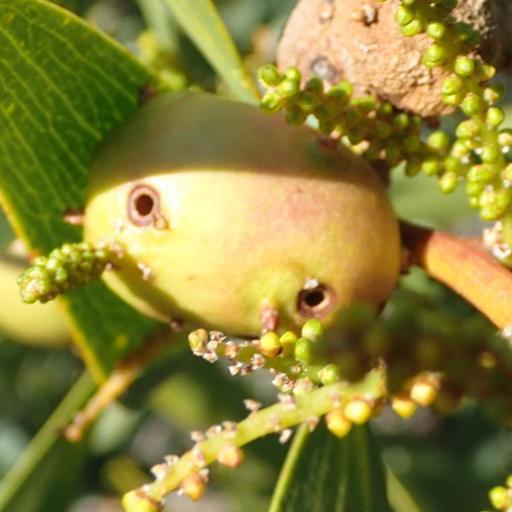
- 🟢 The "Gall" Nursery: You are more likely to see their "houses" than the insects themselves. Look for green, fleshy, marble-sized swellings where flower buds should be on an Acacia tree.
- 🌑 Exit Holes: Once the adult wasp matures and leaves its nursery, the dried, woody galls will feature tiny, perfectly circular pinprick holes.
🌲 Habitat & Ecology
- 🌳 The Wattle Specialist: These wasps are incredibly picky. They focus almost exclusively on the Long-leaved Wattle (Acacia longifolia). By laying their eggs in the flower buds, they trick the tree into growing a protective "gall" instead of a seed pod, effectively "sterilizing" the invasive plant.
- 💨 Weak Flyers: Because they are so small, they don't fly long distances on their own. Instead, they often drift on the wind to find the next suitable tree to call home.
⚠️ Safety & Toxicity
- 🛡️ Safe for Humans: Despite being called a "wasp," they do not have a functional stinger and cannot bite. They are completely harmless to people and are not interested in human food.
- 🐾 Pet Safety: These insects are non-toxic. If a dog or cat were to investigate or even accidentally ingest a gall, there is no risk of poisoning.
- 🌿 Plant Health: While they "damage" the reproductive cycle of the Acacia, they do not kill the tree itself; they simply stop it from spreading uncontrollably.
✨ Fun Fact
- ✨ Chemical Brainwashing: When a female wasp lays her eggs, she injects a special fluid that "reprograms" the plant's DNA. Instead of developing a normal flower, the plant is forced to use its own energy to build a nutrient-rich "nursery" to feed the wasp larvae!
More Details








