Info
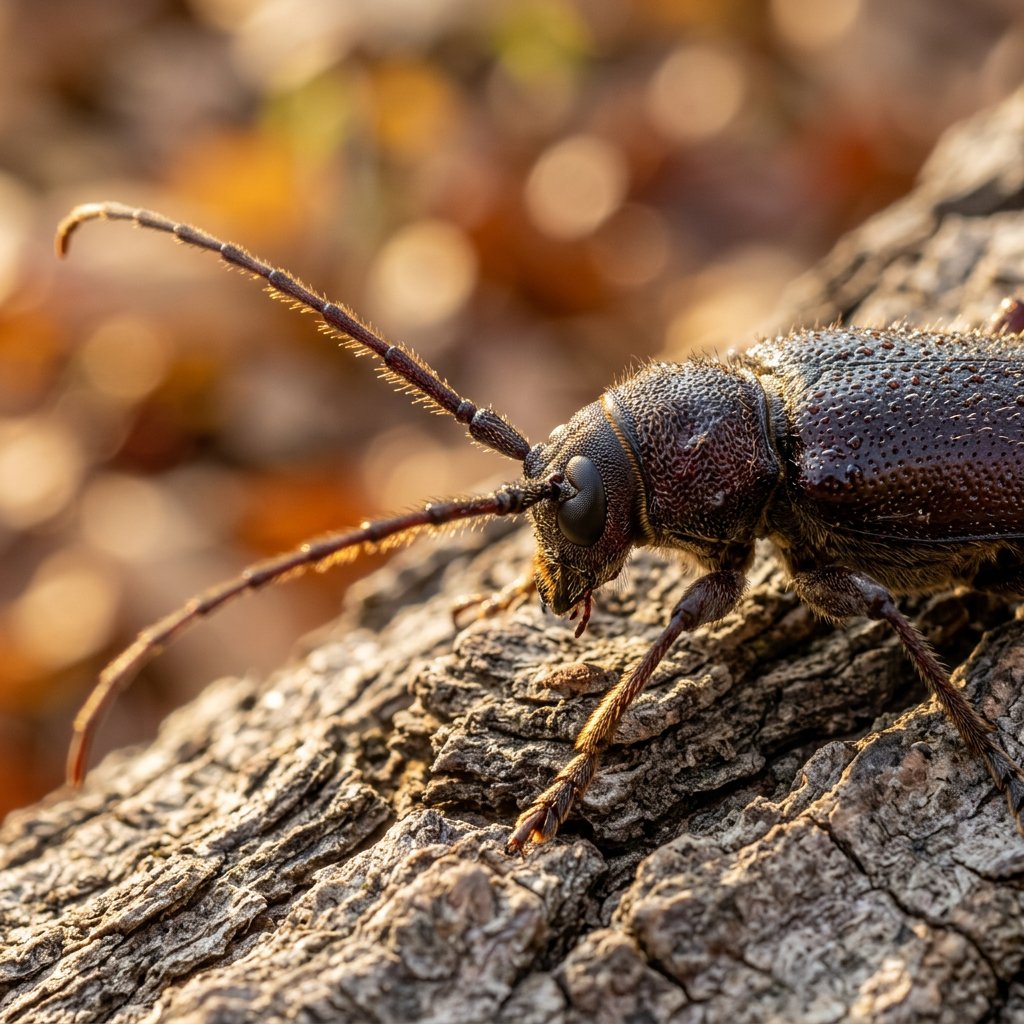
Often called the Velvet Longhorned Beetle, this slender traveler is a master of hitchhiking. Originally from Asia, it has spread across the globe by hiding inside wooden crates and shipping pallets. While its long, sweeping "horns" might look like something out of a sci-fi movie, this beetle is more interested in old wood than in bothering people.
🔍 How to Identify
- 🪲 Velvety Coat: Its brownish-orange or dark tan body is covered in fine, flattened hairs, giving it a soft, matte "velvet" texture rather than a shiny metallic look.
- 📶 Long Antennae: As a member of the longhorn family, its segmented antennae are impressively long, often reaching the full length of its body or more.
- 📏 Flattened Shape: The body is noticeably flattened and elongated, a physical adaptation that allows it to squeeze into tight crevices in tree bark or timber.
🌲 Habitat & Ecology
- 🪵 The Timber Taster: The larvae are "wood borers," meaning they spend their youth chewing tunnels through dead or dying wood. They are particularly fond of Mulberry, Apple, and Maple trees, but they aren't picky and will settle for dry, seasoned lumber.
- 🌙 Nighttime Navigator: You are most likely to spot an adult Trichoferus campestris during mid-to-late summer. They are nocturnal and are highly attracted to artificial lights, often ending up on porch screens or near streetlamps.
- 📦 Global Hitchhiker: Because the larvae can survive for long periods in dry wood, this insect is a frequent "stowaway" in international shipping, leading it to be classified as an invasive species in many parts of Europe and North America.
⚠️ Safety & Toxicity
- 🛡️ Status: Harmless to humans and pets. They do not possess a stinger and are not known to carry diseases.
- 👄 The "Nip": Like most beetles, they have mandibles (jaws) used for chewing wood. While they aren't aggressive, they might give a small, non-venomous pinch if handled roughly or squeezed.
- 🏡 Home Safety: While they don't eat structural house beams as aggressively as termites, they can emerge from firewood or rustic wooden furniture kept indoors.
✨ Fun Fact
The larvae of the Velvet Longhorned Beetle are so hardy and patient that they have been known to emerge as adults from wooden furniture years after the piece was manufactured and brought into a home!
More Details








