Info
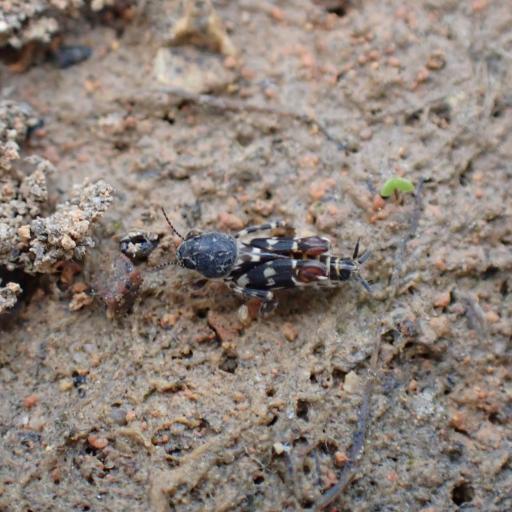
Often called Pygmy Mole Crickets, these tiny marvels are the "Swiss Army Knives" of the insect world. Despite their name and digging lifestyle, they are more closely related to grasshoppers than true mole crickets. These miniature masters of the shoreline are famous for their ability to jump, dig, and even swim with incredible agility.
🔍 How to Identify
- [📏] Tiny Stature: They are remarkably small, usually measuring between 4mm and 10mm—about the size of a grain of rice.
- [⛏️] Fossorial Front Legs: Their front legs are flattened and shaped like tiny spades, specifically evolved for tunneling into damp sand.
- [🦵] Modified Hind Legs: They possess large, powerful hind legs used for jumping, which feature unique movable plates or "paddles" near the tips.
- [🛡️] Glossy Armor: Their bodies are typically smooth, shiny, and dark (black or deep brown), often with pale markings that help them blend into sandy environments.
🌲 Habitat & Ecology
- [🏖️] The Shoreline Specialist: You’ll almost always find them on the muddy or sandy banks of rivers, ponds, and lakes. They require moist substrates to keep their burrows from collapsing.
- [🍴] Algae Eaters: Unlike many garden pests, they primarily feed on microscopic algae, organic debris, and tiny roots found within the damp soil they inhabit.
- [🏊♂️] Surface Swimmers: If they fall into the water, don't worry—they are excellent swimmers! They use their specialized hind-leg paddles to skim across the surface tension back to dry land.
⚠️ Safety & Toxicity
- [✅] Completely Harmless: Pygmy mole crickets are gentle creatures. They do not bite, sting, or carry any diseases harmful to humans.
- [🐾] Safe for Pets: They are non-toxic. If a curious cat or dog happens to find one by a pond, there is no risk of poisoning or injury.
✨ Fun Fact
[🚀] The Spring-Loaded Escape: Pygmy mole crickets have a "superpower"—their hind legs are equipped with spring-like mechanisms that allow them to leap over 50 times their own body length in a single bound to escape predators!
More Details








