Info
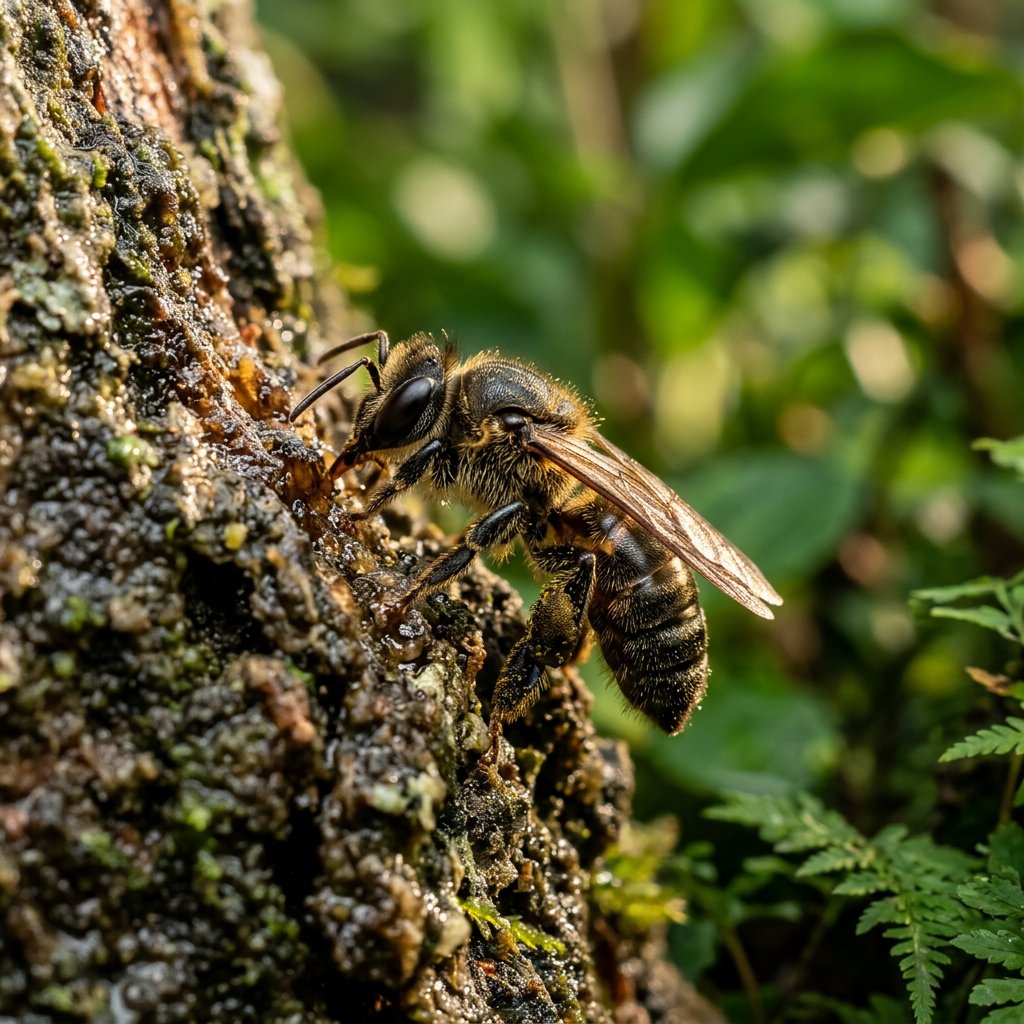
Known throughout Brazil as the Arapuá or "Irapuá," Trigona spinipes is a jet-black, stingless bee that acts more like a tiny, determined soldier than a delicate pollinator. While it belongs to the stingless bee family, don't let the lack of a stinger fool you—it is famous for its aggressive nest defense and its habit of "harvesting" garden plants a bit too enthusiastically.
🔍 How to Identify
- 🐝 The Look: A robust, medium-sized bee (about 7mm) with a completely shiny, pitch-black body and dark, smoky wings.
- 🏗️ The Fortress: They build massive, oval-shaped external nests that look like dark brown rocks or giant termite mounds stuck high in tree branches or on utility poles.
- 🦵 The "Spinipes": Their scientific name refers to the distinct bristles on their hind legs, which they use to carry mud, resin, and fibers back to their colony.
🌲 Habitat & Ecology
- 🍒 Resource Raiders: Unlike many bees that only take nectar, the Arapuá uses its strong mandibles to scar the stems and buds of plants (like citrus, roses, and bananas) to collect resin and sap. This can sometimes cause "scorched" patches on your favorite flowers.
- 🌺 Generalist Pollinators: Despite their rough handling of buds, they are vital pollinators for many tropical wild plants and crops, including onions and carrots.
- 🛡️ Defensive Tactics: They are highly territorial. If you get too close to their nest, they won't sting, but they will "swarm" your head, tangling themselves in your hair and nipping at your skin with their tiny jaws.
⚠️ Safety & Toxicity
- ✅ Stingless: These bees do not possess a functional stinger, making them non-lethal and safe for those with bee-sting allergies.
- 💇 Hair Entanglement: Their primary defense is to fly directly into the hair and ears of perceived threats. They are notoriously difficult to shake off once they’ve latched on.
- 🐶 Pet Safety: While harmless to pets, a curious dog sniffing a low-hanging nest might end up with a face full of sticky, biting bees that cause mild irritation and panic.
✨ Fun Fact
The Arapuá is a master architect of "recycling." Their huge nests are constructed from a mixture of wax, resin, mud, and even animal dung, creating a structure so strong it can survive heavy tropical storms for years.
More Details








