Info
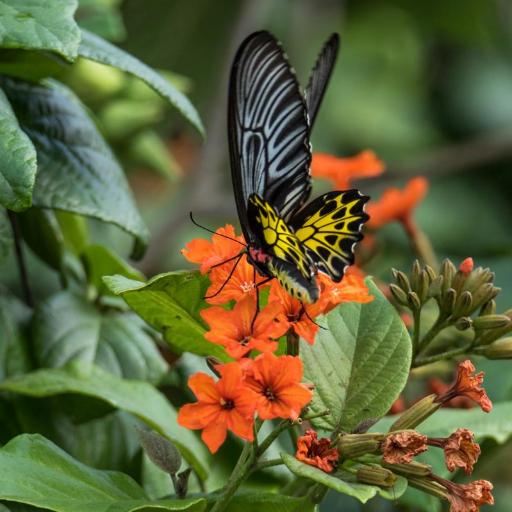
Known as the Golden Birdwing, this majestic insect is often called a "flying gemstone" of the Asian tropics. With a wingspan that can reach up to 16 centimeters, it is one of the largest butterflies in the world, frequently mistaken for a small bird as it glides effortlessly through the forest canopy. In many cultures, its radiant, translucent yellow wings are celebrated as symbols of sunlight and prosperity.
🔍 How to Identify
- 🦋 The Forewings: Long, narrow, and velvet-black, often featuring subtle grayish-white streaks along the veins that shimmer in direct light.
- 🟡 The Hindwings: Strikingly bright golden-yellow with delicate black "scalloped" edges and dark veins that create a stained-glass effect.
- 🔴 The "Red Collar": A distinctive tuft of bright red hair-like scales around the head and thorax, which warns predators of its unpalatability.
🌲 Habitat & Ecology
- 🌺 High-Altitude Feeder: You will most likely spot them near the tops of trees or hovering over nectar-rich flowers like Hibiscus or Lantana in tropical rainforests and humid valleys.
- 🌿 The Toxic Diet: As caterpillars, they feed exclusively on Aristolochia (Birthwort) vines. They ingest aristolochic acids from these plants, which stay in their bodies through adulthood to make them taste bitter to birds.
- 🛡️ Forest Protector: Because they are sensitive to deforestation, the presence of Golden Birdwings is often a sign of a healthy, undisturbed ecosystem.
⚠️ Safety & Toxicity
- ✅ Harmless to Humans: The Golden Birdwing does not bite, sting, or carry diseases. They are gentle giants that pose no threat to gardeners or hikers.
- 🐦 Toxic to Predators: While safe for humans to handle (though their delicate wings should never be touched), they are chemically defended against birds and lizards who might try to eat them.
- 📜 Legal Status: In many regions, such as India and Hong Kong, these butterflies are legally protected. Capturing or harming them can result in significant fines.
✨ Fun Fact
The Golden Birdwing's flight style is unique; unlike the erratic, jerky movements of smaller butterflies, it uses deep, powerful wing beats and long glides, a technique called "thermalling" that is more commonly seen in hawks and eagles.
More Details








