Info
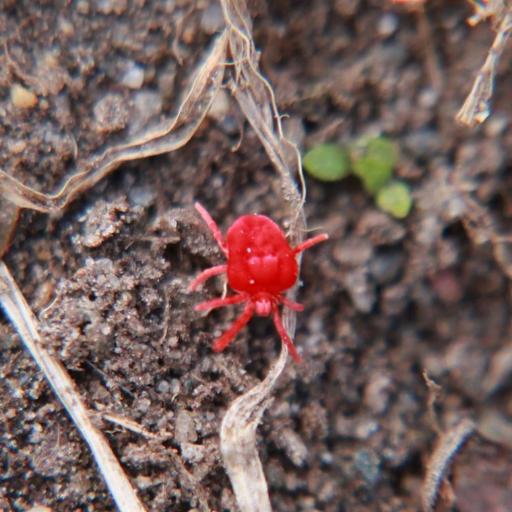
Often called the "Red Velvet Mite," this tiny crimson creature looks like a stray piece of plush fabric wandering through your garden soil. While its neon-red color might look like a "danger" signal, it is actually a beneficial helper that works tirelessly beneath our feet to keep the soil ecosystem healthy. These mites are most visible in early spring, often emerging in large numbers after a fresh rainfall.
🔍 How to Identify
- 🔴 Velvet Texture: The body is covered in a dense layer of fine, soft hairs (setae) that give it a distinct "suede" or plush appearance, making it look like a tiny wandering pillow.
- 🕷️ Arachnid Features: Though often called a "bug," it is actually an arachnid with eight crawling legs and a plump, squarish body that lacks a distinct neck or waist.
- 🎨 Neon Hue: Its most striking feature is its saturated scarlet-to-orange color, which acts as a warning to birds and larger predators that it tastes very bitter.
🌲 Habitat & Ecology
- 🍂 The Leaf Litter Hunter: As adults, these mites are active predators that prowl through mulch, leaf litter, and topsoil. They are the "lions" of their tiny world, feeding on even smaller pests like springtails and insect eggs.
- 🌦️ Moisture Lovers: They are highly sensitive to drying out. You will rarely see them in the midday sun; instead, they prefer the damp, cool environment of a garden bed or the crevices of old stone walls.
⚠️ Safety & Toxicity
- ✅ Completely Harmless: Red Velvet Mites do not bite, sting, or burrow into human skin. They are not to be confused with "chiggers" (their parasitic cousins); the adult Trombidium has no interest in humans.
- 🐶 Pet Friendly: They are non-toxic and do not pose a threat to cats or dogs. If a curious pet sniffs or licks one, the mite’s bitter defensive chemicals usually ensure the pet won't try it a second time.
✨ Fun Fact
To attract a mate, the male Red Velvet Mite builds an elaborate "love garden." He places droplets of sperm on blades of grass and then creates an intricate trail of silken threads leading to the spot, hoping a female will follow his "invitation" path!
More Details








