Info
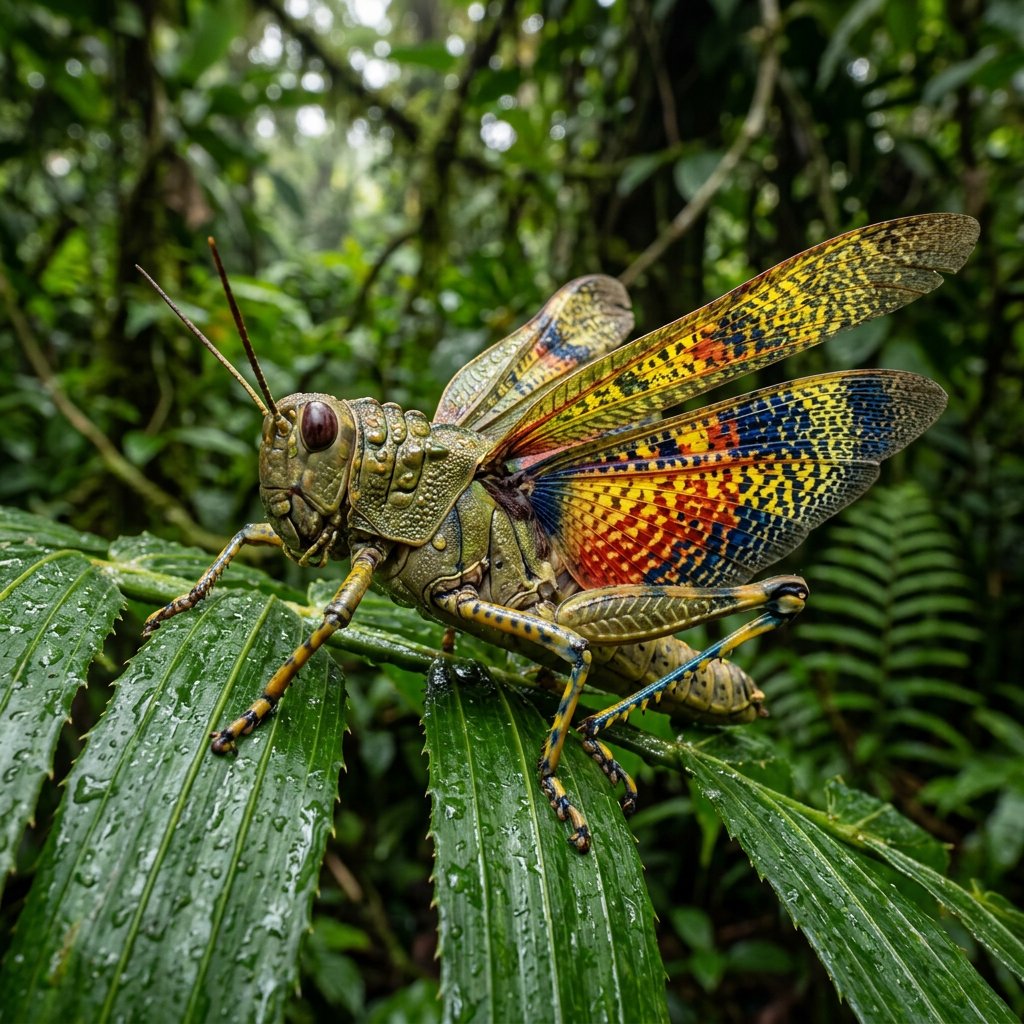
While you mentioned "plant," Tropidacris cristata is actually one of the world’s largest and most spectacular insects! Known commonly as the Giant Red-winged Grasshopper, this South American titan is so massive that it is frequently mistaken for a small bird or a bat when it takes flight. It is a prehistoric-looking marvel that acts as a colorful, albeit hungry, inhabitant of the tropical canopy.
🔍 How to Identify
- 📏 Colossal Size: This is a true giant, with bodies reaching up to 14 cm (5.5 inches) in length and a wingspan that can exceed 20 cm.
- 🌈 Hidden Colors: While its outer wings are a camouflaged olive-green or brown to blend with leaves, its large hindwings are a shocking, brilliant red or orange, revealed only during flight.
- 🛡️ Thoracic Crest: It features a prominent, finely serrated ridge or "crest" on its thorax (the section behind the head), which gives the species its Latin name cristata.
🌲 Habitat & Ecology
- 🌳 Forest Dwellers: Native to the rainforests and wooded areas of Central and South America, these grasshoppers spend most of their time high in the trees but will descend to gardens and plantations to feed.
- 🍃 Generalist Herbivore: They are not picky eaters. They consume a vast array of vegetation, including palms, fruit trees, and ornamental plants. While they don't form devastating swarms like migratory locusts, a single individual can eat a significant amount of foliage in one sitting.
⚠️ Safety & Toxicity
- 🛡️ Non-Venomous: These insects are completely non-toxic and do not possess a stinger. They are generally "gentle giants" unless provoked.
- 🌵 Spiny Defense: Their massive hind legs are lined with very sharp, hard spines. If you try to grab one, it may kick, which can result in painful scratches or even shallow cuts on human skin.
- 👄 Strong Mandibles: Due to their size, their mouthparts are powerful. While they aren't aggressive, a defensive "pinch" from a Giant Grasshopper can be quite strong compared to smaller species.
✨ Fun Fact
✨ Because of their immense weight and size, Tropidacris cristata are actually quite clumsy flyers. When they land on a branch, you can often hear the wood audibly "thud" or creak under their weight!
More Details








