Info
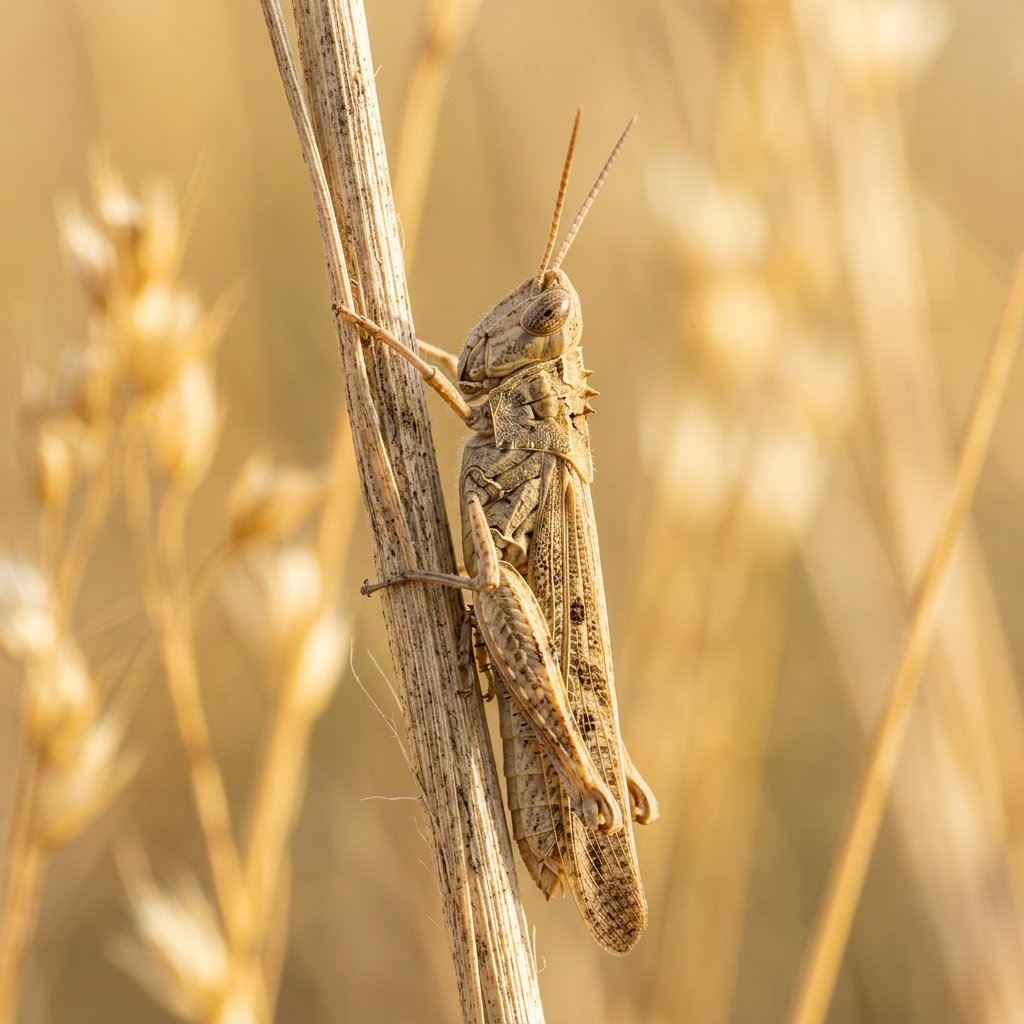
Often referred to as the Long-headed Grasshopper or the Nose Grasshopper, this insect is a true master of disguise. With its incredibly elongated, conical head and slender body, it looks less like a bug and more like a stray blade of dried grass or a green twig. Found throughout the Mediterranean, Africa, and parts of Asia, it spends its days perfectly still, relying on its "living straw" appearance to vanish in plain sight.
🔍 How to Identify
- 👃 Conical Head: The most striking feature is its exceptionally long, pointed forehead that tapers into a "nose," giving it a distinct, aerodynamic profile.
- 🦗 Slender Silhouette: Its body is remarkably thin and elongated, lacking the "chunky" look of common field grasshoppers.
- 🎨 Polychromatic Colors: They appear in two primary color phases—vibrant green to match lush vegetation or a dusty straw-brown for arid, dry environments.
- 🦵 Lanky Limbs: It possesses very long, thin hind legs that allow for sudden, explosive leaps when its camouflage is finally compromised.
🌲 Habitat & Ecology
- 🌾 Stealthy Herbivore: It feeds exclusively on grasses and low-lying vegetation. Because it blends in so well, it rarely needs to move, spending hours clinging to a single stem.
- ☀️ Arid Specialist: This species thrives in warm, dry habitats. You are most likely to find them in sun-drenched meadows, coastal dunes, or rocky hillsides where tall, spindly grasses grow.
- 🕊️ Silent Flight: While it prefers to stay still, it is a capable flyer. When it takes to the air, it moves with a fluttering motion that can look more like a large dragonfly or a small bird than a grasshopper.
⚠️ Safety & Toxicity
- ✅ Harmless: The Long-headed Grasshopper is completely non-toxic and poses no threat to humans. It does not sting and lacks the jaw strength to deliver a painful bite.
- 🐾 Pet Friendly: It is safe to have around curious pets. If a cat or dog tries to catch one, the grasshopper’s only defense is a quick jump or a "propeller-like" flight to a distant patch of grass.
✨ Fun Fact
When the Truxalis nasuta spreads its wings to fly, it reveals a hidden splash of beauty—its hind wings are often tinted with a delicate rose-pink or purplish hue. This sudden flash of color is designed to startle predators, but the moment the insect lands and folds its wings, it "vanishes" back into a dull brown or green stick.
More Details








