Info
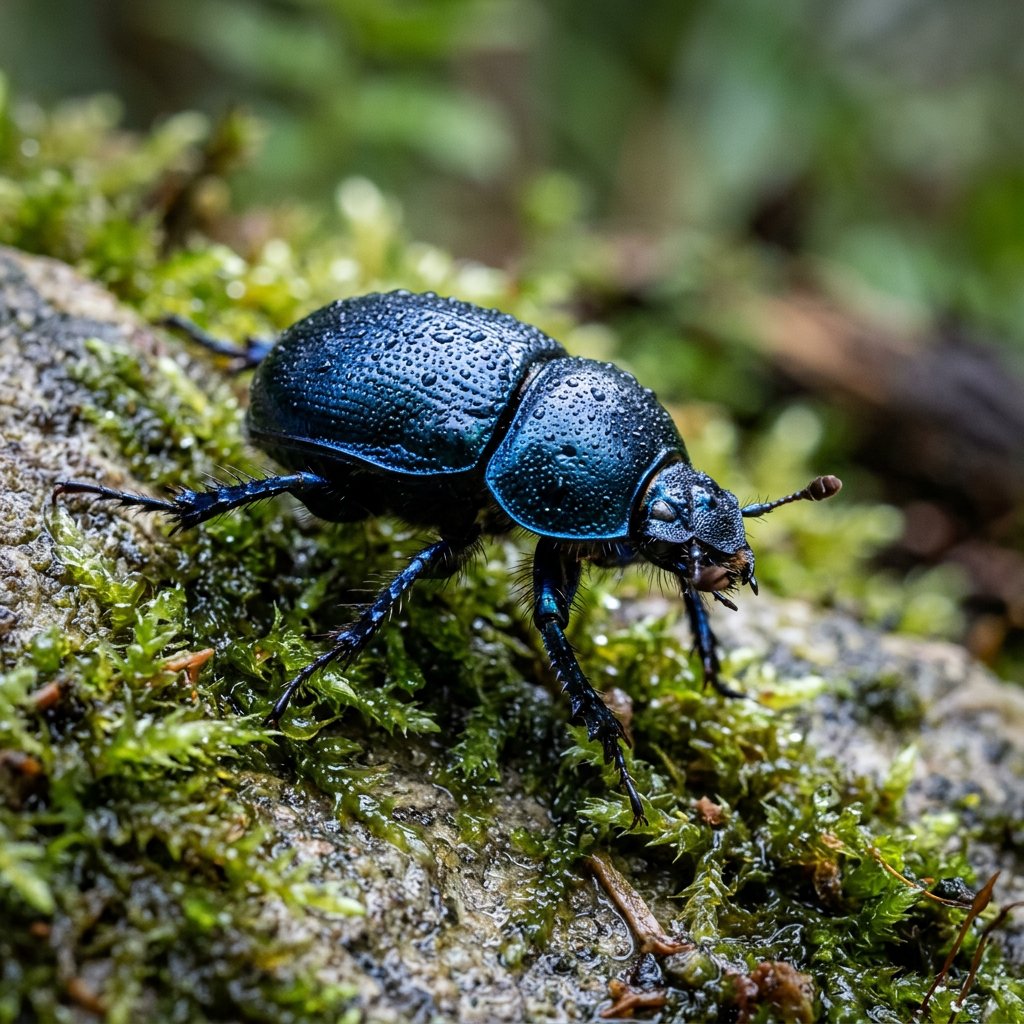
The Pyrenean Dung Beetle is like a tiny, iridescent armored tank patrolling the mountain pastures. Often called the "Jewel of the Meadow," this beetle spends its life cleaning up after grazing livestock, turning waste into nutrient-rich soil. While its job might seem messy to us, this beetle is a vital recycler and a symbol of the hidden hard work that keeps high-altitude ecosystems healthy.
🔍 How to Identify
- 🛡️ Metallic Armor: A highly polished, dome-shaped exoskeleton that glimmers with deep metallic shades of violet, cobalt blue, or obsidian black depending on the light.
- 🐜 Clubbed Antennae: Distinctive "lamellate" antennae that end in tiny, fan-like clubs, which act as high-powered sensors to sniff out organic material from a distance.
- ⛏️ Heavy-Duty Legs: Robust, spiny front legs designed like heavy-duty shovels, perfectly adapted for digging deep tunnels into the earth.
🌲 Habitat & Ecology
- ⛰️ Mountain Life: As the name suggests, it is most famous in the Pyrenees, but it thrives in many European meadows and pastures where cattle, horses, or sheep graze.
- 🏗️ Underground Nurseries: They are masterful architects. Instead of just eating on the surface, they dig vertical shafts beneath manure piles, dragging "provisions" down to create a safe, food-rich nursery for their developing larvae.
- 🚜 Soil Aerators: By constantly tunneling, they help oxygen reach the roots of meadow grasses and transport nutrients deep into the ground, acting as nature’s miniature plows.
⚠️ Safety & Toxicity
- ✅ Harmless Helper: These beetles are completely safe for humans and pets. They do not sting, and their mouthparts are designed for soft organic matter, meaning they cannot give a painful bite.
- 🧼 Hygiene Note: Because their life revolves around animal waste, they are not "dirty" themselves, but it is always wise to wash your hands after handling one to avoid any bacteria from their environment.
✨ Fun Fact
These beetles are exceptionally strong for their size! To protect their "find" from competitors, they can roll or drag pieces of organic matter that weigh significantly more than their own body weight, often navigating over rugged terrain to find the perfect spot to bury it.
More Details








