Info
Known as the "King of Insects" in East Asia, the Japanese Rhinoceros Beetle (Trypoxylus dichotomus) is a legendary figure of the summer months. Often called Kabutomushi—meaning "Helmet Bug" in Japanese—because its head resembles the ornate helmet of a samurai, this beetle is a symbol of strength and a prized pet for nature lovers across the globe.
🔍 How to Identify
- 🪖 The Samurai Horn: Males possess a magnificent, double-forked Y-shaped horn on their head and a smaller horn on the thorax, used primarily for wrestling rivals off tree branches.
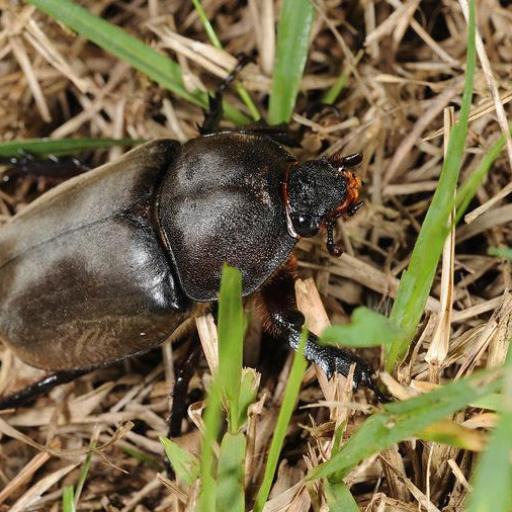
- 🛡️ Glossy Armor: They feature a thick, heavy exoskeleton that ranges from a deep reddish-brown to a near-inky black, polished to a high-gloss finish.
- ♀️ The Female Look: Females are slightly smaller and lack the dramatic horns; they have a more textured, matte wing cover (elytra) which helps them stay camouflaged while burrowing.
🌲 Habitat & Ecology
- 🌳 The Sap Bar: In their natural habitat, these beetles are most frequently found on the trunks of Oak trees. They use their specialized, brush-like mouths to lap up sweet, fermenting tree sap.
- 🌙 Nocturnal Life: They are primarily active at night. If you are looking for them in the wild, you’ll likely find them congregating at dusk or buzzing around bright porch lights.
- 🍂 Forest Recyclers: As larvae (grubs), they live underground or in rotting logs, playing a vital role in the ecosystem by breaking down decaying organic matter into rich soil.
⚠️ Safety & Toxicity
- 🤝 Gentle Giants: Despite their intimidating "battle-ready" appearance, they are completely harmless to humans. They are not aggressive, they do not sting, and they lack the mandibles required to deliver a painful bite.
- 💅 Sharp Claws: While safe to handle, be aware that their legs end in sharp, hooked claws designed for gripping tree bark. If they latch onto your finger, it can feel like a tiny, prickly scratch—don't pull them off forcefully, or you might hurt the beetle!
✨ Fun Fact
💪 World-Class Weightlifters: The Japanese Rhinoceros Beetle is one of the strongest creatures on Earth relative to its size. These tiny titans are capable of lifting objects over 800 times their own body weight—the equivalent of a human lifting several school buses at once!
More Details








