Info
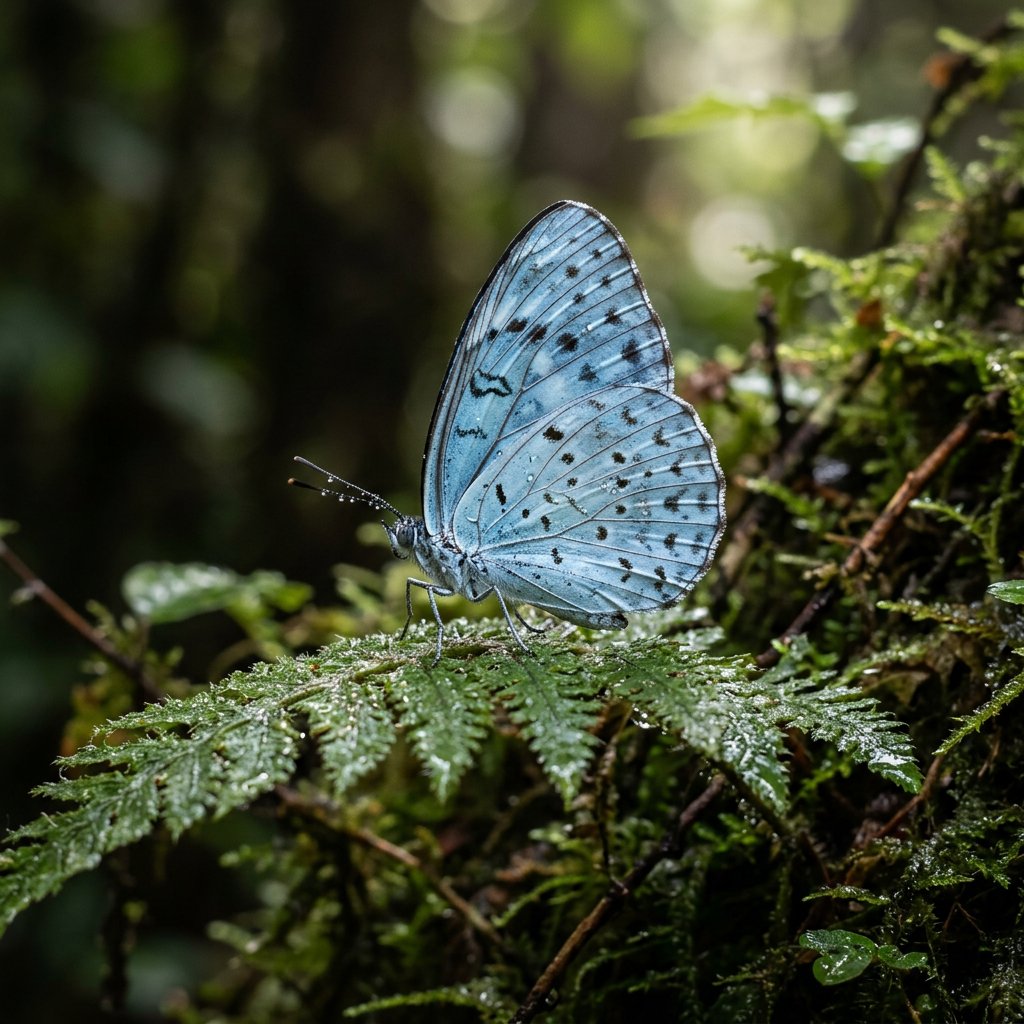
Often referred to as the Hedge Blues, butterflies of the genus Udara are like tiny, shimmering fragments of the sky brought to earth. These delicate members of the Lycaenidae family are widespread across Asia and Oceania, often found dancing around forest margins. Their ethereal blue wings and intricate "polka-dot" undersides make them a favorite among butterfly watchers and macro photographers.
🔍 How to Identify
- 🦋 Upper Wings: When their wings are open, you’ll see a soft, iridescent pale blue or violet-blue hue, usually framed by a thin dark border.
- ⚪ The Underside: The underside is a pale, milky white or light grey, decorated with a series of distinct, tiny black spots and faint, smoky-grey streaks.
- 🧶 Antennae: Look for thin, black-and-white ringed antennae that end in a small, dark club-like tip.
🌲 Habitat & Ecology
- 💧 Mud-Puddling: You will often find groups of males congregating on damp patches of soil or muddy puddles. They do this to drink mineral-rich water, which is essential for their health and reproduction.
- 🌿 Forest Dwellers: Unlike some garden butterflies, Udara species prefer the dappled light of woodland edges, secondary forests, and shaded hillsides where their host plants grow.
- 🐜 Ant Guardians: Many Udara caterpillars have a "special deal" with ants. The caterpillars secrete a sugary substance (honeydew) that the ants love; in exchange, the ants act as aggressive bodyguards, protecting the larvae from wasps and spiders.
⚠️ Safety & Toxicity
- ✅ Completely Harmless: These butterflies do not bite, sting, or carry toxins. They are "friend" insects through and through.
- 🛡️ Fragile Beauty: While they aren't dangerous, they are extremely delicate. Touching their wings can rub off the microscopic scales they need for flight and thermoregulation, so it is best to enjoy them from a distance.
✨ Fun Fact
Many species in the Udara genus are so similar in appearance that even expert entomologists sometimes have to examine them under a microscope to tell them apart—earning them the nickname of "the little blue puzzles" in some scientific circles!
More Details








