Info
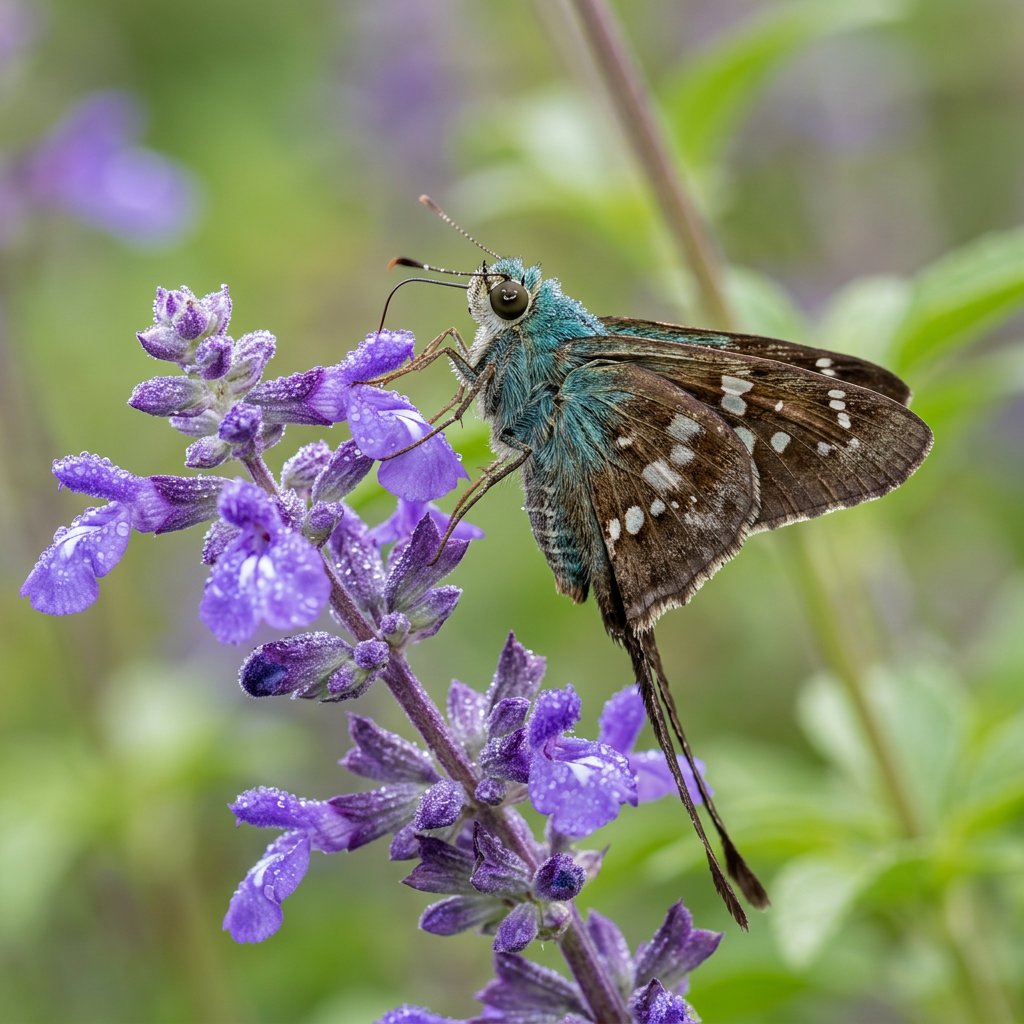
Often called the "Long-tailed Skipper," this butterfly is the dandy of the insect world. While many skippers are drab and brown, Urbanus proteus sports a shimmering iridescent blue-green "cape" across its back that sparkles in the sunlight. In the garden, it is a fast-moving visitor that looks like a miniature kite trailing long, elegant ribbons behind it.
🔍 How to Identify
- 🦋 The Tails: The most striking feature is the pair of long, pendulous "tails" extending from the hindwings, which give the butterfly its name.
- ✨ Iridescent Body: The upper side of the body and the base of the wings are covered in vibrant, metallic blue or emerald-green scales.
- 🔲 Wing Patterns: The wings are primarily chocolate brown, marked with a series of distinct, square-shaped translucent white spots on the forewings.
🌲 Habitat & Ecology
- 🌿 The Bean Roller: While the adult is a beloved pollinator, the caterpillar is known to gardeners as the "Bean Leaf Roller." It constructs a private shelter by cutting a notch in a leaf, folding it over, and "sewing" it shut with silk.
- 🌸 Nectar Enthusiast: You’ll often find them darting erratically between flowers like Zinnias, Bougainvillea, and Lantana. They are incredibly fast fliers, often appearing as a brown-and-green blur until they land to feed.
⚠️ Safety & Toxicity
- ✅ Harmless Friend: The Long-tailed Skipper is completely safe for humans and pets. They do not bite, sting, or possess any chemical defenses that cause skin irritation.
- 🌱 Garden Impact: While harmless to people, they can be a minor nuisance for vegetable gardeners. Their caterpillars have a hearty appetite for legumes (beans and peas), though they rarely cause enough damage to kill a healthy plant.
✨ Fun Fact
The Long-tailed Skipper is a master of disguise from birth; the caterpillars have large, yellowish "eye-spots" on their heads that are actually fake! These spots are designed to scare off predators by making the tiny larva look like a much larger, more intimidating creature.
More Details








