Info
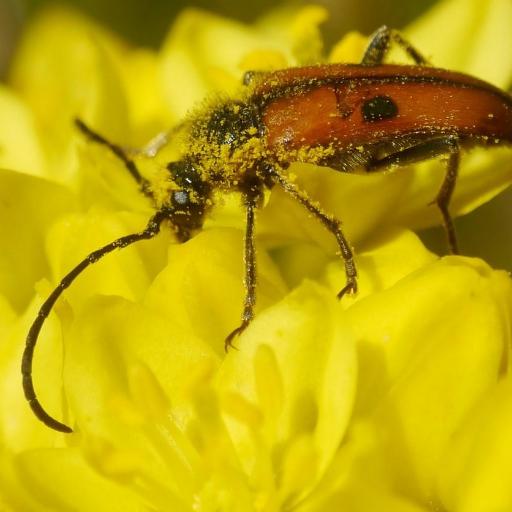
Often referred to as the Flower Longhorn, the Vadonia beetle is a sun-loving insect that brings a touch of elegance to summer meadows. With its slender, tapered body and exceptionally long antennae, it is a quintessential member of the Cerambycidae family. Far from being a pest, this beetle is a dedicated pollinator that spends its days lounging on bright blossoms, fueled by nectar and sunshine.
🔍 How to Identify
- 🎨 The Elytra: Their wing covers are typically a warm amber, tawny, or golden-yellow, often featuring a single, distinct dark spot on each side (especially in the common Vadonia unipunctata).
- 📏 Body Shape: They possess a "teardrop" silhouette, with broad shoulders that taper significantly toward the back, giving them a sleek, aerodynamic look.
- 📡 The Antennae: True to their "Longhorn" name, their antennae are segmented and long, often reaching more than half the length of their entire body.
🌲 Habitat & Ecology
- 🌼 Floral Buffet: You will almost always find adults perched on white or yellow flowers, particularly those in the carrot family (Umbellifers) or daisies, where they feed on pollen and nectar.
- 🍂 The Underground Phase: While the adults love the light, their larvae are creatures of the earth. They live in the soil, often associated with the root zones of specific plants or decaying wood, where they help break down organic matter.
- ☀️ Summer Peak: These beetles are highly seasonal, appearing most frequently during the hottest months of June and July when wildflowers are in full bloom.
⚠️ Safety & Toxicity
- ✅ Harmless Friend: Vadonia beetles are completely harmless to humans and pets. They do not possess a stinger, and they are not known to bite unless extremely provoked.
- 🛡️ Gentle Nature: They lack any chemical defenses or toxins. If they feel threatened, they are more likely to simply drop from a flower into the grass or fly away than to stand their ground.
✨ Fun Fact
Unlike many other wood-boring beetles that can damage furniture or homes, the Vadonia genus is strictly a "wild" insect. Because their larvae often develop in the soil rather than deep inside healthy timber, they are considered beneficial recyclers rather than forest pests!
More Details








