Info
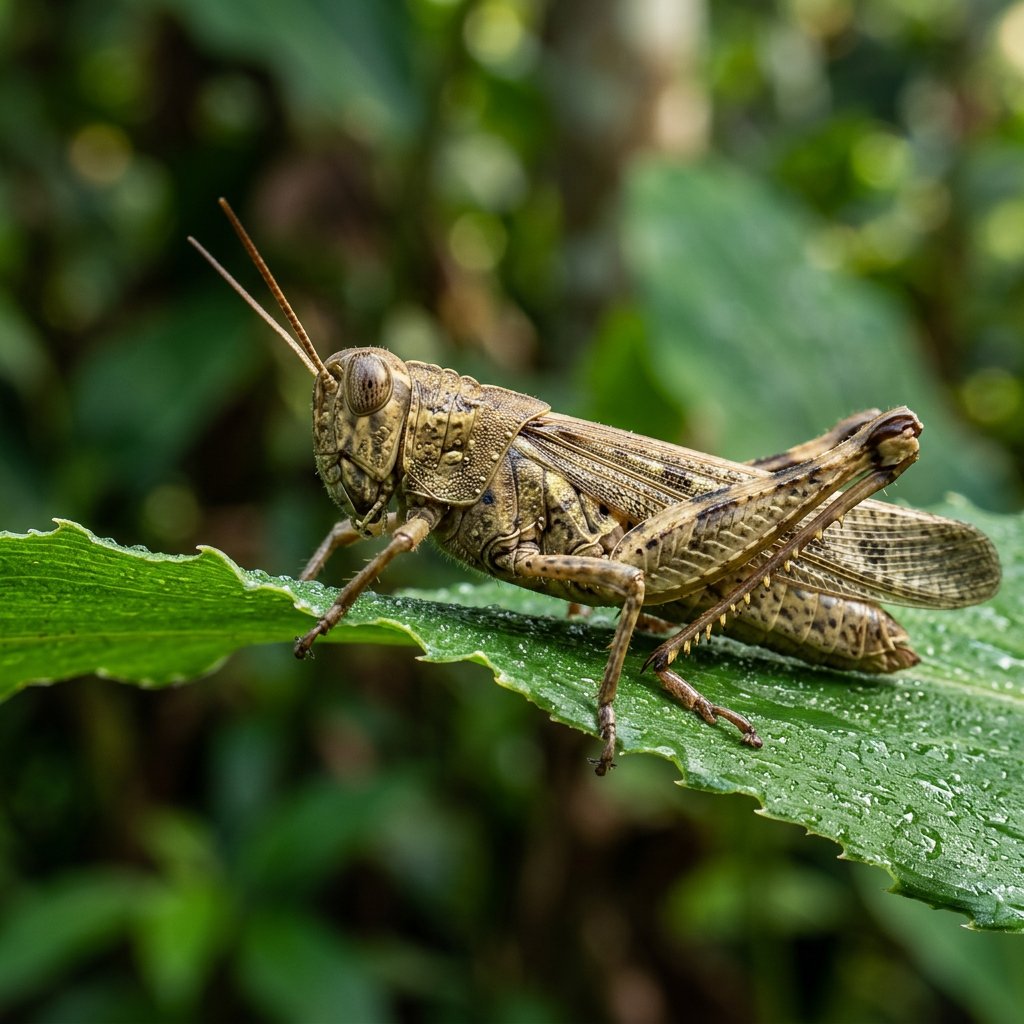
Known as the Javanese Grasshopper, this vibrant giant is one of the most recognizable insects across Southeast Asia. With its impressive size and striking yellow-and-black patterns, it often looks like a toy brought to life. While it is a solitary wanderer rather than a swarming locust, it has a legendary appetite that keeps tropical gardeners on their toes.
🔍 How to Identify
- 🎨 Color Palette: A base of yellowish-green or olive, heavily decorated with distinct black spots and markings, especially on the "thighs" (femora).
- 📏 Impressive Size: One of the larger grasshopper species, with females reaching up to 10 centimeters (4 inches) in length.
- 🦵 Armed Legs: Its powerful hind legs are lined with sharp, rose-thorn-like spines that help it grip foliage and deter small predators.
- ✈️ Smoky Wings: When it takes flight, you may catch a glimpse of its long, brownish-grey wings that extend well past the end of its abdomen.
🌲 Habitat & Ecology
- 🍽️ The Generalist Eater: This grasshopper isn't picky. It enjoys munching on a wide variety of plants, from ornamental hibiscus and roses to economically important crops like coffee, rubber, and citrus trees.
- 🍃 Master of Camouflage: Despite its bright spots, its greenish hue allows it to blend perfectly into the underside of large tropical leaves, where it spends the hottest parts of the day.
- 🧗 Solitary Climber: Unlike true "plague" locusts, the Valanga nigricornis prefers to live a quiet, solitary life high up in the canopy or deep within garden shrubbery.
⚠️ Safety & Toxicity
- ✅ Harmless to Humans: They do not possess a stinger and are not venomous. They are generally shy and will choose flight over a fight.
- 🌵 Prickly Defense: If handled roughly, their spiny hind legs can deliver a sharp "poke" or scratch to sensitive skin. It’s best to observe their beauty without picking them up.
- 🐱 Pet Safety: They are not toxic to cats or dogs, though the crunchy chitin and leg spines might cause mild stomach upset if swallowed by a curious pet.
✨ Fun Fact
When a Javanese Grasshopper outgrows its skin, it leaves behind a perfect, translucent "ghost" of itself called an exuvia. These empty husks are so detailed—right down to the tiny spikes on the legs—that they are often mistaken for live insects by surprised gardeners!
More Details








