Info
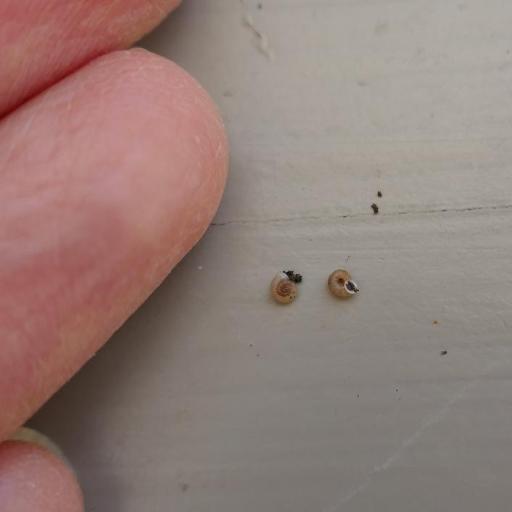
Often mistaken for a tiny insect or a stray seed, the Ribbed Vallonia is actually a miniature architectural marvel of the snail world. Known as the "Costate Vallonia," these tiny land snails are the hidden "pearls" of your garden, sporting shells with exquisite, delicate ridges. They are one of the most common land snails in North America and Europe, yet they are rarely noticed because they are barely larger than a grain of sand.
🔍 How to Identify
- 🐚 The Shell: A flattened, disc-like spiral that is remarkably symmetrical and translucent.
- 📏 The Ribs: Its most defining feature is the 25 to 45 sharp, raised radial ridges (ribs) that decorate the surface of the shell.
- ⚪ The Color: Usually a pearly white or a pale grey, often appearing slightly frosted under a magnifying glass.
- 🤏 The Size: Extremely tiny, typically measuring only 2 to 3 millimeters in diameter.
🌲 Habitat & Ecology
- 🍂 Nature’s Recycler: The Ribbed Vallonia is a dedicated detritivore. It spends its life quietly breaking down decaying leaves, moss, and lichen, turning them into nutrient-rich soil.
- 🧱 Limestone Lover: These snails have a "sweet tooth" for calcium. You will most likely find them in gardens with alkaline soil, near old stone walls, or tucked under the moisture-trapping roots of lawn grass.
- 🚶 Urban Resident: Unlike many sensitive woodland species, this snail thrives in human-disturbed environments like city parks, backyards, and even cracks in the sidewalk.
⚠️ Safety & Toxicity
- ✅ Harmless: The Ribbed Vallonia is completely harmless to humans, pets, and garden plants.
- 🛡️ Non-Invasive: Unlike larger "garden snails" that might eat your prize hostas, these tiny snails focus on dead organic matter and rarely cause any noticeable damage to living vegetation.
✨ Fun Fact
Because their tiny shells are so durable and specific about their environment, Ribbed Vallonia fossils are often used by scientists (paleoecologists) to figure out what the climate and vegetation were like thousands of years ago!
More Details








