Info
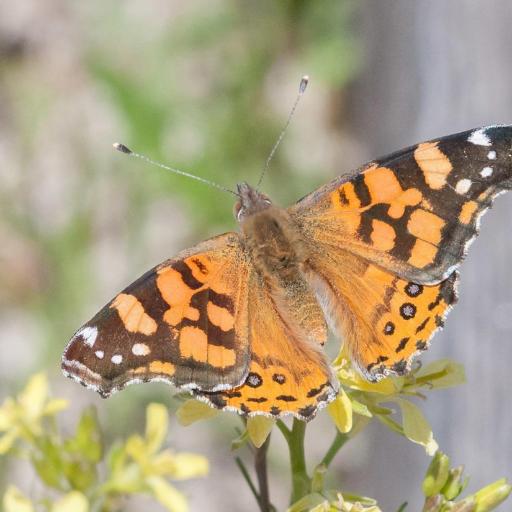
The West Coast Lady (Vanessa annabella) is like a living piece of stained glass fluttering through the golden hills of the Pacific. Often seen dancing over wildflower meadows, this butterfly is a resilient beauty that thrives even in urban backyards across Western North America. While it is frequently confused with its world-traveling cousin, the Painted Lady, this species is a true local specialist of the West.
🔍 How to Identify
- 🦋 Squared Wingtips: Look closely at the tips of the forewings; they have a distinctively "clipped" or squared-off appearance compared to other "Lady" butterflies.
- 🎨 Orange & Black Tapestry: The upper wings are a vibrant, warm orange-red, heavily patterned with deep black bars and punctuated by bright white spots near the edges.
- 👁️ The Eyespots: On the underside of the hindwings, you will find four small eyespots. A key ID feature for the West Coast Lady is that these spots usually lack the bright blue centers found in its relatives.
🌲 Habitat & Ecology
- 🌼 The Nectar Bar: These butterflies are frequent visitors to sunny gardens, especially those featuring Zinnias, Butterfly Bush, and Asters. They serve as excellent secondary pollinators for summer blooms.
- 🌿 Mallow Nurseries: The caterpillars are specialists that feed almost exclusively on the Mallow family (Malvaceae). If you grow Hollyhocks or have "Cheeseweed" growing nearby, you will likely find their larvae hiding in silk-tented leaf nests.
- ☀️ Sun Basking: You will often find them resting on flat stones or bare soil with their wings spread wide. They use their wings like solar panels to raise their body temperature before taking flight.
⚠️ Safety & Toxicity
- ✅ Status: Completely harmless and a welcome friend to any gardener.
- 🌸 Details: They do not bite, sting, or carry diseases. They are safe for children to observe closely and pose no threat to curious pets. In fact, having them in your yard is a sign of a healthy, chemical-free ecosystem.
✨ Fun Fact
Unlike the famous Monarch, which migrates thousands of miles, the West Coast Lady is a "partial migrant." While some stay put year-round in warmer climates, others perform shorter, erratic migrations depending on the weather, sometimes showing up in huge numbers after a wet spring in the desert!
More Details








