Info
The Black-bellied Hornet (Vespa basalis) is widely regarded as one of the most formidable and aggressive social wasps in South and East Asia. Known for its dark, brooding appearance and its tendency to build massive nests high in the forest canopy, this hornet is a master predator that commands respect from humans and insects alike.
🔍 How to Identify
- 🐝 The "Black" Abdomen: True to its name, its abdomen is almost entirely a deep, matte black, which distinguishes it from many other hornet species that feature yellow or orange stripes.
- 🎨 Thorax Accents: The head and the upper part of the thorax (the middle section) typically display a dark reddish-brown or dull orange-brown hue, providing a subtle contrast to its dark body.
- 📐 Size & Build: It is a robust insect, usually measuring between 25mm and 30mm in length, featuring a thick waist and powerful mandibles designed for hunting.
🌲 Habitat & Ecology
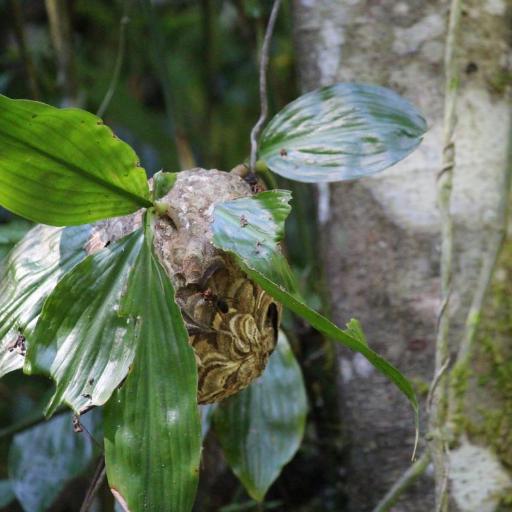
- 🌳 High-Altitude Nests: Unlike some hornets that nest near the ground, Vespa basalis prefers the "penthouse" view, building large, ball-shaped paper nests high up in trees, often hidden by thick foliage.
- 🍖 Insect Hunter: This species is a generalist predator. It plays a crucial role in the ecosystem by hunting a variety of agricultural pests, though it is also known to raid honeybee colonies for larvae.
- 🍯 Nectar Seeker: While the larvae eat protein (insects), the adults primarily fuel themselves with high-energy carbohydrates like tree sap and flower nectar.
⚠️ Safety & Toxicity
- 🚫 Extreme Danger: This hornet is notoriously aggressive. If a nest is perceived to be under threat, the colony will launch a coordinated, mass attack that can chase an intruder for long distances.
- 💉 Potent Venom: The sting is exceptionally painful and delivers a complex cocktail of toxins. For those with allergies, a single sting can be fatal, and for others, multiple stings can lead to serious systemic complications.
- 🐾 Pet Warning: Keep dogs and cats away from areas with active hornet activity. Their curious nature can lead to a swarm attack, which is often life-threatening for smaller animals.
✨ Fun Fact
The Black-bellied Hornet is a master of "recruitment." When a scout finds a threat or a rich food source, it uses chemical signals (pheromones) to alert the colony, leading to a "mobbing" behavior where hundreds of hornets can emerge from the nest simultaneously in a matter of seconds.
More Details








