Info
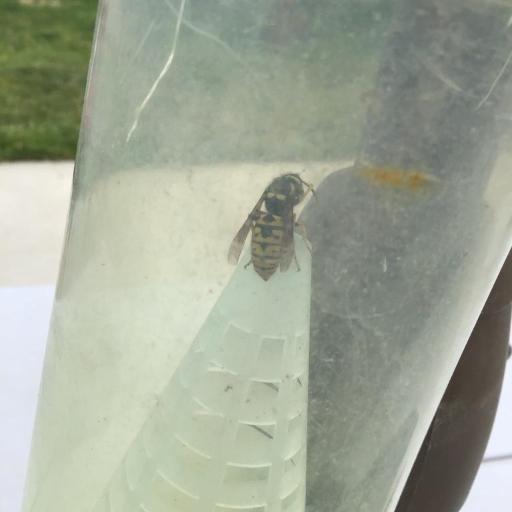
Known as the Prairie Yellowjacket, this vibrant flyer is a common sight across the grasslands and gardens of Western North America. While its bright "caution" colors often trigger a bit of panic, this insect is actually one of the more "polite" members of its family. Unlike its more aggressive cousins, the Prairie Yellowjacket is a dedicated hunter that prefers to patrol your flower beds for pests rather than crashing your weekend picnic.
🔍 How to Identify
- 🐝 The Abdomen: It features a striking pattern of bright yellow and deep black. Compared to other wasps, the yellow is more dominant, often showing diamond or "anchor" shaped black marks along its back.
- 👀 The Face: If you look closely (from a distance!), you'll notice a yellow face often marked with three small black dots in a triangular pattern between the eyes.
- 📏 Body Shape: It possesses the classic "wasp waist"—a very narrow connection between the thorax and abdomen—and long, smoky-transparent wings that fold lengthwise when the insect is resting.
🌲 Habitat & Ecology
- 🚜 Garden Guardian: These wasps are beneficial predators. They spend their days hunting caterpillars, flies, and beetle larvae, acting as a natural, chemical-free pest control service for your backyard.
- 🕳️ Subterranean Architect: They are social insects that build intricate paper-maché nests. However, you won't see these hanging from trees; they almost exclusively nest underground in abandoned rodent burrows or soft, sandy soil.
- 🌾 Preferred Terrain: True to their name, they thrive in open, sun-drenched spaces like meadows, prairies, and suburban lawns rather than deep, shaded forests.
⚠️ Safety & Toxicity
- 🛡️ Stinging Capability: Like all yellowjackets, they possess a stinger and can sting multiple times if they feel the nest is threatened. However, they are notably less "cranky" than the Western Yellowjacket.
- 🐾 Risk Factor: The primary danger comes from accidentally stepping on or mowing over a ground nest. For most people, a sting results in temporary pain and swelling. However, for those with wasp allergies, a sting can be life-threatening. Keep children and pets away from areas where you see wasps repeatedly flying in and out of a hole in the ground.
✨ Fun Fact
Unlike the "scavenger" yellowjackets that try to steal your soda or ham sandwich at a barbecue, the Prairie Yellowjacket is a "pure" predator. It is rarely attracted to human food, making it a much better neighbor than its more famous, picnic-raiding relatives!
More Details








