Info
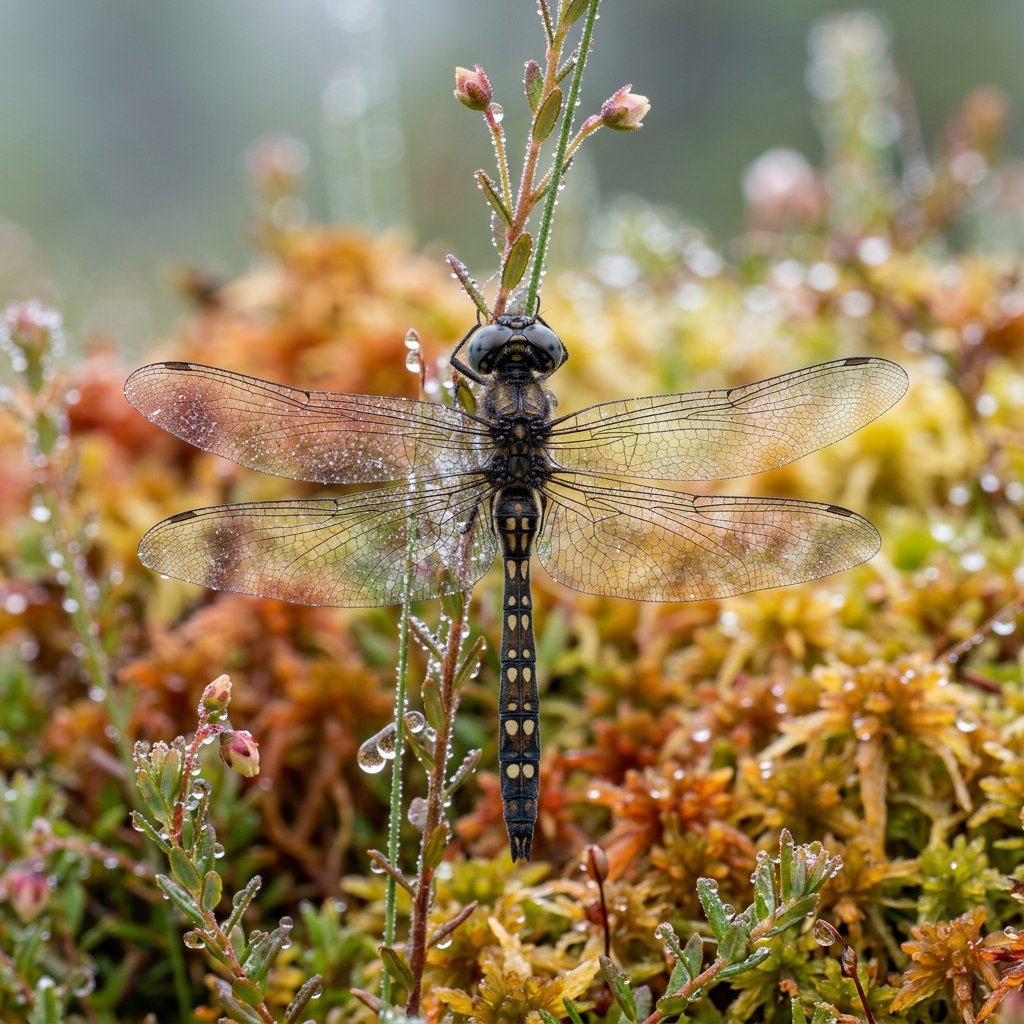
Meet the Ebony Boghaunter, a tiny, mysterious ghost of the northern wetlands. Unlike the giant, neon-colored dragonflies that zip around in the heat of July, this little "friend" is a shy, dark-colored specialist that emerges while the air is still crisp. It is one of the rarest and most elusive dragonflies in North America, often acting as a quiet guardian of acidic peatlands.
🔍 How to Identify
- 🖤 Petite Frame: This is one of the smallest dragonflies you’ll ever see, rarely reaching more than 1.5 inches in length.
- 🌑 Matte Finish: Its body is a deep, charcoal black or dark ebony, lacking the metallic shimmer found in many of its cousins.
- 💨 Subtle Wings: The wings are mostly clear, though they may have tiny, dark amber smudges at the very base where they attach to the body.
- 👀 Ringed Abdomen: If you look closely, you may see thin, pale rings around its dark tail sections, though these fade as the insect ages.
🌲 Habitat & Ecology
- 🛶 Bog Specialist: As the name suggests, it lives almost exclusively in acidic sphagnum bogs and fens. It relies on these specific, mossy environments for its larvae to develop.
- ❄️ Early Bird: This insect is a cold-weather specialist. It is often the very first dragonfly to emerge in the spring, sometimes seen flying while patches of snow are still visible on the ground.
- 🪵 Vertical Rester: Unlike most dragonflies that perch on twigs, the Ebony Boghaunter loves to "bask" flat against tree trunks or sun-warmed rocks to soak up heat.
⚠️ Safety & Toxicity
- ✅ Perfectly Harmless: Despite the slightly spooky "Boghaunter" name, this insect is entirely safe. It does not sting and is not aggressive toward humans.
- 🛡️ Gentle Nature: Even if handled, its mandibles are far too small to break human skin. It poses no threat to curious children or roaming pets.
- 🦟 Pest Control: It is a beneficial predator that spends its short life hunting small gnats and mosquitoes, making it a great neighbor to have.
✨ Fun Fact
The Ebony Boghaunter is so sensitive to its environment that scientists use it as an "indicator species." If a Boghaunter population is thriving, it means the entire wetland ecosystem is exceptionally healthy and undisturbed!
More Details








