Info
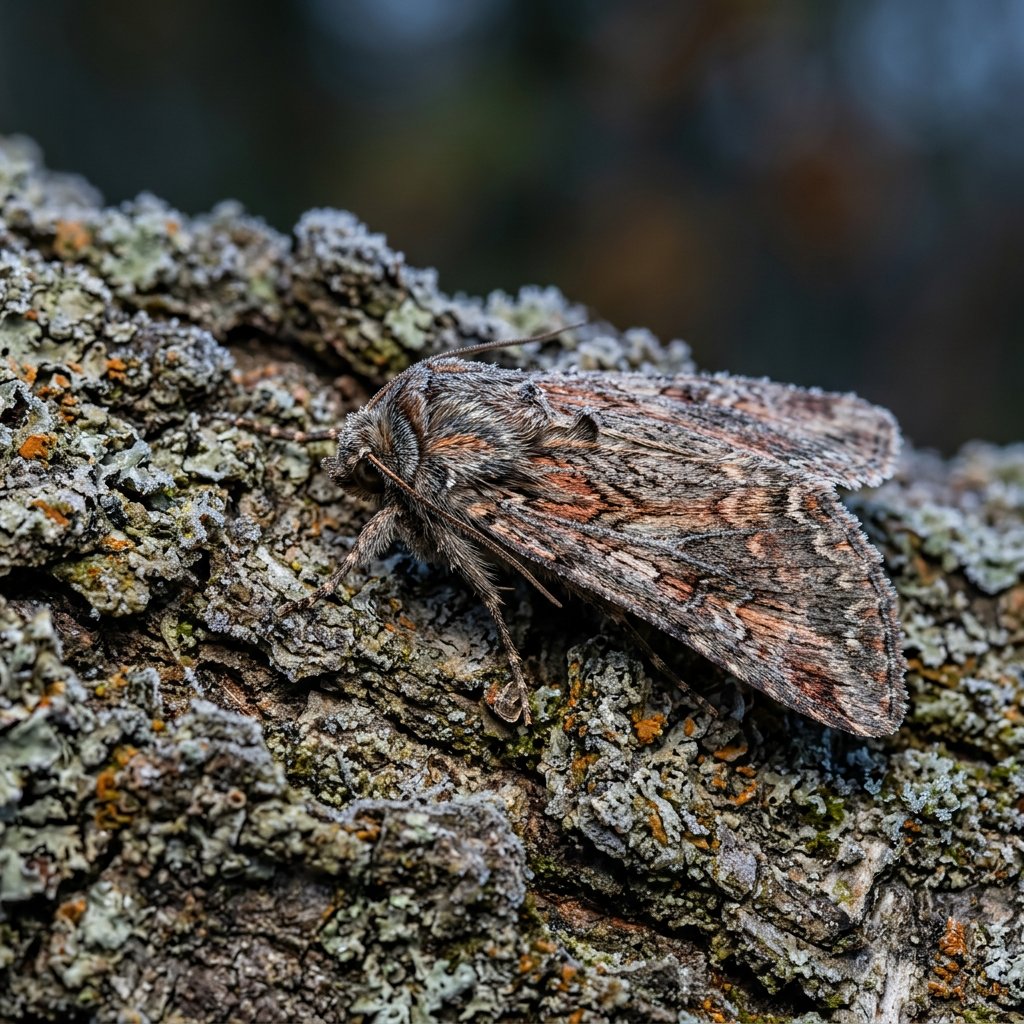
Known as the Sword-grass moth, this insect is a master of wood-mimicry. When it folds its wings, it looks almost exactly like a splintered piece of rotten wood or a fallen twig. This moth is a hardy survivor, braving the cold winter months as an adult while most other insects have long since perished or tucked away as pupae.
🔍 How to Identify
- 🦋 The "Wood" Wings: The forewings are long, narrow, and streaked with buff, brown, and grey, perfectly mimicking the natural grain of weathered bark.
- 🪵 Resting Posture: It holds its wings tightly against its body, creating a cylindrical shape that hides its insectoid features from predators.
- 🐛 The Showy Larva: While the adult is camouflaged, the caterpillar is spectacular—vibrant green with bold yellow stripes and distinct black-rimmed red spots along its sides.
🌲 Habitat & Ecology
- 🌙 Winter Survivor: This moth emerges in late autumn, hibernates through the coldest months in thick vegetation or log piles, and reappears in early spring to mate.
- 🍬 Sweet Tooth: Adults are often found feeding on late-season ivy blossoms or "sugar" (a mix of fermented fruit and molasses used by naturalists to attract them).
- 🌾 Ecological Role: As a generalist, the larvae feed on a huge variety of plants, including docks, thistles, and brambles, serving as a vital food source for birds in late spring.
⚠️ Safety & Toxicity
- ✅ Harmless: The Sword-grass moth is completely safe for humans and pets. It does not bite, sting, or possess any irritating hairs.
- 🍃 Garden Friend: While they do eat garden plants, they rarely occur in high enough numbers to cause significant damage, making them a neutral and fascinating guest in your yard.
✨ Fun Fact
✨ Longevity Champ: Because it hibernates as an adult, the Sword-grass can live for up to nine months—an incredibly long lifespan for a moth, most of which only live for a few weeks!
More Details








