Info
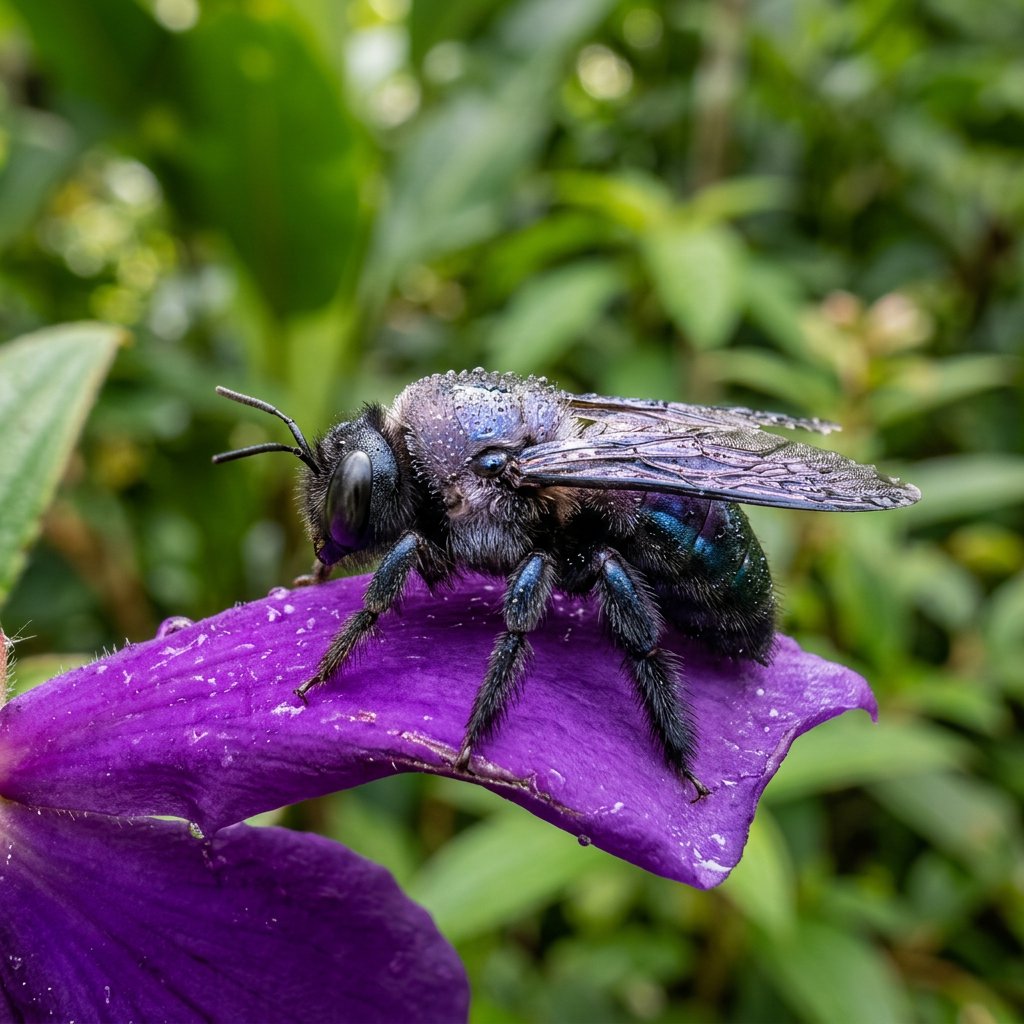
The Tropical Carpenter Bee (Xylocopa latipes) is the heavyweight champion of the bee world. Often mistaken for a giant beetle due to its jet-black, metallic sheen, this "gentle giant" is one of the largest bees on the planet. In many Southeast Asian cultures, its deep, resonant hum is a familiar soundtrack to sunny afternoons, signaling a master pollinator at work.
🔍 How to Identify
- 💎 The Wings: Look for a breathtaking iridescent shimmer. Depending on the light, the wings flash deep violet, royal blue, or even teal against their dark bodies.
- 🖤 The Body: They are massive and robust, often reaching over 3 centimeters in length. Unlike the fuzzy bumblebee, the Carpenter Bee has a shiny, mostly hairless abdomen that looks like polished obsidian.
- 🦵 The "Wide Feet": Their scientific name latipes literally means "broad-footed," referring to the unusually wide, fringed forelegs found on the males of the species.
🌲 Habitat & Ecology
- 🪵 Woodland Engineers: True to their name, these bees use their powerful mandibles to tunnel into dead wood or bamboo to create nesting galleries. They don't eat the wood; they simply "carve" out a safe home for their larvae.
- ⚡ Buzz Pollination: They are specialists in "sonication." They grab onto a flower and vibrate their flight muscles so intensely that the high-frequency hum shakes pollen loose from deep within the flower—a feat many smaller bees cannot achieve.
- 🌸 Floral Favorites: You will often find them hovering around large, sturdy tubular flowers like those of the Passionfruit or Trumpet vines, which can support their significant weight.
⚠️ Safety & Toxicity
- 🛡️ Status: Generally Harmless. While their sheer size and loud buzzing can be intimidating, they are solitary bees and lack the "hive defense" aggression seen in honeybees.
- 🐝 Stinging Capability: Only the females possess a stinger, but they are incredibly docile and will typically only sting if handled roughly or stepped on. The males, while often more "patrol-oriented" and prone to flying near your face, lack a stinger entirely.
- 🪵 Structural Note: While they aren't dangerous to humans, they can occasionally cause minor aesthetic damage to wooden garden structures or eaves by drilling holes.
✨ Fun Fact
The Tropical Carpenter Bee is such a powerful flier that it can forage in weather conditions that ground other insects. They have even been observed flying during light rain showers, using their massive body mass to maintain heat!
More Details








