Info
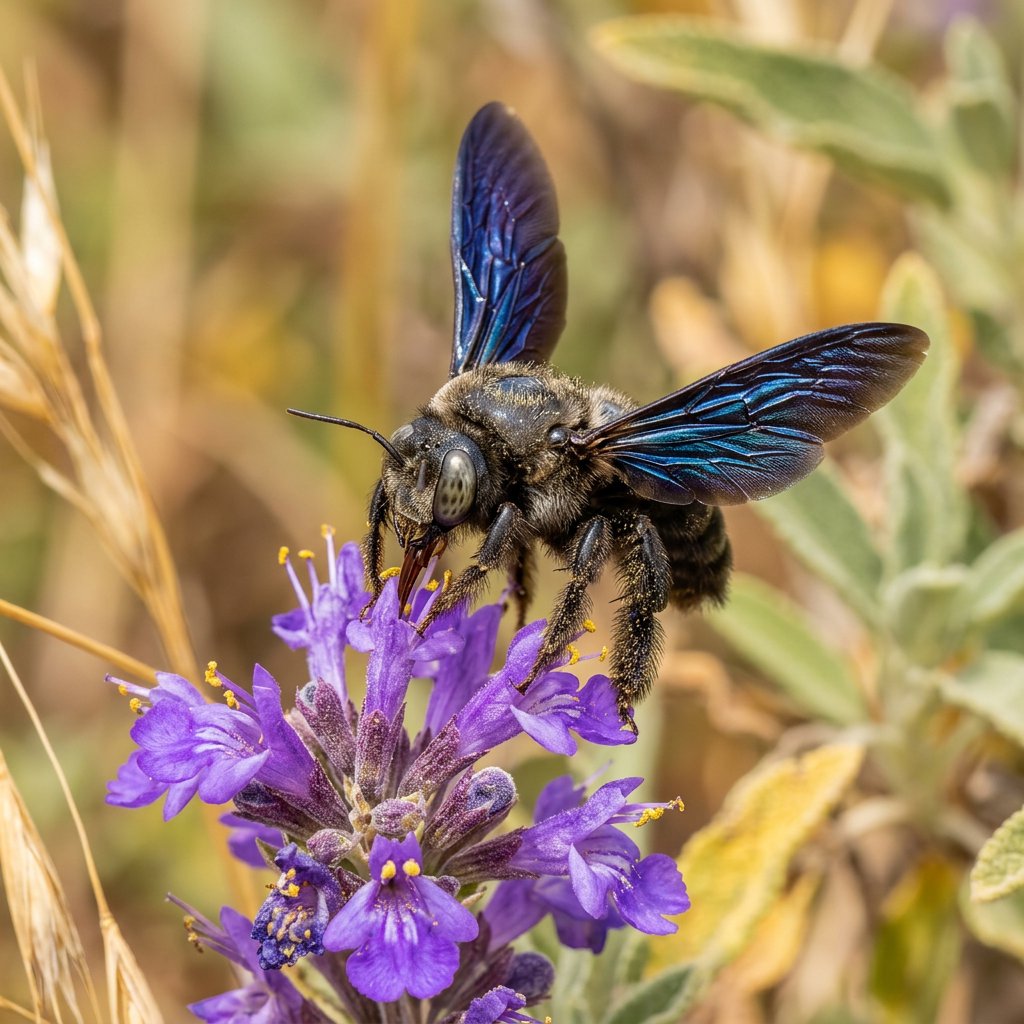
Often mistaken for a giant fly or a menacing wasp, Xylocopa tabaniformis is actually a gentle giant of the bee world. Known commonly as the Mountain Carpenter Bee or Horse-fly Carpenter Bee, these solitary flyers are master woodworkers and crucial pollinators for native wildflowers. While their large size and loud, vibrating hum might seem intimidating, they are far more interested in floral nectar than human interaction.
🔍 How to Identify
- 🐝 Body Shape: Robust and stout, lacking the narrow "wasp waist." They typically have a dark, metallic sheen that can appear blue-black or slightly greenish under the sun.
- 🎭 The Face: Males are famous for their "horse-fly" appearance, featuring unusually large eyes and distinct patches of white or yellow hair on their faces and thoraxes.
- 💨 Wings & Sound: They possess dark-tinted, smoky wings. Their flight is heavy and purposeful, accompanied by a deep, low-frequency buzz that you can often feel if they fly close by.
🌲 Habitat & Ecology
- 🏗️ Woodland Architects: Unlike termites, these bees do not eat wood; they simply bore into it. You’ll often find their perfectly circular entry holes in dead tree limbs, pithy stems, or untreated redwood and cedar, where they excavate "apartments" for their larvae.
- ⚡ Buzz Pollination: They are experts in "sonication." By vibrating their powerful flight muscles at a specific frequency, they can dislodge stubborn pollen from flowers that other bees can't access, making them vital for the reproduction of many native plants.
⚠️ Safety & Toxicity
- 🛡️ Gentle Nature: These bees are non-aggressive. Females possess a stinger but will only use it as a last resort if they are squeezed, stepped on, or handled roughly.
- 🚫 The Stingerless Male: The males are highly territorial and will "dive-bomb" or hover inches from your face to scare you away from their nesting site. However, males lack a stinger entirely—their aggressive display is a complete bluff!
✨ Fun Fact
The Mountain Carpenter Bee is a bit of a "nectar robber." If a flower tube is too long for their tongue to reach the nectar, they will use their powerful mandibles to slit a hole in the base of the flower and "steal" the nectar without providing any pollination services in return!
More Details








