Info
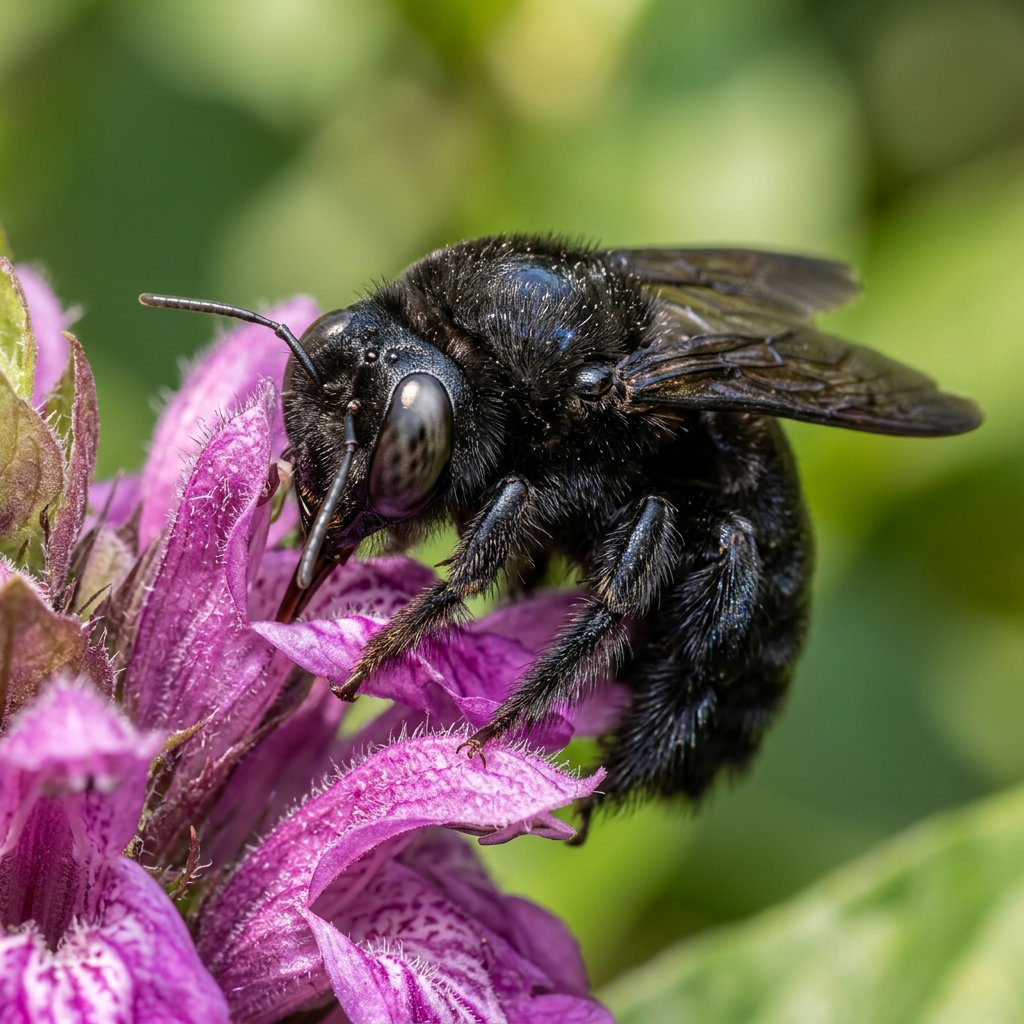
Often called the Giant Carpenter Bee, Xylocopa tenuiscapa is a true heavyweight of the insect world. Found throughout South and Southeast Asia, these solitary giants look like polished black jewels patrolling the garden. While their deep, low-frequency hum can be intimidating, they are the gentle "gentle giants" of the bee community, more interested in nectar than confrontation.
🔍 How to Identify
- 🐝 The Build: These are massive bees, often reaching over 25mm in length. They have a robust, jet-black, and glossy body that looks almost metallic.
- 💎 The Wings: Their wings are a standout feature, shimmering with a striking iridescent sheen that shifts between deep violet, electric blue, and bronze depending on the light.
- 💨 The Flight: Unlike the frantic zig-zag of smaller bees, these giants fly with a heavy, purposeful drone, moving in straight lines between their favorite flowering trees.
🌲 Behavior & Ecology
- 🪵 Master Carpenters: As their name suggests, they use their powerful mandibles to tunnel into dead wood or bamboo. They don't eat the wood; they create perfectly circular "apartments" where they lay their eggs and store "bee bread" (a mix of pollen and nectar).
- 🌸 Buzz Pollination: They are vital pollinators. They practice "sonication" or buzz pollination, where they vibrate their massive flight muscles to shake pollen loose from flowers that other insects can't reach.
- 🏠 Solitary Lifestyle: Unlike honeybees, they don't have a queen or a hive. Every female is a "queen" of her own small wooden tunnel, though several females may sometimes live in the same piece of wood as peaceful neighbors.
⚠️ Safety & Toxicity
- 🛡️ Non-Aggressive: Despite their size, they are very docile. They will usually ignore humans entirely unless you physically grab them or block the entrance to their nest.
- 🧤 The Sting: Only females possess a stinger. While a sting is painful due to the bee's size, it is not medically significant for most people unless they have a specific bee-venom allergy. Males are often seen "guarding" territory, but they lack a stinger and are completely harmless.
✨ Fun Fact
The Xylocopa tenuiscapa is so strong that it can perform "nectar robbing." If a flower is too deep or narrow for the bee to crawl inside, it will simply use its sharp mouthparts to cut a hole in the base of the flower and "steal" the nectar from the outside!
More Details








