Info
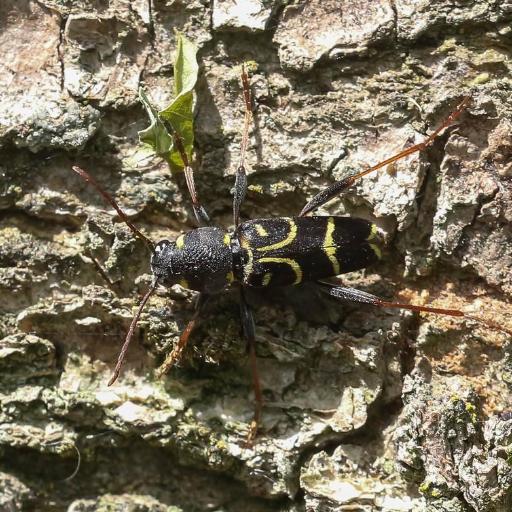
The Xylotrechus antilope, often called the Antelope Longhorn Beetle, is a master of visual deception. While it might look like a stinging wasp at first glance, it is actually a harmless beetle that has evolved "Batesian mimicry" to trick predators into staying away. This sun-loving insect is a common sight in European oak forests during the height of summer, often seen scuttling nervously across fallen logs.
🔍 How to Identify
- 🐝 The Disguise: Features a striking black body adorned with bright yellow transverse stripes, mimicking the warning colors of a common wasp.
- 🪲 Body Shape: It has a cylindrical, elongated body typical of longhorn beetles, but its antennae are relatively short compared to its cousins in the Cerambycidae family.
- 🦵 The "Antelope" Legs: It possesses long, slender legs that allow it to move with a rapid, jerky, and high-stepping gait, which is likely where its "Antelope" name originates.
🌳 Habitat & Ecology
- 🪵 Oak Specialist: This beetle is highly dependent on deciduous trees, specifically Oak (Quercus). You will most likely find them on sun-exposed dead wood, fallen branches, or stacked firewood.
- 🌞 Sun Seeker: Unlike many beetles that hide in the shadows, Xylotrechus antilope is most active during hot, sunny days. It spends its time searching for mates or suitable places to lay eggs in the bark of stressed or recently dead trees.
- 🍂 Nature's Recycler: The larvae live inside the wood for one to two years, feeding on the sapwood. They play a vital role in the forest ecosystem by helping break down old timber into nutrient-rich soil.
⚠️ Safety & Toxicity
- ✅ Harmless Friend: Despite its "scary" wasp-like appearance, this beetle is completely harmless. It does not have a stinger and lacks the powerful venom of the insects it imitates.
- 🛡️ Defense Mechanism: If handled, it might try to give a tiny pinch with its mandibles or make a squeaking sound (stridulation) to startle you, but it is not toxic to humans, dogs, or cats.
✨ Fun Fact
The Antelope Longhorn Beetle doesn't just look like a wasp; it acts like one too! When it feels threatened, it will vibrate its wings and move in zigzag patterns to perfectly replicate the nervous, aggressive energy of a yellowjacket to ensure birds think twice before snacking on it.
More Details








