Info
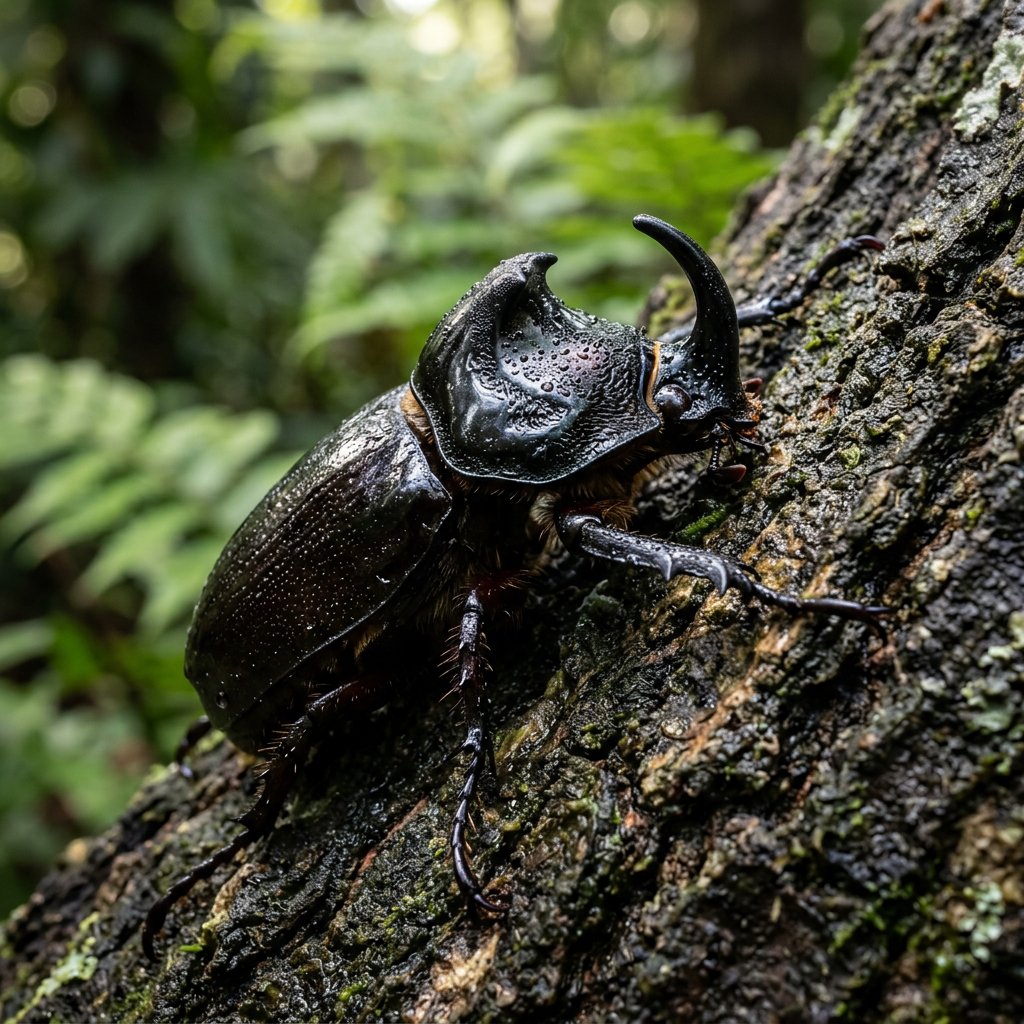
Often called the "Elephant Beetle" or "Rhino Beetle," Xylotrupes are the heavyweights of the insect world. Looking like miniature armored tanks, these charismatic giants are famous for their dramatic horns and incredible displays of strength. Despite their intimidating, gladiator-like appearance, they are gentle giants more interested in sipping sweet sap than starting a fight with humans.
🔍 How to Identify
- 🪖 The Horns: Males sport a magnificent pair of bifurcated (forked) horns—one curving up from the head and another reaching down from the thorax. Females lack these horns and have a simpler, pitted appearance.
- 🛡️ Glossy Armor: Their bodies are incredibly sturdy, featuring a smooth, high-gloss exoskeleton that ranges from deep mahogany brown to a "piano black" finish.
- 🧗 Spiny Legs: They possess thick, powerful legs equipped with sharp tarsal claws, which allow them to cling to tree bark with a grip that is notoriously difficult to break.
🌲 Habitat & Ecology
- 🍎 A Sweet Tooth: Adult Xylotrupes are nocturnal foragers that seek out fermenting fruit or oozing tree sap. In residential areas, you might find them attracted to porch lights or hiding near compost heaps where overripe fruit is present.
- 🏗️ Nature’s Recyclers: The life of a Rhino Beetle begins underground. As giant, C-shaped white grubs, they spend months to years eating decaying wood and leaf mulch, helping to break down organic matter into nutrient-rich soil.
- 🤺 The Wrestling Ring: Males are highly territorial and use their horns like levers to flip rival males off tree branches during the mating season.
⚠️ Safety & Toxicity
- 🛡️ Non-Aggressive: These insects have no sting and are not venomous. They are generally docile and will only attempt to fly away or hiss when disturbed.
- 🤏 The "Pinch" Factor: While they don't bite in the traditional sense, their leg spines are very sharp and their grip is intense. If one crawls on your skin, do not pull it off forcefully, as the claws may scratch you; instead, gently nudge it from behind.
- 🐾 Pet Safety: They are non-toxic to cats and dogs, though the hard exoskeleton could be a choking hazard or cause minor digestive upset if swallowed.
✨ Fun Fact
When these beetles feel threatened, they don't just run—they protest! By rapidly rubbing their abdomen against the underside of their wing covers (a process called stridulation), they produce a rhythmic "hissing" or "zipping" sound to startle potential predators.
More Details








