Info
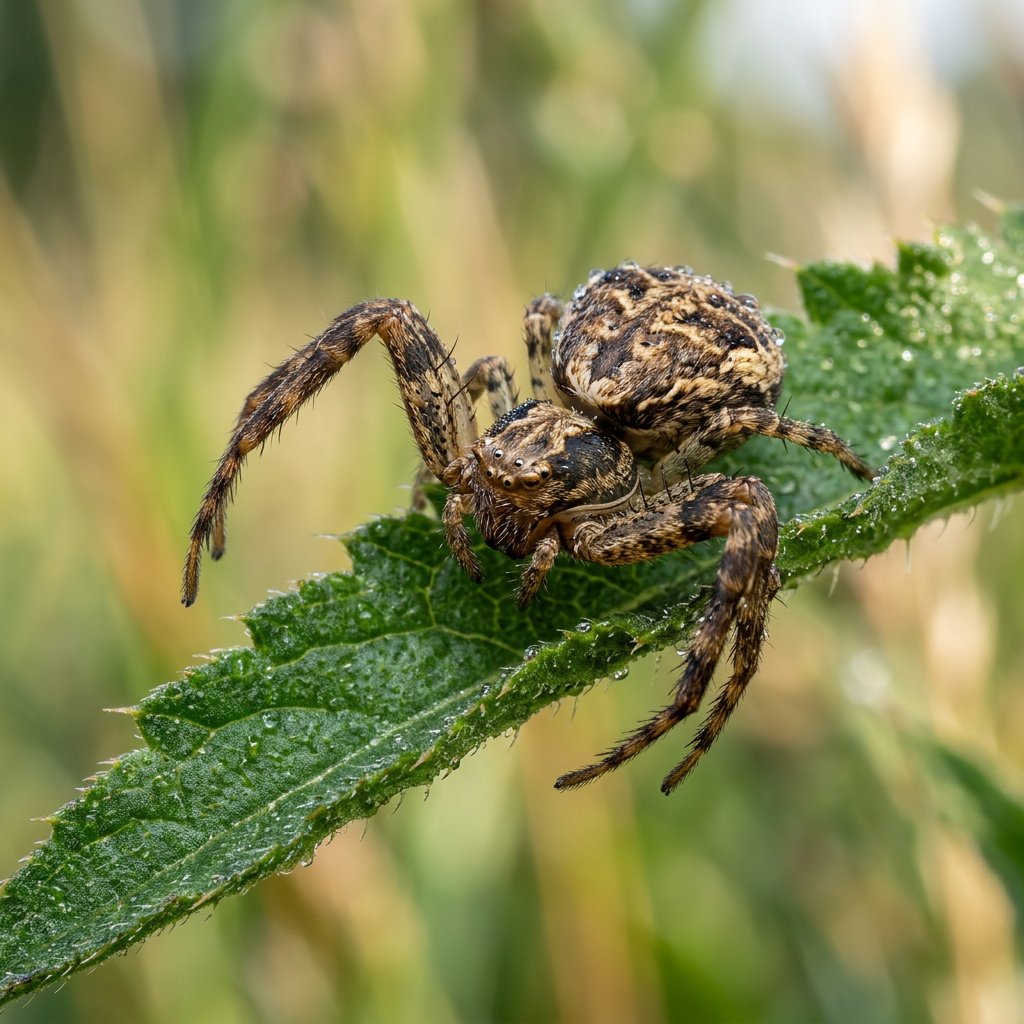
Known as the Common Crab Spider, Xysticus cristatus is the garden’s version of a stealthy, miniature ninja. Unlike your typical spider, it doesn't spin intricate webs to catch dinner; instead, it relies on its remarkable resemblance to a crustacean and its lightning-fast reflexes. You’ll often find them lurking in low vegetation, disguised perfectly against the soil or dried leaves, waiting for the perfect moment to strike.
🔍 How to Identify
- 🦀 The Stance: Its first two pairs of legs are significantly longer and stouter than the back ones, usually held out to the sides in a wide, crab-like pose.
- 📐 The Crest: Look for a distinct, dark-edged triangular pattern (the "crest") on its head area (cephalothorax), which gives the species its name cristatus.
- 🍂 Camouflage: Its body is a mottled mosaic of browns, tans, and creams, designed to make it nearly invisible against leaf litter, mulch, or bark.
🌲 Habitat & Ecology
- 🌾 Ambush Master: This is a "sit-and-wait" predator. It spends its days motionless on low-growing flowers or the ground, waiting for a fly, bee, or beetle to wander within reach of its powerful front legs.
- 🕸️ Web-Free Hunting: While it can produce silk, it doesn't use it for hunting. It uses its silk mainly for creating egg sacs or as a "dragline" safety rope to catch itself if it falls.
- 🛡️ Garden Ally: These spiders are excellent "friends" for hobbyists. They act as a natural pest control, keeping populations of smaller insects in check without the need for chemicals.
⚠️ Safety & Toxicity
- 🟢 Safe Status: They are completely harmless to humans. These spiders are shy and will almost always choose to scuttle away sideways rather than engage with a "giant" human.
- 🐾 Pets & Kids: They are non-aggressive and possess no venom of medical significance. If handled roughly, they might give a tiny pinch, but it is less painful than a mosquito bite and non-toxic to cats and dogs.
✨ Fun Fact
✨ The Sideways Scuttle: True to their name, Common Crab Spiders can walk sideways and backward just as easily as they walk forward. This agility allows them to quickly reposition themselves behind a leaf or into a crevice when they sense a predator nearby!
More Details








