Info
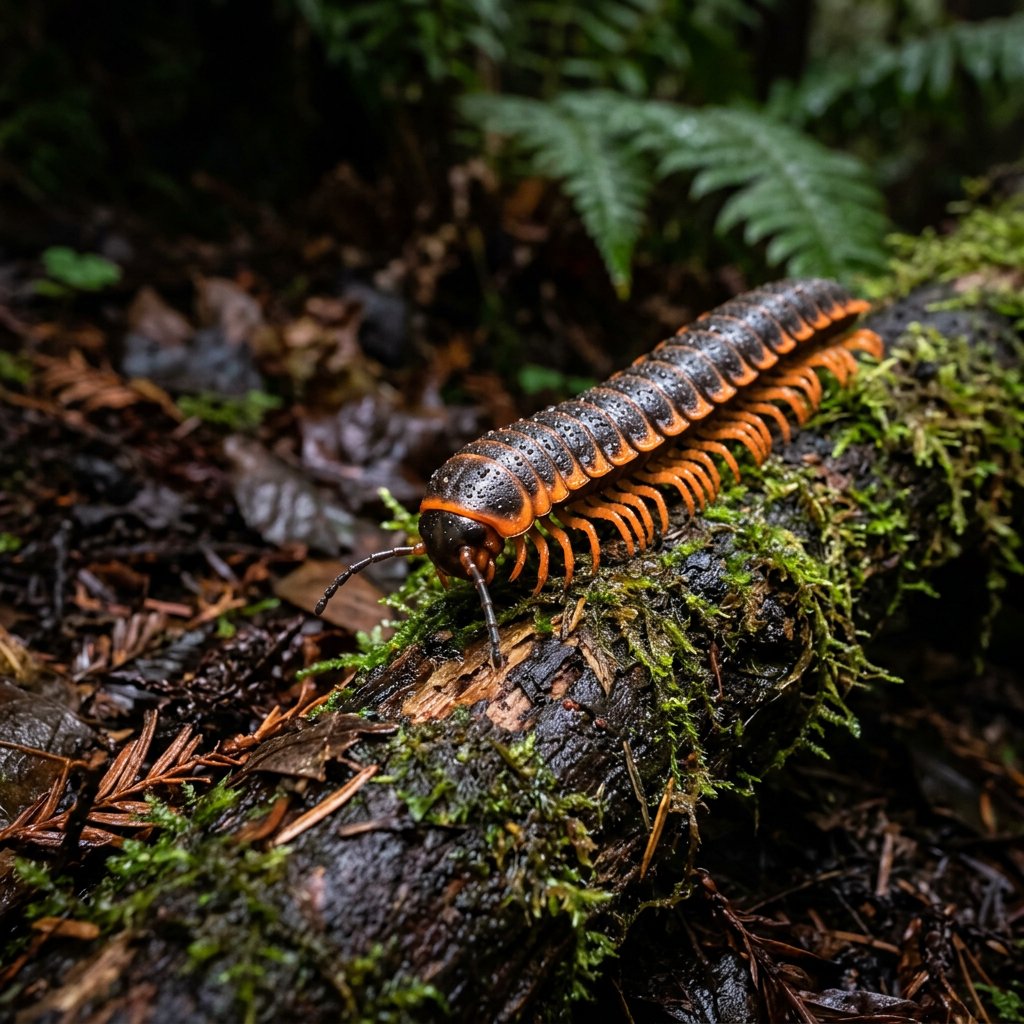
Known as the Yellow-spotted Millipede or the California Flat-backed Millipede, this multi-legged wanderer is one of nature’s most efficient recyclers. Often found strolling through the damp redwood forests of the American West, it looks like a piece of living jewelry moving across the dark soil. While its many legs might seem intimidating, it is a slow-moving, peaceful neighbor that plays a vital role in turning dead leaves into rich earth.
🔍 How to Identify
- 🎨 High-Contrast Armor: It features a series of flat, matte-black body segments with striking yellow or almond-colored spots on the outer edges (paranota).
- 🚜 Flat-Backed Shape: Unlike the "cylindrical" millipedes that look like tubes, Xystocheir dissecta is noticeably flat, allowing it to squeeze into tight crevices under bark and rocks.
- 🦵 Double Legs: As a diplopod, it has two pairs of legs for every body segment, which move in a mesmerizing, wave-like motion as it walks.
🌲 Habitat & Ecology
- 🍂 Forest Floor Cleaner: These millipedes are detritivores. They spend their entire lives eating decaying organic matter, effectively acting as the forest’s "compost crew."
- 💧 Dampness Dependent: Because they breathe through tiny pores that can’t close, they are highly sensitive to drying out. You will almost always find them in shady, moist environments or tucked deep under rotting logs during the heat of the day.
⚠️ Safety & Toxicity
- 🧪 Chemical Defense: When it feels threatened or is handled roughly, this millipede can secrete a defensive liquid containing small amounts of hydrogen cyanide.
- 👃 The Almond Scent: If you pick one up, you might notice a distinct smell of bitter almonds or marzipan—this is actually the smell of its chemical defense!
- 🧤 Handling Advice: While not "stinging" or "biting," the secretions can irritate human skin and eyes. It is best to observe them without touching, and if you do handle one, wash your hands immediately. Keep them away from curious pets who might try to take a "test bite."
✨ Fun Fact
Xystocheir dissecta is famous for its "chemical warfare" capabilities, but it isn't the only one! Some species of monkeys in the wild have been observed rubbing similar millipedes on their fur to use the millipede's secretions as a natural insect repellent against mosquitoes and ticks.
More Details








