Info
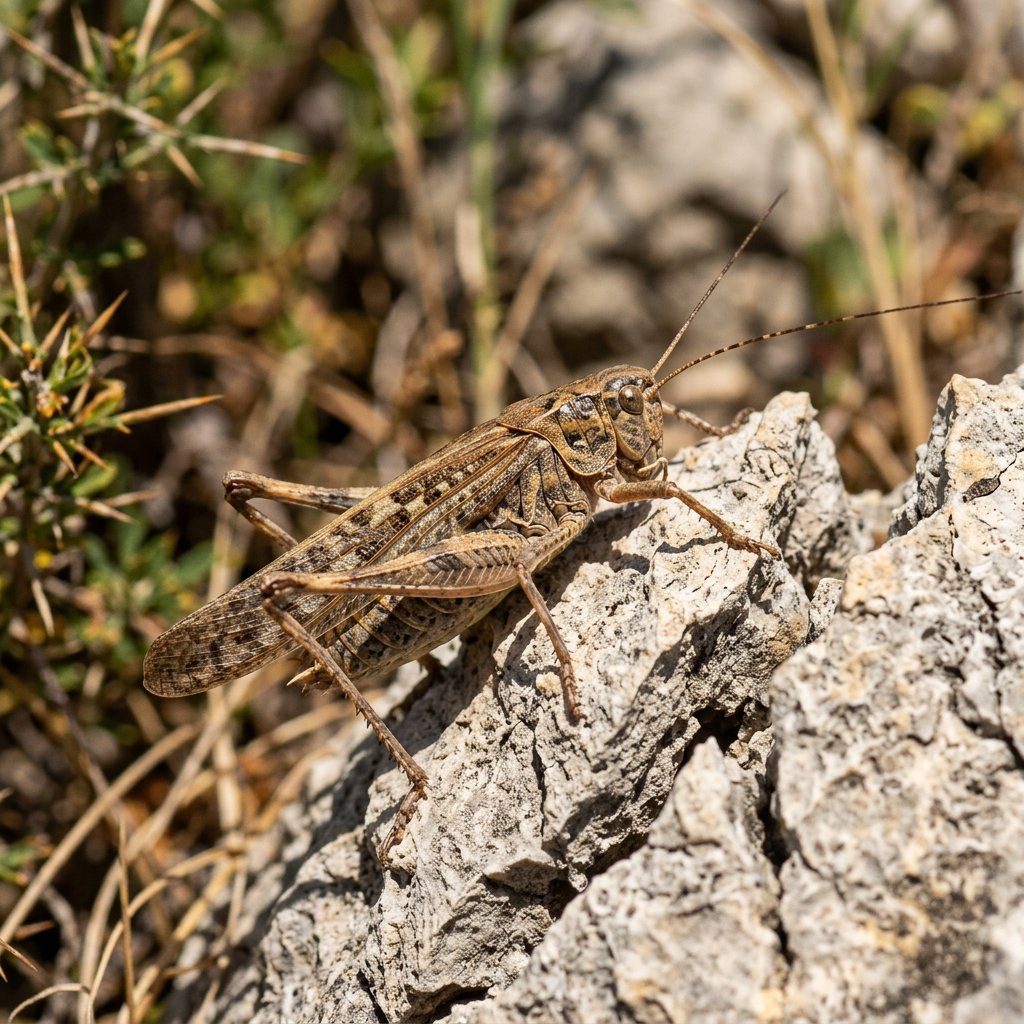
Meet the shy "shadow-walker" of the Mediterranean scrubland, the Raymond’s Bush-cricket. Often overlooked due to its incredible camouflage, this tiny insect is a master of blending into dried leaves and woody stems. While it might look like a miniature prehistoric creature, it is a peaceful resident of warm gardens and forest edges across Southern Europe.
🔍 How to Identify
- 🟤 Cryptic Coloring: Its body is typically a mix of earthy browns, greys, and ochre, often marked with a dark lateral stripe that runs from the eye along the side of the body.
- 🪽 Vestigial Wings: Unlike many grasshoppers, this species has very short, scale-like wings. They are flightless, relying on their powerful back legs to hop out of danger.
- 🗡️ The "Saber" Tail: Females possess a distinct, upward-curving ovipositor. While it looks like a formidable stinger, it is actually a specialized tool used for laying eggs in soil or plant tissue.
🌲 Habitat & Ecology
- 🍂 Leaf Litter Lover: You will most likely find them in low-lying vegetation, brambles, or hiding among fallen leaves. They prefer warm, dry environments where they can bask in dappled sunlight.
- 🍽️ The Opportunistic Diner: They are generalist omnivores. They spend their nights scavenging for organic debris, nibbling on tender leaves, or occasionally hunting even smaller soft-bodied insects like aphids.
- 🎶 Silent Serenades: While many crickets are famous for their loud chirping, the Raymond’s Bush-cricket produces a very faint, high-frequency song that is often barely audible to human ears.
⚠️ Safety & Toxicity
- ✅ Harmless Friend: This insect is completely non-toxic and poses no threat to humans. They do not have a "sting," and their mouthparts are too small to deliver a painful bite to a person.
- 🛡️ Garden Neutral: They are rarely present in high enough numbers to cause damage to garden plants. In fact, by snacking on smaller pests, they can be considered a minor "cleanup crew" for your backyard ecosystem.
✨ Fun Fact
Because they cannot fly, Raymond’s Bush-crickets have very limited mobility compared to their cousins. This has led to "isolated evolution," where different populations in Mediterranean valleys can develop slightly different color patterns and behaviors over thousands of years!
More Details








