Info
Often referred to as the Orchard Ermine, this moth is a master weaver that can turn an entire hedgerow into a ghostly, silk-covered landscape. While the sight of a tree draped in white webbing might look like a scene from a spooky movie, it is actually the communal nursery of hundreds of tiny, spotted caterpillars working together for protection.
🔍 How to Identify
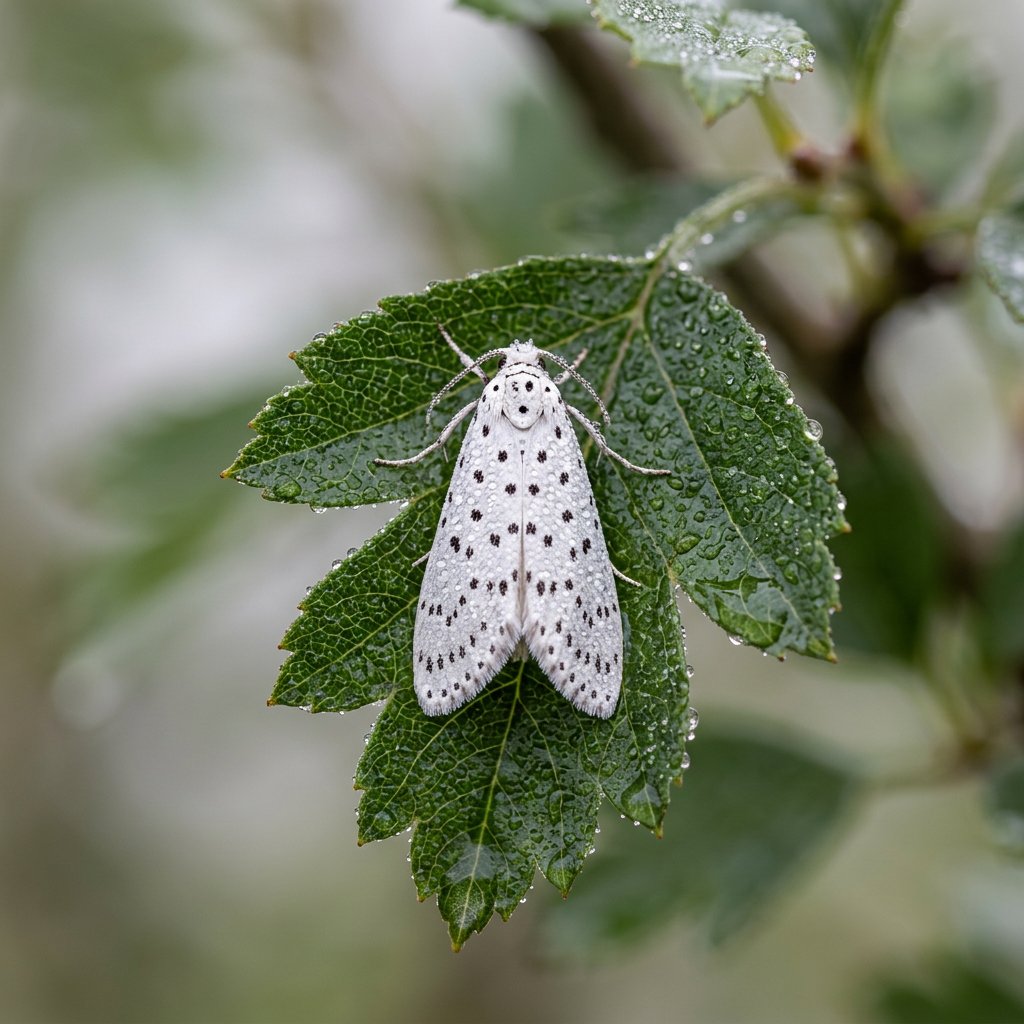
- ⚪ The Wings: The adult moth features striking white or silvery-grey forewings adorned with rows of tiny black dots, closely resembling the luxurious ermine fur once worn by royalty.
- 🐛 The Larvae: The caterpillars are cream-colored or pale yellow with distinct black spots running down their sides, usually found huddled together inside silken nests.
- 🕸️ The Webbing: Unlike spiders, these moths create dense, translucent silk "tents" that envelop branches and leaves, protecting the colony from birds and bad weather.
🌳 Habitat & Ecology
- 🍎 Host Plants: You will most commonly find them on Hawthorn, Blackthorn, and various fruit trees like Cherry or Plum. They are highly specialized and rarely stray from these specific food sources.
- 🍃 Defoliation: In early summer, the caterpillars can eat every leaf within their web. While this looks devastating, most healthy trees are resilient and will grow a second flush of leaves once the moths have flown away.
- 🛡️ Safety in Numbers: The communal web acts as a fortress. By living together, the larvae create a microclimate that keeps them warm and hides them from predatory wasps and birds.
⚠️ Safety & Toxicity
- ✅ Harmless: The Orchard Ermine is completely safe for humans and pets. Unlike the "Oak Processionary Moth," these caterpillars do not have stinging hairs and do not cause skin irritations.
- 🏘️ Garden Impact: While they are "pests" to fruit growers because they can reduce a single season's fruit yield, they are a vital part of the ecosystem and provide a feast for many bird species.
✨ Fun Fact
The different species of Ermine moths look so similar that even experts struggle to tell them apart by sight alone; they are often identified simply by the specific type of tree they chose to build their web on!
More Details








