Info
Often called the Sooty Orange Tip, the Zegris eupheme is a delicate desert traveler that looks as though its wings were lightly dusted with charcoal. This butterfly is a prized sight for nature enthusiasts in dry, Mediterranean, and steppe regions, often appearing as a fleeting white blur against the arid landscape. While it shares a name with the common Orange Tip, it carries a much more rugged, "dusty" aesthetic suited for its harsh environment.
🔍 How to Identify
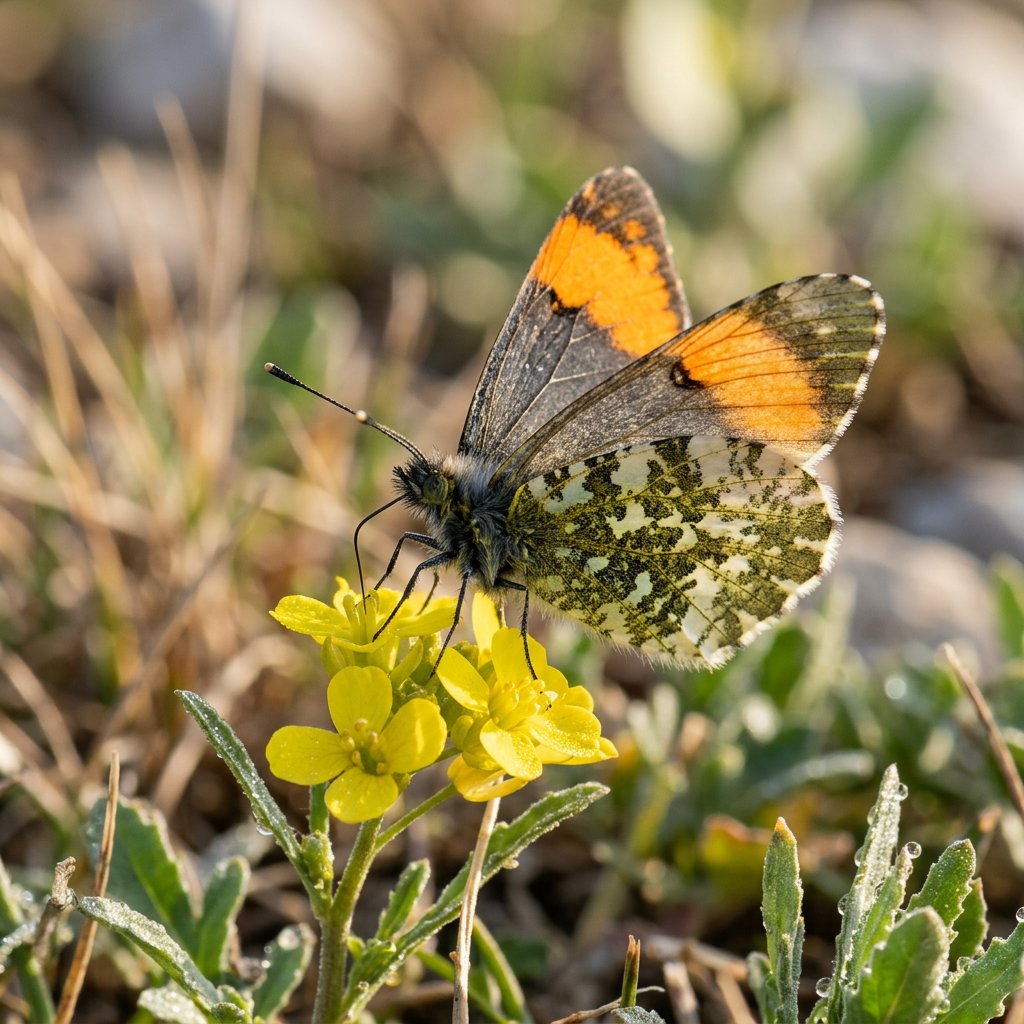
- 🦋 The Wings: The upper side of the wings is a creamy white, but the forewings feature a distinctive "sooty" or grayish-black patch near the tips.
- 🟠 The Orange Patch: Nestled within that dark tip is a small, subtle orange or yellowish-orange crescent, which gives the species its name.
- 🍃 Underwing Camouflage: The underside of the hindwings is beautifully marbled with a mossy, greenish-yellow pattern. This helps the butterfly disappear completely when it rests on dry vegetation.
🌲 Habitat & Ecology
- 🏜️ Arid Specialists: You won't find these in lush rainforests; they prefer dry, sunny hillsides, flower-rich steppes, and wasteland areas where their favorite plants grow.
- 🥗 Specific Diet: The caterpillars are quite picky, feeding almost exclusively on wild mustards and cruciferous plants like Isatis tinctoria (Woad). They are essential pollinators for these hardy desert wildflowers.
- ☀️ Sun Seekers: They are active primarily during the hottest parts of the day, flying low and fast over the ground to find nectar or mates.
⚠️ Safety & Toxicity
- ✅ Harmless: The Sooty Orange Tip is a "friend" of the garden. It does not bite, sting, or carry any venom.
- 🐶 Safe for Pets: There are no known toxic secretions associated with this butterfly, making it perfectly safe for curious dogs or cats that might chase it.
- 🛡️ Fragile Nature: Like most butterflies, their wings are covered in microscopic scales. Touching them can damage their ability to fly, so it’s best to admire them with a camera rather than your hands.
✨ Fun Fact
The Zegris eupheme is a master of timing; it spends the vast majority of its life as a pupa (chrysalis). It can remain in this dormant state for an entire year—or even longer—waiting for the perfect spring rains to trigger its emergence for just a few short weeks of flight.
More Details








