Info
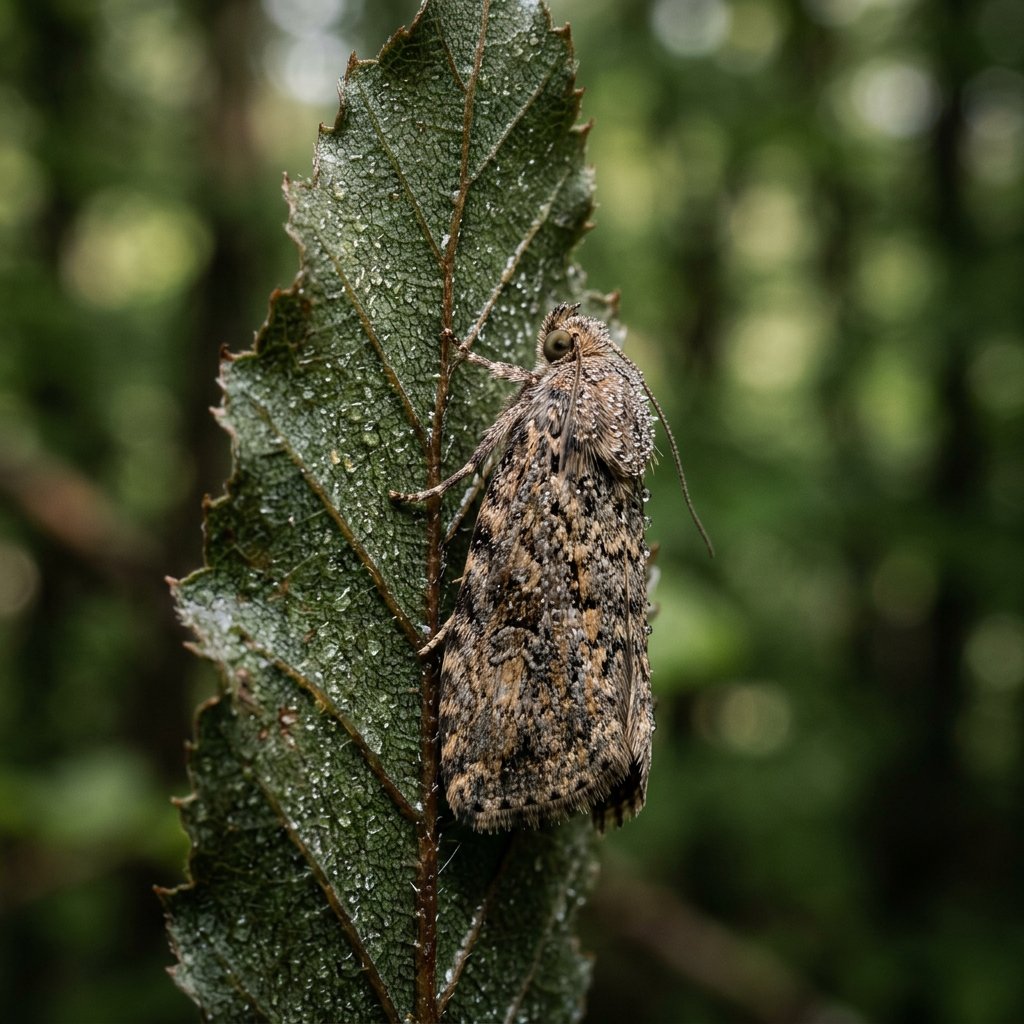
The Marbled Bell (Zeiraphera isertana) is a tiny, mottled master of disguise frequently found fluttering through European and Asian woodlands. Often called the "Cock’s-head Bell," this micro-moth is a specialist of the oak canopy, spending most of its life high above the ground. While it may look like a simple scrap of bark at first glance, its intricate patterns are a marvel of natural camouflage.
🔍 How to Identify
- 🦋 Marbled Forewings: The wings feature a complex, marbled mix of grey, white, and brownish-black. The pattern is highly variable, meaning no two moths look exactly the same.
- 🔔 Bell-Shaped Silhouette: When resting, the moth holds its wings in a flat, triangular shape that resembles a miniature bell or the head of a traditional shuttlecock.
- 📏 Diminutive Size: It is a true "micro-moth," with a wingspan usually measuring between 13 and 18 millimeters—roughly the size of a fingernail.
🌲 Habitat & Ecology
- 🌳 The Oak Connection: This species is almost exclusively tied to Oak trees (Quercus). It is commonly found in deciduous forests, parks, and large gardens where mature oaks are present.
- 🧵 Shelter Builders: As caterpillars (larvae), they are known as "leaf-rollers." They spin delicate silk threads to pull the edges of an oak leaf together, creating a protective "sleeping bag" where they can eat and grow in safety.
- 🌓 Crepuscular Activity: While they occasionally fly during the day if disturbed, they are most active during the "golden hour" of dusk, when they emerge to mate and lay eggs.
⚠️ Safety & Toxicity
- 🛡️ Completely Harmless: The Marbled Bell is a "friend" of the garden. It does not sting, bite, or carry any known diseases.
- 🌿 Plant Health: While the larvae eat oak leaves, they rarely occur in high enough numbers to cause significant damage to the tree's health. They are a natural part of the ecosystem and a favorite snack for garden birds.
✨ Fun Fact
- 💩 A "Dirty" Trick: To avoid being eaten while it sleeps during the day, the Marbled Bell often rests on the upper side of a leaf. Its mottled white and grey pattern is designed to mimic a bird dropping—a clever strategy that makes it look unappealing to predators!
More Details








