Info
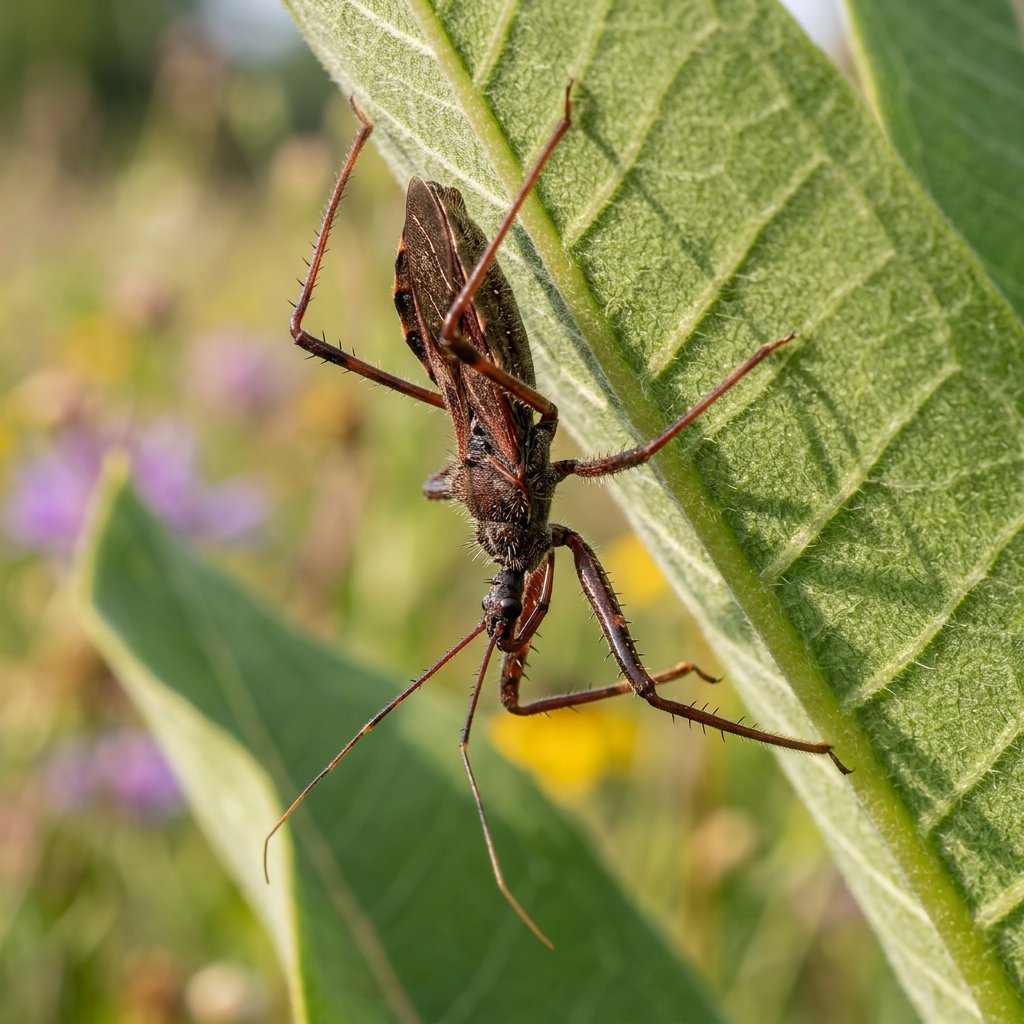
Meet the Milkweed Assassin Bug, the garden's stealthy orange-and-black protector. Despite the intimidating name, these insects are fantastic allies for gardeners, acting as highly efficient natural pest control agents. While their "assassin" title sounds grim, they are far more interested in eating the beetles and caterpillars damaging your plants than they are in bothering humans.
🔍 How to Identify
- 🎨 Vibrant Coloring: Primarily bright orange or reddish-orange with contrasting black markings on the wings, legs, and antennae.
- 🦵 Lanky Limbs: Exceptionally long, slender legs that give them a delicate, almost spider-like silhouette when moving through foliage.
- 👃 The "Beak": A distinct, curved feeding tube (proboscis) tucked under the head, which they flip forward when it's time to hunt.
🌲 Habitat & Ecology
- ⚔️ Ambush Predator: Unlike insects that hunt by speed, these bugs are masters of patience. They often sit perfectly still on flowers or leaves, waiting for a pest to wander within reach.
- 🛡️ Garden Bodyguard: They are generalist predators, meaning they eat almost anything they can catch, including aphids, leafhoppers, and small caterpillars that plague vegetable patches.
- 🗺️ Sun Seekers: You will most often find them in sunny fields, meadows, and backyard gardens across North and South America, frequently perched on milkweed or flowering herbs.
⚠️ Safety & Toxicity
- 🚫 Hands-Off Policy: While they are "friends" to the garden, they are not pets. If handled or pinched, they can deliver a very painful bite with their proboscis.
- 🐝 The Sting Factor: The bite is often compared to a bee or wasp sting; it causes immediate sharp pain and localized swelling but is generally not medically significant for humans.
- 🐕 Pet Safety: Keep curious cats or dogs away. While not venomous in a traditional sense, the defensive bite is enough to cause significant distress to a small pet.
✨ Fun Fact
The Milkweed Assassin Bug uses a "sticky trap" strategy! They secrete a resinous, glue-like substance (sometimes harvested from plants) onto their front legs. This makes their limbs act like flypaper, ensuring that once they grab a prey item, there is no escape.
More Details








