Info
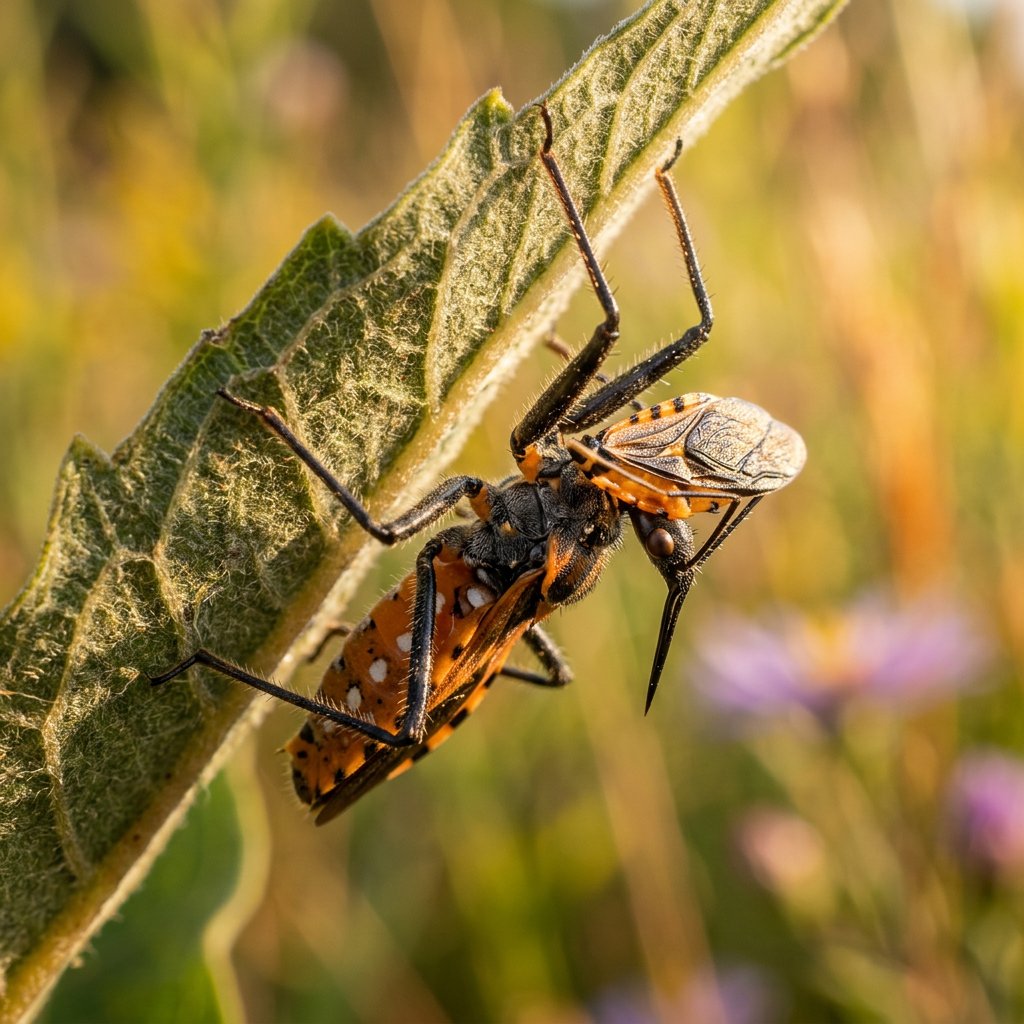
Often called the Four-spined Assassin Bug, this slender insect is a master of the long game. While its sharp features and "assassin" title might sound intimidating, it is actually a top-tier garden ally and a natural form of pest control. It spends its days camouflaged among leaves and stems, acting as a silent guardian for your plants.
🔍 How to Identify
- 📍 The Spines: Its most defining feature is the four sharp, prominent spines located on its "shoulders" (the pronotum), which give the species its name.
- 🛡️ Body Shape: It has a very elongated, graceful body, typically ranging from pale brown to a dusty yellow-green, allowing it to blend perfectly with dried grass or twigs.
- 🗡️ The Rostrum: Look for a narrow head equipped with a short, curved, needle-like beak. This is its primary tool for both feeding and self-defense.
🌲 Habitat & Ecology
- 🦗 Predatory Diet: This bug is a generalist predator with a big appetite. It hunts a wide variety of common garden pests, including caterpillars, beetles, aphids, and leafhoppers.
- 🌿 Ambush Tactics: You’ll typically find them in sunny fields, gardens, or shrubbery. They are patient hunters, often standing perfectly still on a flower or leaf, waiting for an unsuspecting insect to wander within reach of their long front legs.
⚠️ Safety & Toxicity
- 🥊 Status: Beneficial but defensive. It does not hunt humans or pets and will generally try to move away if spotted.
- 🩹 Details: If it feels threatened—such as being squeezed or sat upon—it can deliver a very painful bite. The sensation is often described as similar to a sharp bee or wasp sting and may cause localized redness and swelling. While not medically significant for most people, it’s best to admire this "assassin" from a distance and avoid handling it with bare hands.
✨ Fun Fact
Many species in the Zelus genus are famous for "sticky-trap" hunting. They produce a natural, resinous glue from glands on their legs, effectively turning their own limbs into living flypaper to ensure their prey can't wiggle away!
More Details








