Info
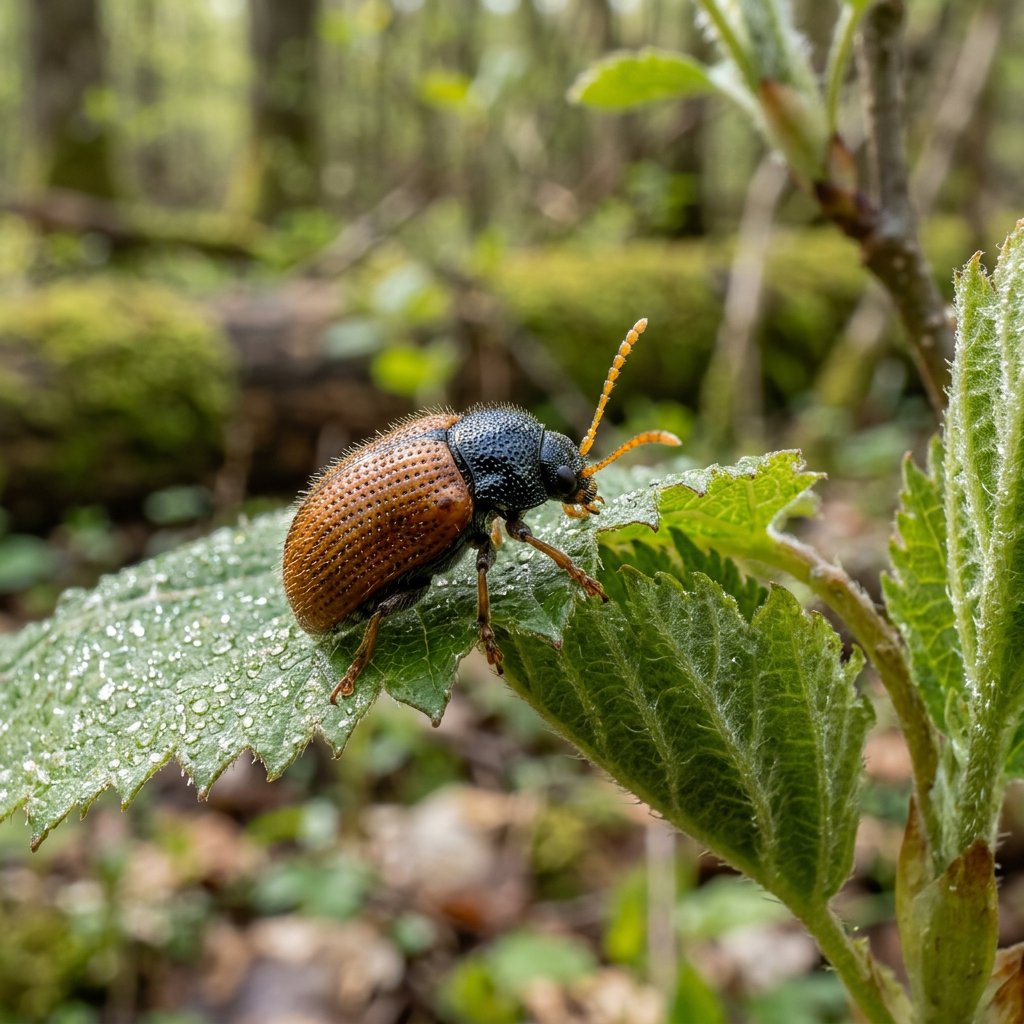
Meet the Zeugophora, more commonly known as the Necked Leaf Beetle. These tiny, jewel-toned acrobats are often found dancing across the leaves of poplars and willows during the warmer months. While they might look like common beetles at a glance, their unique "waist" and specialized lifestyle make them a fascinating find for any nature observer or backyard explorer.
🔍 How to Identify
- 🧣 The "Neck": Their most defining feature is a distinct constriction right behind the head. Unlike many beetles where the head appears tucked into the shoulders, Zeugophora looks as though it has a tiny, structured neck.
- 🎨 Vibrant Contrast: They often sport striking color patterns, frequently featuring bright orange or reddish bodies paired with deep black or metallic blue wing covers (elytra).
- 📏 Micro-Sized: These are very small beetles, usually measuring only 3 to 5 millimeters. You’ll need a keen eye or a magnifying glass to appreciate their intricate details.
🌲 Habitat & Ecology
- 🍃 Internal Artists: The larvae are "leaf miners." They live entirely inside the thickness of a leaf, eating the soft tissue between the upper and lower surfaces, which creates visible brown blotches or "mines" on the foliage.
- 🌳 Specific Hosts: They are quite picky eaters! You will almost exclusively find them on the leaves of Poplar, Aspen, and Willow trees, where the adults skeletonize the surface and the larvae feed from within.
⚠️ Safety & Toxicity
- 🤝 Harmless Guest: These beetles are completely safe for humans and pets. They do not possess a stinger, they do not bite, and they do not produce any toxic secretions that irritate the skin.
- 🪴 Plant Impact: While they can make leaves look a bit "tattered" due to their feeding habits, they are rarely considered a serious pest. Healthy trees can easily tolerate their presence without any long-term damage.
✨ Fun Fact
- 🧬 Ancient Lineage: Zeugophora belongs to a primitive family of beetles called Megalopodidae. Because of their ancient physical traits, scientists often refer to them as "living fossils," providing a glimpse into what beetles looked like millions of years ago!
More Details








