Info
Known as the "Giant Termite" of the West Coast, the Pacific Dampwood Termite is a master of the damp, dark undergrowth. While the word "termite" often sends homeowners into a panic, these insects are the primary recyclers of the forest, turning massive fallen logs into nutrient-rich soil. They are unique because, unlike their subterranean cousins, they live entirely inside the wood they eat.
🔍 How to Identify
- 📏 Impressive Size: These are among the largest termites in North America, with some individuals reaching nearly an inch (25mm) in length.
- ⚔️ Soldier Features: The soldiers possess enormous, reddish-brown heads equipped with long, black, scissor-like mandibles used to defend the colony.
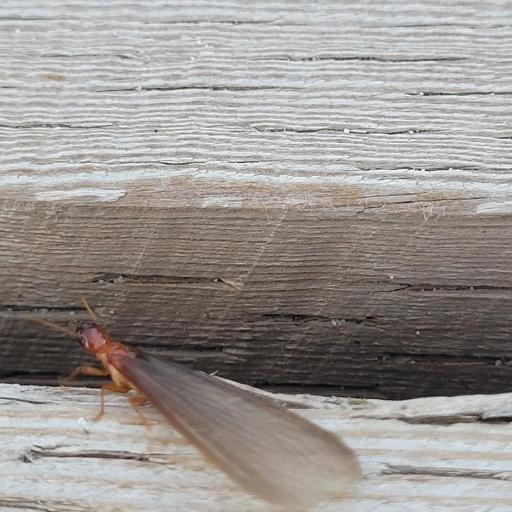
- ✈️ The Alates: During "swarming" season, the winged reproductives appear dark brown with two pairs of long, smoky-grey wings that are significantly longer than their bodies.
🌲 Habitat & Ecology
- 💧 Moisture Dependency: They are strictly "dampwood" dwellers. They require high-moisture environments and typically colonize fallen logs, stumps, or dead trees that are in direct contact with wet ground.
- 🍄 Fungal Connection: These termites are often attracted to wood that is already being decayed by fungi, as the fungi soften the wood fibers and provide extra nutrients for the colony.
- 🧱 No Soil Needed: Unlike most termites, they do not build mud tubes or nest in the dirt. Their entire world exists within the galleries they carve out of rotting timber.
⚠️ Safety & Toxicity
- 🛡️ Non-Aggressive: Despite the "scary" appearance of the soldiers' jaws, they are not aggressive toward humans or pets. They have no sting and will only bite if provoked or handled.
- 🏠 Structural Warning: While they are physically harmless, finding them in a home is a serious "red flag." It indicates a severe moisture problem or wood rot within the structure, as they cannot survive in sound, dry wood.
- 🐾 Pet Safety: They are non-toxic to cats and dogs, though a soldier could deliver a tiny, harmless pinch to a curious nose.
✨ Fun Fact
Termites are actually highly specialized social cockroaches! Genetic testing has shown they evolved from wood-eating roaches millions of years ago, which is why they share a similar "thick-waisted" body shape rather than the pinched waist of an ant.
More Details








