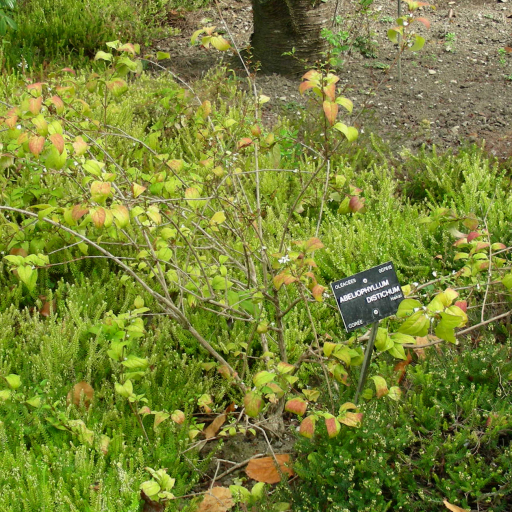
Plant Overview
Known affectionately as the "White Forsythia," Abeliophyllum distichum is a rare and elegant gem hailing from the Korean Peninsula. While it shares the name and early-blooming habit of the common yellow Forsythia, it is actually a distinct genus all its own. This "harbinger of spring" is beloved by gardeners for being one of the first plants to wake up, often blooming while the ground is still frosted with late winter snow.
🔍 How to Identify
- 🌸 Starry Blooms: Small, four-petaled white or light pink flowers that cling to dark, leafless branches in late winter or very early spring.
- 👃 Honeyed Scent: Unlike common forsythia, which has little smell, these flowers release a powerful, sweet fragrance reminiscent of almonds or honey.
- 🍃 Opposite Foliage: The leaves are simple, oval-shaped, and grow in opposite pairs along the stems, appearing only after the flowering cycle has finished.
- 🎋 Arching Habit: It grows as a multi-stemmed deciduous shrub with slender, slightly arching branches that can reach up to 5 feet in height.
🏡 In Your Garden
- ☀️ Sun for Blooms: To get the most dramatic floral display, plant it in a spot that receives full sun. While it will grow in partial shade, the flower count will be significantly lower.
- ✂️ Timing the Prune: This plant blooms on "old wood" (stems from the previous year). If you need to shape it, do so immediately after the flowers fade in spring; pruning in winter will accidentally remove all of the upcoming season's flowers.
- 🌱 Drainage is Key: It is quite hardy but sensitive to "wet feet." Ensure your soil is well-draining, especially during the dormant winter months, to prevent root rot.
⚠️ Safety & Toxicity
- ✅ Non-Toxic: Abeliophyllum distichum is generally considered non-toxic and safe for home landscapes.
- 🐾 Pet Safety: There are no known records of this plant being poisonous to cats, dogs, or horses. However, as with any woody shrub, ingesting large amounts of branches or leaves can cause mild digestive upset in curious pets.
✨ Fun Fact
- This plant is a "living fossil" and the only species in its entire genus. In its native South Korea, it is considered critically endangered in the wild and is protected as a National Monument, making the specimens in our gardens vital for the species' continued existence.

Detailed Care Instructions
To successfully grow Abeliophyllum distichum (White Forsythia), you can follow these steps:
- Choose a suitable location: Abeliophyllum distichum prefers full sun to partial shade. It can tolerate a wide range of soil types but thrives in well-draining soils.
- Planting: Select healthy, nursery-bought plants and choose a planting site that provides enough space for the plant to grow. Dig a hole twice as wide and as deep as the root ball. Place the plant in the hole, backfill with soil, and gently firm it around the roots.
- Watering: Initially, water the plant deeply to settle the roots. Afterwards, water regularly, especially during dry spells, to keep the soil moist but not waterlogged. However, avoid over-watering, as excessive moisture can lead to root rot.
- Mulching: Apply a layer of organic mulch around the plant to help conserve moisture, suppress weeds, and regulate soil temperatures. Avoid mulching too close to the stem to prevent issues like stem rot.
- Fertilization: Fertilization may not be necessary if the soil is already fertile. However, you can apply a balanced, slow-release fertilizer in early spring to promote healthy growth. Follow the manufacturer's instructions for application rates.
- Pruning: Abeliophyllum distichum generally requires minimal pruning. Remove any dead, damaged, or crossing branches to maintain a tidy appearance. Prune after flowering in early spring.
- Winter protection: In colder regions, Abeliophyllum distichum may need some winter protection. Apply a layer of mulch around the base of the plant to insulate the roots and reduce the risk of frost damage. You can also cover the plant with burlap or use other protective measures during extreme cold spells.
- Pests and diseases: Abeliophyllum distichum is generally resistant to most pests and diseases. However, keep an eye out for common issues like aphids, scale insects, and powdery mildew. Treat as needed with appropriate insecticides or fungicides.
By following these steps and providing proper care, your Abeliophyllum distichum plant should grow and thrive happily.

Place in a bright room that is sun drenched almost all day. Or directly in a south-facing window.

Abeliophyllum Distichum, also known by its common names, is a deciduous shrub native to Korea. It is popularly cultivated for its attractive clusters of fragrant white flowers that bloom in early spring. To water this plant effectively, follow these guidelines:
1. Monitor the soil: Check the moisture level of the soil regularly to determine when watering is necessary. Stick your finger about an inch into the soil or use a moisture meter to gauge the moisture content.
2. Watering frequency: Abeliophyllum Distichum generally prefers well-draining soil and does not tolerate excessive moisture. It is essential to allow the top layer of soil to slightly dry out between waterings. Aim for a moderate watering frequency to strike a balance and prevent the soil from becoming too dry or too soggy.
3. Watering method: Use a watering can or a garden hose with a gentle spray nozzle to water the plant. Avoid creating too much force or causing water to splash onto the foliage excessively, as this can lead to waterlogging or encourage the growth of fungal diseases.
4. Watering technique: Direct the water towards the base of the plant, aiming for the root zone, rather than wetting the foliage. This ensures that the roots receive an adequate amount of water, promoting healthy growth.
5. Water quantity: Provide enough water to thoroughly moisten the soil without saturating it. The required amount of water varies depending on factors such as temperature, humidity, and soil type. As a general rule, provide enough water to penetrate the top 6 to 8 inches of soil.
6. Mulching: Apply a layer of organic mulch around the base of the plant to conserve soil moisture and regulate temperature. Mulching also helps prevent weed growth, which can compete with the plant for water and nutrients.
7. Seasonal adjustments: During periods of heavy rainfall or high humidity, reduce watering frequency to prevent overwatering. In contrast, during dry spells or when the plant is actively growing, increase watering as needed.
By following these watering guidelines, you can ensure the optimal growth and health of your Abeliophyllum Distichum plant, supporting its ability to produce beautiful flowers when the blooming season arrives.
To provide proper fertilization to the Abeliophyllum Distichum plant, follow the instructions below:
- Choose a balanced fertilizer: Look for a complete, well-balanced fertilizer with equal amounts of nitrogen (N), phosphorus (P), and potassium (K). A general-purpose 10-10-10 or 14-14-14 fertilizer works well.
- Time of application: Apply fertilizer in early spring, just as new growth begins. Avoid applying fertilizer during winter or late fall, as it can promote tender growth that is susceptible to frost damage.
- Dilution: Mix the fertilizer according to the manufacturer's instructions. Generally, mix 1-2 tablespoons of fertilizer per gallon of water. Adjust the amount based on the specific instructions on the packaging.
- Apply around the plant: Pour the diluted fertilizer solution around the base of the Abeliophyllum Distichum plant. Avoid pouring the fertilizer directly onto the foliage, as it may cause burning or damage.
- Watering: After applying the fertilizer, thoroughly water the plant to ensure the nutrients are absorbed properly into the soil.
- Frequency: Fertilize the Abeliophyllum Distichum plant once a year, in early spring. Do not over-fertilize, as excessive nutrients can harm the plant and affect its overall health.
- Repeat application: In subsequent years, follow the same fertilization schedule, applying the fertilizer annually in early spring, as new growth emerges.
Remember, it's important to carefully read and follow the specific instructions provided on the fertilizer packaging for the best results.
The most suitable soil composition for Abeliophyllum Distichum plants is well-draining and slightly acidic. It thrives in soil that is rich in organic matter and retains moisture without becoming waterlogged. A loamy soil with a balanced texture, containing a mixture of sand, silt, and clay, is ideal for this plant. This soil type allows for proper aeration and moisture retention while preventing excessive water buildup.
To ensure optimal growth, it is recommended to amend the soil with organic matter such as compost or well-rotted manure. This improves soil fertility, enhances drainage, and promotes healthy microbial activity. Mixing in organic matter also helps retain moisture around the plant's root zone and provides essential nutrients for proper development.
Moreover, maintaining a slightly acidic soil pH level between 5.5 and 6.5 is crucial for Abeliophyllum Distichum plants. Acidic conditions enable these plants to effectively absorb nutrients from the soil. Adding organic materials such as peat moss or leaf mold during soil preparation can help lower the pH levels if necessary.
Lastly, it is important to note that Abeliophyllum Distichum plants prefer slightly sandy or loamy soil textures, as they allow for good drainage and prevent the roots from sitting in stagnant water. Optimal soil conditions lead to healthy root growth, overall plant vigor, and successful blooming of its beautiful white flowers.
Abeliophyllum Distichum is a deciduous flowering plant native to Korea. It is a member of the Oleaceae family and is commonly propagated through various methods. Here's a detailed guide on how to propagate Abeliophyllum Distichum:
- Propagation by seeds:
- Collect mature seeds from the plant during the late summer or early fall when the seed capsules are fully developed.
- Soak the seeds in water for 24 hours to aid in germination.
- Prepare a well-draining soil mixture with equal parts of peat moss, sand, and perlite.
- Fill a seed tray or small pots with the soil mixture and lightly tamp it down.
- Sow the seeds on the surface of the soil, spacing them about an inch apart.
- Cover the seeds with a thin layer of soil and lightly mist the surface with water.
- Place the container in a warm location with indirect sunlight.
- Keep the soil consistently moist but not waterlogged.
- Germination can take anywhere from 6 to 12 weeks.
- Once the seedlings have developed a few sets of true leaves, they can be transplanted into bigger pots or directly into the ground.
- Collect mature seeds from the plant during the late summer or early fall when the seed capsules are fully developed.
- Propagation by stem cuttings:
- Take stem cuttings from the plant in early spring, just as new growth is starting to emerge.
- Select healthy, non-flowering stems that are approximately 4-6 inches long.
- Make a clean cut just below a leaf node using a sharp, sterilized knife or pruners.
- Remove the lower leaves, leaving only a few leaves at the top.
- Dip the cut end of the stem in rooting hormone powder to encourage root formation.
- Fill a pot with a well-draining soil mix, such as a combination of perlite and peat moss.
- Make holes in the soil with a pencil or your finger and insert the cuttings about an inch deep.
- Gently firm the soil around the stem to ensure good contact.
- Place the pot in a warm location with indirect light.
- Mist the cuttings and soil lightly to maintain moisture without saturating the soil.
- Roots should start forming in about 4 to 6 weeks.
- Once the cuttings have developed a strong root system, they can be individually potted or transplanted into the ground.
- Take stem cuttings from the plant in early spring, just as new growth is starting to emerge.
- Propagation by layering:
- Select a low-growing, flexible branch close to the ground.
- Bend the branch down to the soil level and make a small wound on the underside of the bent section.
- Dust the wounded area with rooting hormone powder.
- Dig a shallow trench next to the wounded area and bury it with soil, leaving the tip of the branch exposed.
- Place a small rock or stake over the buried section to hold it in place.
- Keep the soil moist but not waterlogged throughout the growing season.
- After several months, new roots should develop where the wounded area was buried.
- Cut the rooted branch from the parent plant carefully and transplant it into a suitable growing container or directly into the ground.
Remember, it is important to provide proper care, including regular watering and adequate sunlight, to ensure the successful growth of newly propagated Abeliophyllum Distichum plants.
- Select a low-growing, flexible branch close to the ground.








