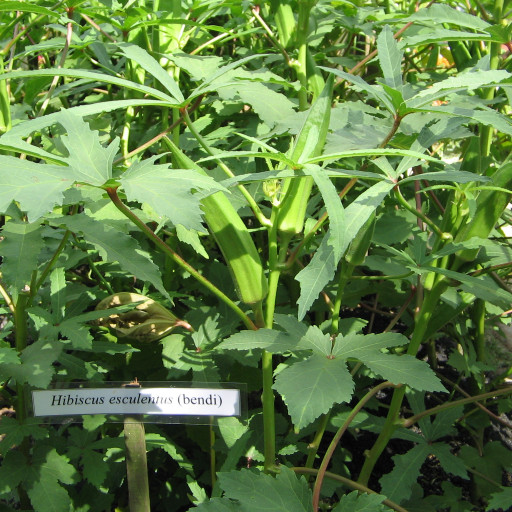
Plant Overview
Known widely as Okra or "Ladies' Fingers," this heat-loving vegetable is far more than just a kitchen staple for gumbo. A member of the Mallow family, it is a close cousin to the Hibiscus, which explains its stunning, tropical-looking blooms. Originally hailing from Africa or South Asia, it has become a beloved symbol of summer gardens in warm climates worldwide.
🔍 How to Identify
- 🌸 Showy Blooms: The flowers are exceptionally beautiful, featuring five creamy-yellow petals with a deep burgundy or purple "eye" at the center.
- 🍃 Lobed Foliage: The leaves are large, heart-shaped, and deeply lobed, often feeling slightly rough or fuzzy to the touch.
- 🥒 Pointed Pods: The fruit is a fuzzy, green (or occasionally red) seed pod that grows upright and tapers to a point, resembling a slender finger.
🏡 In Your Garden
- ☀️ The Heat Seeker: Unlike many vegetables that wilt in the mid-summer sun, Okra thrives in high temperatures. It rarely begins to grow vigorously until the soil is consistently warm.
- 🌱 Root Sensitivity: Okra develops a strong taproot very early in its life. Because it hates having its roots disturbed, it is best to sow seeds directly into the ground rather than transplanting older seedlings.
- ✂️ Frequent Harvesting: The pods grow incredibly fast—sometimes an inch or more a day. To keep the plant productive and the fruit tender, you must harvest them when they are only 2–4 inches long.
⚠️ Safety & Toxicity
- ✅ Generally Safe: Okra is non-toxic to humans, dogs, and cats. In fact, it is highly nutritious and packed with fiber.
- 🧤 Contact Irritation: Many varieties are covered in tiny, bristly hairs (spicules) that can cause itchy skin irritation or "mechanical dermatitis." It is wise to wear long sleeves and gloves when harvesting to avoid the prickles.
✨ Fun Fact
- ☕ Civil War Coffee: During the American Civil War, when coffee beans were impossible to find due to blockades, resourceful individuals would roast and grind mature okra seeds to create a caffeine-free coffee substitute!

Detailed Care Instructions
| Color | Yellow, White |
| Soil Ph | 6.0-6.8 |
| Humidity | Normal |
| Lighting | Full Sun |
| Toxicity | Non-Toxic |
| Soil Type | Moist, Fertile, Well-Drained |
| Bloom Time | Seasonal |
| Difficulty | Medium |
| Plant Type | Annual |
| Hibernation | Cold Period |
| Mature Size | 3-5 Feet Tall |
| Native Area | Africa, Asia |
| Temperature | 15°C - 35°C |
| Sun Exposure | Full Sun |
| Hardiness Zones | 2-11 |
To grow Abelmoschus Esculentus (okra) plants, follow these steps:
- Choose the right time: Okra is a warm-season crop, so it is best to plant the seeds after the danger of frost has passed and the soil temperature is consistently above 60°F (15°C).
- Prepare the soil: Select a sunny location with well-drained soil. Loosen the soil and remove any weeds or rocks. Incorporate compost or well-rotted manure to improve nutrient levels and drainage.
- Planting the seeds: Sow the seeds directly in the garden, about 1 inch (2.5 cm) deep and 12-18 inches (30-45 cm) apart. Leave about 3 feet (1 meter) between rows.
- Watering: Keep the soil consistently moist, especially during dry spells or prolonged periods of hot weather. Avoid overhead watering as okra plants prefer to have their roots watered.
- Fertilization: Okra plants benefit from regular fertilization. Apply a balanced organic fertilizer or a slow-release, granular fertilizer according to the package instructions. Avoid excessive nitrogen as it can lead to abundant leaf growth but reduced fruiting.
- Mulching: Apply a layer of organic mulch, such as straw or wood chips, around the plants to conserve moisture, suppress weed growth, and keep the soil temperature consistent.
- Pruning and training: Okra plants can grow tall, so it may be beneficial to provide support. Stake or cage the plants to prevent them from falling over during strong winds or when heavy with fruit.
- Pest and disease control: Monitor the plants regularly for signs of pests like aphids, spider mites, or caterpillars. Use organic pest control methods such as insecticidal soaps or neem oil to manage infestations. For diseases like fusarium wilt or root rot, practice crop rotation and provide adequate air circulation to minimize risks.
- Harvesting: Okra pods are ready to harvest when they reach 3-4 inches (7-10 cm) in length. Harvest every 2-3 days to encourage continuous production. Use a knife or scissors to cut the pods close to the stem. Prompt and regular harvesting boosts production.
By following these steps, you should be able to successfully grow Abelmoschus Esculentus plants and enjoy a bountiful harvest of okra.

Place in a bright room that is sun drenched almost all day. Or directly in a south-facing window.

In order to water this plant, it is important to consider its specific watering needs. These can vary based on factors such as the plant's age, size, and location, as well as the time of year and weather conditions.
When watering Abelmoschus Esculentus, it is important to avoid over-watering, as this can lead to root rot and other problems. It is generally best to water deeply but infrequently, rather than giving the plant a little bit of water every day.
The best time to water this plant is in the morning, as this allows any excess water to evaporate before the temperatures rise during the day. When watering, be sure to aim for the soil around the base of the plant, rather than drenching the leaves or flowers.
In addition to monitoring how much water the plant receives, it is also important to consider the quality of the water. This plant prefers well-draining soil and does best with water that is free of minerals and chemicals.
Overall, the key to effectively watering Abelmoschus Esculentus is to pay attention to the plant's needs and adjust your watering schedule accordingly. By doing so, you can help ensure that this plant thrives and produces healthy, tasty okra pods.
To fertilize this plant, apply a balanced fertilizer (10-10-10) every two weeks during the growing season. Use a water-soluble fertilizer and apply it according to the package instructions. Be sure to water the plant thoroughly before and after fertilizing. Avoid fertilizing during the winter months when the plant is dormant.
The ideal soil for the plant should be well-draining and rich in organic matter. It should have a pH range of 6.0 to 6.8. A loamy soil with good water retention capacity is preferred. The soil should be deep to allow for root development and should be free of pests and diseases. Adding compost or well-rotted manure to the soil before planting can help improve soil quality and fertility. Regular application of organic fertilizers can also aid in the growth and productivity of the plant. It is important to avoid using soils that are compacted, heavy, or contain high levels of clay, as they can impede root growth and limit plant productivity.
To propagate this plant, take a stem cutting from a mature plant. The cutting should be around 4-6 inches long with at least two sets of leaves. Remove the lower leaves of the cutting and dip the cut end into rooting hormone powder. Plant the cutting in a well-draining potting mix, water thoroughly, and keep in a warm, humid location away from direct sunlight. It's best to cover the cutting with a plastic bag or dome to maintain humidity. After a few weeks, you should begin to see new growth, indicating successful rooting. Gradually acclimate the new plant to brighter light and lower humidity before transplanting it to its final location.
Common pests of the okra include Spider mites, aphids. Make a habit of checking your okra frequently for pests so that any infestations can be caught and managed early.








