Plant Overview
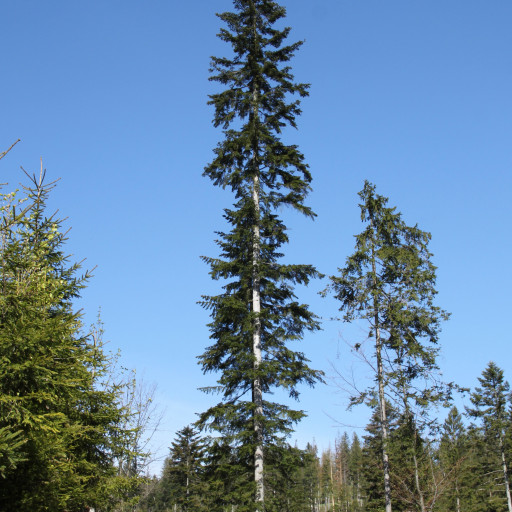
Known as the "King of the Forest" in many European folk tales, the Silver Fir (Abies alba) is a majestic evergreen that once served as the original Christmas tree across the continent. This mountain-dwelling giant is famous for its perfectly symmetrical, pyramidal shape and its shimmering, "silver-lined" foliage that brightens up dark, misty woodlands.
🔍 How to Identify
- 🌲 The Needles: Unlike spruces, these needles are flat and soft to the touch. If you flip a needle over, you will see two distinct, bright white stomatal bands that give the tree its "silvery" name.
- 🕯️ The Cones: One of the easiest ways to spot a true Fir is by its cones; they sit upright on the branches like festive candles, rather than hanging down like those of a Pine or Spruce.
- 🥈 The Bark: The trunk is remarkably smooth and silvery-grey when the tree is young, often featuring small resin blisters that release a citrusy scent when pressed.
🏡 In Your Garden
- ⛰️ Mountain Heritage: Because it originates from high-altitude regions, this tree thrives in areas with high humidity and cool summers. It struggles in sweltering heat or dry, "baked" urban soils.
- ⚓ Deep Roots: The Silver Fir develops a deep taproot system. This makes it incredibly wind-firm (it won't blow over easily), but it also means it hates being transplanted once it has settled into its home.
- 🌬️ Fresh Air Only: This species is famously sensitive to air pollution. If your Silver Fir is thriving, it’s a glowing green certificate that the air quality in your neighborhood is excellent.
⚠️ Safety & Toxicity
- ✅ Generally Safe: The Silver Fir is considered non-toxic to humans, cats, and dogs. In fact, its needles are often used in traditional herbal teas and bath oils.
- 💧 Sticky Resin: While not poisonous, the tree produces a thick, sticky resin. This can be a nuisance to remove from pet fur or children's clothing and may cause minor skin irritation in very sensitive individuals.
✨ Fun Fact
The wood of the Silver Fir is prized for its "tonal" qualities. Some of the world’s most famous musical instruments, including certain components of historical violins, were crafted from this high-quality, lightweight timber.

Detailed Care Instructions
| Soil Ph | Acidic (5.0 To 6.5) |
| Humidity | Normal |
| Lighting | Shade |
| Soil Type | Loamy, Sandy, Clay, Silt, Moist, Well-Drained |
| Difficulty | Easy |
| Plant Type | Tree |
| Hibernation | Cold Period |
| Mature Size | 130–160 Ft. |
| Native Area | Southern Europe, Northern Serbia |
| Sun Exposure | Full Sun, Part Shade |
| Hardiness Zones | 5-8 |
To grow an Abies alba plant, also known as the silver fir, you will need to follow these steps:
- Choose the right location: Abies alba prefers a cool and moist climate, and is best suited for USDA hardiness zones 4 to 7. Select a location that provides partial shade or filtered sunlight, as too much direct sunlight can be detrimental to the plant.
- Soil preparation: The silver fir thrives in well-drained soil that is rich in organic matter. Prepare the soil by removing any weeds, rocks, or debris. If the soil is heavy and lacks drainage, consider adding coarse sand or organic matter such as compost to improve its structure.
- Propagation: There are several methods to propagate Abies alba. You can collect seeds from mature cones in the fall and sow them in containers filled with well-draining compost. Another method is taking semi-hardwood cuttings in late summer or early autumn and rooting them in a rooting hormone-treated soil mix. You can also purchase nursery-grown seedlings or young plants for transplanting.
- Planting: If you are using container-grown seedlings, dig a hole slightly larger than the root ball and place the plant at the same depth it was growing in the container. Backfill the hole with soil, gently firming it around the root ball. Water thoroughly after planting to settle the soil.
- Watering: Keep the soil consistently moist but not waterlogged. Water the plant deeply, especially during dry periods. Avoid overwatering, as excessive moisture can lead to root rot.
- Mulching: Apply a layer of organic mulch, such as bark chips or shredded leaves, around the base of the plant to help retain soil moisture, suppress weed growth, and insulate the roots.
- Fertilization: Abies alba plants generally do not require frequent fertilization. However, you can apply a slow-release balanced fertilizer in early spring to provide necessary nutrients.
- Pruning: Pruning is generally not necessary for Abies alba, but you can remove any dead or damaged branches. Prune sparingly to maintain the natural shape of the plant.
- Winter protection: In regions with cold winters, protect your plant from harsh winds and heavy snow by wrapping the trunk with burlap or applying a windbreak.
- Monitor for pests and diseases: Regularly inspect the plant for common pests like aphids, spider mites, or adelgids. Treat any infestations promptly using appropriate insecticides, following the instructions carefully. Abies alba is susceptible to some diseases such as root rot or needle cast, so keep an eye out for any signs of fungal infections and take necessary measures if needed.
Remember that Abies alba is a slow-growing tree, so it requires patience and care. Provide regular maintenance, and your silver fir plant should grow into a beautiful and healthy specimen.

Place in a window with dappled sun or a spot in the middle of a room. Or directly in a window facing west or east.

Abies Alba is a type of evergreen tree that requires proper watering for its survival. To water this plant, you should avoid overwatering as it can cause root rot and fungal diseases.
Firstly, it is essential to water the plant only when the soil is dry. You can check the moisture level of the soil by inserting your finger into the soil up to a depth of two inches. If the soil is dry, it's time to water the plant.
Secondly, when watering the plant, make sure to water at the base of the tree and avoid watering the tree's foliage. This is because wet foliage can attract fungal diseases.
Thirdly, ensure to use a watering can or hose attachment with a showerhead to water the tree gently. This will allow the water to seep into the soil without causing erosion or waterlogging the soil.
Lastly, you should water the Abies Alba deeply, ensuring that the water reaches the roots and soil beneath the surface. However, you should avoid watering too much as it can damage the tree's roots.
By adhering to these watering tips, you can keep your Abies Alba healthy and long-lasting.
To fertilize the Abies alba plant, apply a slow release, balanced fertilizer in the early spring before new growth appears. Take care to avoid getting the fertilizer granules on the needles or foliage of the plant. Water the plant thoroughly after applying the fertilizer. Repeat this process annually to maintain healthy growth and foliage.
The Abies Alba plant prefers well-draining and slightly acidic soil. It thrives in soil that is rich in organic matter, such as compost or well-decomposed leaf litter. A combination of loamy, peat-based soil mixed with sand and perlite can also provide ideal conditions for this plant. It is important to avoid using heavy or clay soils as they hold too much moisture and can cause root rot. Additionally, the plant prefers a slightly cool and humid environment, so the soil should be kept moist but not waterlogged.
Abies Alba is a type of coniferous plant that can be propagated through various methods. The most common method is through seed propagation, which involves collecting the seeds from mature cones and sowing them in a suitable seedbed.
Another way to propagate Abies Alba is through stem cuttings taken from the parent plant. The stem cuttings should be taken from the base of the plant, and the cutting should have at least 2-3 nodes. The cuttings should be dipped in rooting hormone and placed in a pot filled with a well-draining potting mix. They should be kept in a humid environment until root growth is visible.
Layering is another propagation method that can be used for Abies Alba. This involves bending a low-growing branch of the parent plant, making a small cut in the bark, and then burying the branch in soil. The branch will eventually form its own roots, and can then be separated from the parent plant and transplanted elsewhere.
Grafting is also a reliable propagation method for Abies Alba, especially for cultivars with desirable characteristics. This involves taking a cutting from the desired cultivar, and grafting it onto a rootstock of a closely related species or variety. The two plant parts are held together until the graft union has healed and the plant is established.
Overall, propagating Abies Alba requires patience, experience, and a bit of luck, as success rates can vary depending on the propagation method used.








