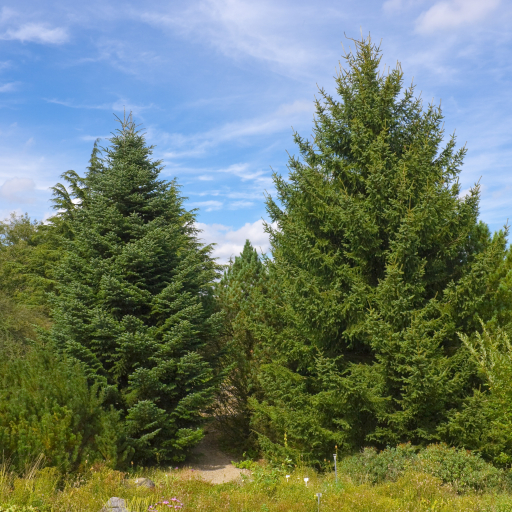
Plant Overview
Known as the "Greek Fir," Abies cephalonica is the rugged mountaineer of the Mediterranean. Standing as a noble sentinel on the limestone peaks of Greece, this conifer is a survivor of the Ice Age. It is often sought after by collectors for its formal, architectural shape and its ability to withstand warmer, drier climates than many of its cousins in the fir family.
🔍 How to Identify
- 🌵 Prickly Needles: Unlike the soft, flat needles of many other fir trees, the Greek Fir has needles that end in a sharp, prickly point. They are arranged spirally around the twig, giving the branches a full, "bottle-brush" appearance.
- 🕯️ Upright Cones: The cones stand perfectly vertical on the upper branches like brown candles. They are often coated in a sticky, fragrant white resin that glitters in the sunlight.
- 🎨 Stomatal Bands: If you flip a needle over, you will see two distinct, silvery-white lines. these are "stomata" through which the tree breathes, creating a beautiful shimmering effect when the wind catches the foliage.
🏡 In Your Garden
- ⛰️ Limestone Specialist: This tree is a "calcicole," meaning it loves alkaline (high pH) soils. If you have rocky or chalky soil where other evergreens turn yellow, the Greek Fir will likely feel right at home.
- ☀️ Drought Resilience: While most firs crave cool, misty mountains, the Greek Fir is remarkably heat-tolerant once established. It is an excellent choice for larger landscapes in temperate regions that experience dry summers.
⚠️ Safety & Toxicity
- ✅ Non-Toxic: Abies cephalonica is generally considered safe and non-toxic to humans, dogs, and cats.
- ⚔️ Physical Hazard: The main safety concern is the sharpness of the needles. They are stiff enough to pierce skin or snag clothing, so it is best planted away from narrow walkways or children's play areas.
✨ Fun Fact
The Greek Fir hybridizes so easily with the European Silver Fir that a unique "natural hybrid" exists called the King Boris Fir (Abies borisii-regis). For centuries, the wood of the Greek Fir was the primary material used to build the sturdy ships that sailed the Aegean Sea.

Detailed Care Instructions
To grow Abies cephalonica, also known as Greek fir, follow these steps:
- Choose a suitable spot: Abies cephalonica prefers full sun to partial shade and well-draining soil. It thrives in mountainous regions and is hardy in USDA zones 5-9.
- Prepare the soil: The soil should be slightly acidic to neutral. If your soil is heavy clay, add organic matter like compost or well-rotted manure to improve drainage and texture.
- Planting: Dig a hole slightly larger than the container or root ball of the plant. Place the plant in the hole at the same level it was previously planted and fill the hole with soil. Tamp down gently to eliminate air pockets.
- Watering: After planting, water thoroughly and keep the soil consistently moist, but not waterlogged. Provide regular watering during dry spells, especially in the first year until the root system is fully established.
- Mulching: Apply a layer of organic mulch around the base of the plant, such as wood chips or compost. This will help retain moisture, suppress weeds, and provide a more favorable growing environment.
- Pruning: Abies cephalonica generally doesn't require much pruning. However, you can remove any dead or damaged branches to maintain the plant's health and shape.
- Fertilizing: Use a balanced slow-release fertilizer in early spring to give the tree a boost. Follow the package instructions for the application rate.
- Protection: In colder regions, provide protection from harsh winter conditions, such as strong winds and heavy snowfall. Wrap the tree with burlap or use protective screens during winter months.
- Monitoring: Regularly monitor for pests and diseases, such as aphids, spider mites, or needle cast diseases. Control them by using appropriate organic or chemical treatments as needed.
- Patience and care: Abies cephalonica is a slow-growing tree, so be patient and give it time to establish and grow. Provide consistent care, water appropriately, and ensure the plant receives the necessary sunlight and nutrients.
With proper care and suitable growing conditions, your Abies cephalonica plant should thrive and develop into a beautiful tree over time.

Place in a bright room that is sun drenched almost all day. Or directly in a south-facing window.

Abies cephalonica plant is a species of conifer in the genus Abies that is native to the mountain ranges of Greece. To properly water this plant, you should first determine the soil moisture level by inserting your finger about an inch deep into the soil. If the soil feels dry to the touch, it is time to water the plant. The best way to water the Abies cephalonica plant is to moisten the soil evenly around the base of the plant, making sure not to create pools of standing water. It is recommended to water the plant deeply but infrequently, ensuring that the soil is completely saturated. Wait until the soil has dried out before watering the plant again. Additionally, it is important to avoid watering the plant during the heat of the day to prevent excessive evaporation and plant stress. It is recommended to water the plant early in the morning or late in the evening when the temperatures are cooler.
To fertilize this plant, use a balanced fertilizer with equal amounts of nitrogen, phosphorus, and potassium. Apply the fertilizer in early spring before new growth begins and then again in mid-summer. Be careful not to over-fertilize as this can burn the roots and damage the plant. Water the plant well before and after fertilizing, and avoid getting fertilizer on the foliage or needles. Follow the manufacturer's instructions for the proper amount of fertilizer to use based on the size and age of the plant.
The ideal soil for this plant is a well-drained, rich and fertile soil that has a slightly acidic to neutral pH level. It should be moist but not waterlogged as excessive moisture can lead to root rot. The soil should also have good aeration to allow for healthy root growth. The plant prefers slightly cooler temperatures and is tolerant of light shade. It is important to avoid using heavy clay soils or highly alkaline soils when planting this tree.
To propagate this plant, begin by taking semi-hardwood cuttings in summer, preferably from the lower part of the tree. Cuttings should be about 5-6 inches long and should have a few sets of leaves. Remove the lower leaves and dip the stem in rooting hormone powder. Plant the cutting in a mixed soil of peat moss and perlite and keep it moist in a bright but indirect light. Cover the cutting with a plastic bag to maintain humidity. Once roots have formed, remove the plastic and transplant the plant to a more permanent location. Alternatively, you can propagate the plant through layering or by collecting and planting its seeds in the fall.








