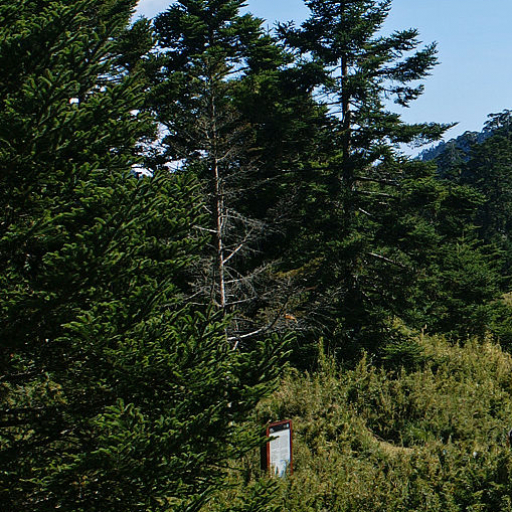
Plant Overview
Known as the "Taiwan Fir," the Abies kawakamii is a majestic high-altitude survivor that rules the misty mountain peaks of Taiwan. Often called the "Crowned Jewel of the Central Range," this evergreen conifer is prized by collectors for its rare, violet-hued cones and its ability to bring an air of ancient, alpine mystery to a landscape. It is one of the southernmost fir species in the world, adapted to thrive where the clouds meet the earth.
🔍 How to Identify
- 🌲 The Needles: Look for short, flat, and blunt-tipped needles that are a deep, glossy green on top. If you flip them over, you’ll see two distinct silvery-white bands (stomata) that give the tree a shimmering appearance in the wind.
- 🟣 The Cones: Unlike many conifers whose cones hang down, these stand perfectly upright like purple candles. When young, they are a striking violet-blue or deep plum color, coated in a fine, sticky resin.
- 🔘 The Bark: Younger trees have smooth, silvery-gray bark dotted with resin blisters. As the tree matures, the bark becomes more textured, cracking into small, scaly plates.
🏡 In Your Garden
- 🏔️ Climate Requirements: Because this is an alpine species, it is quite picky. It demands cool summers and cold winters. If you live in a hot, humid lowland area, this fir will likely struggle; it prefers "breathing" the crisp, thin air of higher elevations or temperate zones.
- 💧 Soil & Drainage: The Taiwan Fir has a "no wet feet" policy. While it loves consistent moisture and high humidity (think mountain mist), it must be planted in gritty, acidic soil that drains rapidly. It often fails in heavy clay or standing water.
- 🌤️ Slow Growth: This isn't a tree for the impatient gardener. It grows slowly and deliberately, focusing on building a sturdy, pyramidal frame that can withstand heavy snow and wind.
⚠️ Safety & Toxicity
- 🟢 Safety Status: The Taiwan Fir is generally considered non-toxic to humans and most common pets like dogs and cats.
- 💧 Resin Irritation: While not poisonous, the tree produces a thick, aromatic resin. This sap is incredibly sticky and can cause mild skin irritation or "contact dermatitis" for some people. It’s a good idea to wear gloves when pruning to avoid getting the "mountain glue" on your hands.
✨ Fun Fact
The Abies kawakamii holds the record for being the southernmost fir species in the northern hemisphere. It is a "glacial relict," meaning it moved into the high mountains of Taiwan during the last Ice Age and stayed there as the world warmed, finding a permanent home in the cool, isolated peaks.

Detailed Care Instructions
To grow Abies kawakamii, also known as Kawakami fir, you can follow these steps:
- Climate and location: Kawakami firs are native to Taiwan, so they thrive in a cool, temperate climate. They require a location with full to partial sun and well-draining soil.
- Soil preparation: Prepare the soil by removing any weeds or grass and tilling the area to loosen it. Add organic matter such as compost or well-rotted manure to improve soil fertility and drainage.
- Planting: Dig a hole that is just slightly larger than the root ball of the plant. Place the plant in the hole and backfill with soil, firming gently around the base of the plant. Make sure not to plant the tree too deeply. Water the newly planted tree thoroughly.
- Watering: Abies kawakamii prefers moist but not waterlogged soil. Water the tree regularly, especially during dry periods. Deep watering is recommended to encourage the development of a strong root system.
- Mulching: Apply a layer of organic mulch around the base of the tree to help retain moisture, suppress weeds, and regulate soil temperature.
- Pruning: Pruning is generally not necessary for Abies kawakamii, but you can remove any dead or damaged branches as needed. Be careful not to remove too much green foliage, as it may affect the tree's health.
- Fertilizing: Apply a balanced, slow-release fertilizer in the early spring to promote healthy growth. Follow the instructions on the fertilizer package for proper application rates.
- Winter protection: Although Abies kawakamii is cold hardy, providing some winter protection, such as mulching around the base of the tree, can help protect it from extreme temperatures and winter wind damage.
- Pest and disease control: Monitor the tree regularly for pests and diseases. Common pests include aphids, bark beetles, and adelgids. Treat any infestations promptly using appropriate methods or consult a professional if necessary.
- Patience: Growing Abies kawakamii requires patience, as they are slow-growing trees. It may take several years for the tree to reach its full potential height and beauty.
Remember to also check with your local nursery or horticulture extension office for any specific care instructions or recommendations tailored to your region's climate and conditions.

Place in a bright room that is sun drenched almost all day. Or directly in a south-facing window.

Abies Kawakamii, like any other plant, requires watering to thrive and grow. When watering this particular plant, it's essential to ensure that the soil is consistently moist but not waterlogged. It's best to water it thoroughly, ensuring that the soil is soaked up to the root zone, so the roots can take up the water.
One way to achieve this is to pour enough water to allow runoff to escape from the drainage holes in the pot, which ensures that the soil is thoroughly moistened. It's also important to keep an eye on the moisture level in the soil. This can be achieved by sticking a finger up to the first knuckle into the soil; if it feels dry, it's time to water the plant.
During hot weather or if the plant is placed next to a heat source, the soil may dry out faster than usual, so it would be best to check the moisture level more frequently and water accordingly. It's essential to avoid over-watering this plant since it may lead to root rot, which could kill the plant.
In summary, watering Abies Kawakamii involves ensuring that the soil is consistently moist while avoiding waterlogging and over-watering. This could be achieved by watering thoroughly and monitoring the soil's moisture level regularly.
To fertilize this plant, apply a slow-release, balanced fertilizer in early spring before new growth begins. Use a fertilizer with a 3-1-2 or 4-1-2 ratio of nitrogen, phosphorus, and potassium. Follow the manufacturer's instructions for application rates based on the size of the plant. Avoid applying fertilizer late in the growing season, as this can encourage new growth that may not have time to harden off before winter.
The recommended soil for this plant is one that is well-draining, deep, and rich in organic matter. It should have a slightly acidic to neutral pH level, ideally between 5.5 and 7.0. The soil should also be able to hold moisture well, but not be too dense or compacted. A mix of peat moss, vermiculite or perlite, and sand or loam is often used to create a suitable growing medium. This plant prefers a soil that is free from excess nitrogen, but does require adequate levels of nutrients. It is important to ensure that the soil is not too wet, as waterlogged soil can lead to root rot and other plant diseases.
To propagate this specific plant, you can take semi-hardwood cuttings in late summer or early fall. Choose healthy branches that are about 4 to 6 inches long and have several leaf nodes. Remove the lower leaves and dip the cuttings in rooting hormone before placing them in a well-draining potting mix. Keep the soil moist and provide high humidity by covering the pot with a plastic bag or placing it in a propagation dome. Place the pot in a bright, but indirect light and allow the cuttings to root for several weeks. Once rooted, the plant can be transplanted into a larger container with well-draining soil and gradually acclimated to outdoor conditions.








