Plant Overview
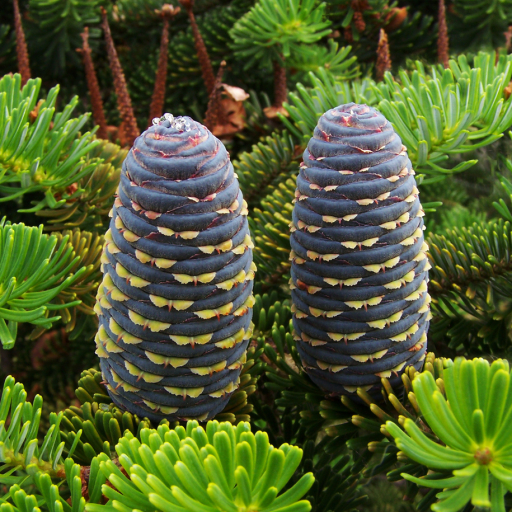
Often called the "Jewel of the Mountains," the Korean Fir is a masterpiece of the conifer world. Native to the high-altitude volcanic slopes of South Korea, this slow-growing evergreen is famous for producing striking, jewel-toned cones even when the tree is very young. It is a favorite for small gardens and rockeries where its elegant, architectural form can be appreciated up close.
🔍 How to Identify
- 🌲 The Cones: Unlike many pines, the cones of this fir stand upright like colorful candles. They are a vivid violet-blue or deep purple, though they eventually fade to brown as they mature.
- 🌿 The Needles: The needles are short, broad, and blunt, making them soft to the touch. Each needle is a glossy dark green on top with two brilliant, chalky-white stripes on the underside, giving the whole tree a shimmering, silvery appearance in the wind.
- 🪵 The Bark: Young trees feature smooth, grayish-brown bark covered in resin blisters. As the tree reaches maturity, the bark becomes deeply fissured and rough, adding a rugged character to its look.
🏡 In Your Garden
- ⛰️ Soil & Drainage: Because it hails from mountain peaks, this tree demands excellent drainage. It thrives in slightly acidic, organic-rich soil but will quickly suffer from root rot if left in "wet feet" or heavy, compacted clay.
- ❄️ Cool Climates: The Korean Fir is a lover of cool summers and cold winters. It is not a fan of intense heat or high humidity; in warmer zones, it needs a spot with afternoon shade to prevent the needles from scorching or the tree from becoming stressed.
⚠️ Safety & Toxicity
- ✅ Status: Non-Toxic.
- 🐾 Details: This plant is generally considered safe for curious pets and children. Because the needles are blunt rather than sharp, it is a much safer choice for high-traffic areas compared to prickly spruce or holly trees.
✨ Fun Fact
While most conifers take decades to reach "adulthood" and produce fruit, the Korean Fir is famously precocious—it often begins producing its stunning violet cones when it is less than three feet tall!

Detailed Care Instructions
| Humidity | Dry |
| Lighting | Full Sun |
| Difficulty | Easy |
| Mature Size | 15 To 30 Feet Tall With A Spread Six To 15 Feet Wide. |
| Native Area | It Is Native To South Korea. |
| Hardiness Zones | Zones 5 To 7 |
To successfully grow Abies koreana (Korean fir) plants, follow these steps:
- Choose the right location: Abies koreana prefers a location with full to partial sun exposure. It thrives in well-drained soil that is slightly acidic to neutral in pH. Ensure the planting area has good air circulation.
- Soil preparation: Before planting, amend the soil with organic matter like compost to improve drainage and nutrient content. Remove any weeds or grass from the planting area.
- Planting: Dig a hole that is slightly wider and deeper than the nursery container. Gently remove the plant from its container and place it in the hole. Ensure that the top of the root ball is level with the surrounding soil. Backfill with the amended soil, firming it gently around the base of the plant.
- Watering: Water newly planted Abies koreana deeply and regularly to establish its roots. Monitor the moisture level of the soil and water whenever it feels dry, particularly during dry periods. However, avoid overwatering, as excessive moisture can lead to root rot.
- Mulching: Apply a layer of organic mulch around the base of the plant to retain soil moisture, suppress weeds, and regulate soil temperature. Keep the mulch a few inches away from the trunk to prevent moisture-related problems.
- Pruning: Abies koreana generally does not require much pruning. However, you can remove any dead, damaged, or diseased branches as needed. Proper pruning can be done in late winter when the plant is dormant.
- Fertilizing: Abies koreana generally does not require heavy fertilization. However, you can apply a balanced organic fertilizer in spring to provide some nutrients. Follow the manufacturer's instructions for application rates.
- Protection from harsh weather: Provide protection from strong winds in exposed locations to prevent damage to the tree. In severe frost, cover the young plant with burlap or a frost cloth to shield it from extreme cold.
- Regular monitoring: Monitor the plant for any signs of pests, diseases, or nutrient deficiencies. Treat any issues promptly to maintain the health of the plant.
- Enjoy your Abies koreana: With proper care, your Korean fir plant should grow and thrive, providing you with its majestic beauty, unique cones, and pleasant fragrance.

Place in a window with dappled sun or a spot in the middle of a room. Or directly in a window facing west or east.

To water this plant, you should first assess the soil moisture level by touching the top layer of soil with your finger. If it feels dry to the touch, then it's time to water the plant. Fill a watering can with room temperature water and gently pour it around the base of the plant, taking care not to splash water on the foliage. Avoid overwatering the plant, as this can lead to root rot and other moisture-related issues. Monitor the soil moisture level regularly and adjust the watering schedule as needed based on the plant's specific needs and the environmental factors such as temperature and humidity.
For optimal growth and health, fertilize your Abies Koreana plant with a slow-release, balanced fertilizer in early spring before new growth appears. Use a fertilizer with a nitrogen-phosphorus-potassium ratio of 10-10-10 or 12-6-6. Apply the fertilizer evenly around the plant, keeping it at least 6 inches away from the trunk. Water the plant thoroughly after fertilizing to help the nutrients get absorbed. Avoid over-fertilizing, as this can cause damage to the plant and harm nearby wildlife.
Abies Koreana plants prefer well-draining soil that is slightly acidic with a pH between 5.5 to 6.5. The soil should not be compacted and should allow for easy water and air movement. A mix of organic matter, such as peat moss or compost, and sand or perlite can help improve porosity and drainage. Adding a slow-release fertilizer can also help provide the necessary nutrients for healthy growth. It is recommended to avoid using heavy clay soil or soil that is too alkaline.
There are two ways to propagate this plant: by seed and by cuttings.
Propagation by seed:
- Collect the cones from a mature Abies Koreana plant in the fall, when they start to brown and open up.
- Place the cones in a paper bag and store them in a cool, dry place until they fully open and release their seeds.
- Place the seeds in a container of moist, well-draining soil and cover with a thin layer of soil.
- Keep the soil moist and in a cool, shaded area. Seedlings should emerge in a few weeks.
Propagation by cuttings: - Take cuttings from the current year's growth in late spring or early summer.
- Dip the cuttings in rooting hormone to stimulate root growth.
- Place the cuttings in a container of moist, well-draining soil and cover with plastic wrap or a clear plastic bag to maintain humidity.
- Keep the container in a warm, shaded area and mist the cuttings daily to keep them moist.
- Once the cuttings have rooted and produced new growth, they can be transplanted into larger containers or outdoors.








