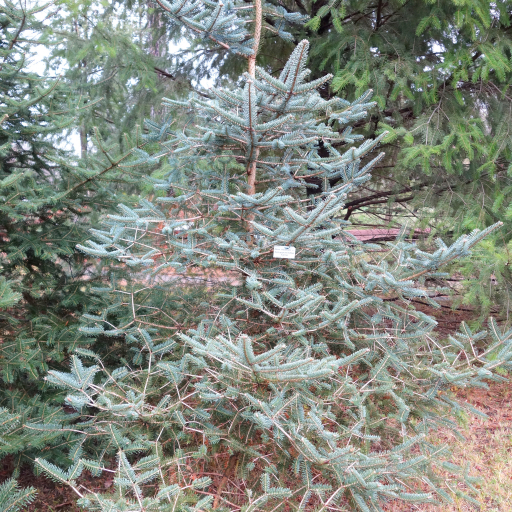
Plant Overview
The Flaky Fir is a true high-altitude mountaineer of the plant world. Originating from the craggy peaks of Western China and Tibet, it thrives at elevations where most other trees give up. Its most striking feature, and the reason for its name, is its extraordinary bark that peels away in thin, papery layers, much like a Birch tree—a rarity among conifers.
🔍 How to Identify
- 🌲 The Bark: The most iconic trait; the bark is purplish-brown and exfoliates in thin, shaggy flakes or "scales," revealing a smoother layer beneath.
- 🪡 The Needles: These are short, dense, and slightly curved, often displaying a beautiful silvery-blue or dark green hue with two pale bands on the underside.
- 🟣 The Cones: It produces upright, cylindrical cones that start out a deep violet-purple before maturing into a woody brown.
🏡 In Your Garden
- 🏔️ Climate Needs: This tree is a specialist for cold climates. It craves "alpine" conditions—cool summers and snowy winters. It will struggle significantly in humid, hot lowlands where the air feels heavy.
- 💧 Soil & Drainage: Because it grows on mountain slopes in the wild, it demands excellent drainage. While it appreciates consistent moisture, it cannot tolerate "wet feet" or heavy, compacted clay which can lead to root rot.
- ⏳ Growth Habit: It is a slow-to-moderate grower with a classic conical shape, making it a majestic specimen for large, open landscapes in northern regions.
⚠️ Safety & Toxicity
- ✅ General Safety: The Flaky Fir is considered non-toxic to humans, dogs, and cats. It is a safe addition to a family backyard.
- 🌲 Resin Irritation: Like many firs, the tree produces a sticky resin. While not poisonous, this sap can be a localized skin irritant for some people and is notoriously difficult to wash out of pet fur or clothing.
✨ Fun Fact
The Abies squamata holds the record for one of the highest-reaching trees in the world, comfortably growing at altitudes of up to 4,700 meters (over 15,000 feet) in the Himalayas—higher than the summit of many famous mountain peaks!

Detailed Care Instructions
To grow Abies Squamata plants, also known as Chinese fir, follow these steps:
- Location: Choose a suitable location that provides full to partial sun exposure. Abies Squamata thrives in cool climates and prefers moist, well-draining soils.
- Soil Preparation: Prepare the soil by loosening it with a garden fork or tiller. Incorporate organic matter like compost or well-rotted manure to improve soil fertility and drainage.
- Planting: Dig a hole that is slightly wider but equal in depth to the plant's root ball. Gently remove the plant from its container, ensuring the root ball remains intact. Place it in the hole and backfill with soil, gently firming it around the roots.
- Watering: After planting, thoroughly water the Abies Squamata plant. Thereafter, water it regularly to keep the soil moist but not waterlogged. Deep watering once a week should be sufficient, adjusting for rainfall and temperature.
- Mulching: Apply a layer of organic mulch around the base of the plant to conserve moisture, suppress weeds, and moderate soil temperature. Avoid piling mulch against the trunk, as it can cause rotting.
- Fertilization: Feed the plant with a balanced slow-release fertilizer in spring, according to the manufacturer's instructions. Avoid over-fertilizing, as it can harm the plant.
- Pruning: Prune any dead, damaged, or diseased branches as necessary. Abies Squamata typically maintains a tidy, pyramidal shape naturally, so extensive pruning is usually not required. However, you can lightly shape it to maintain its desired form.
- Pests and Diseases: Monitor the plant regularly for signs of pests like aphids, sawflies, or spider mites, as well as common fungal diseases. Use appropriate organic or chemical treatments if necessary.
- Winter Protection: Some varieties of Abies Squamata are cold hardy, but if you reside in an area with severe winters, consider protecting young plants from freezing temperatures and heavy snowfall. Mulching around the base and wrapping the plant with burlap can help.
- Ongoing Care: Continue watering, weeding, and monitoring the health of the Abies Squamata plant throughout its growth. Provide occasional supplemental watering during dry periods.
Remember to research specific care requirements for the particular variety of Abies Squamata you are growing, as there are different cultivars with slight variations in their preferences.
Abies Squamata is a species of plant that requires careful watering to thrive. To water this plant, it is important to first understand its unique characteristics and needs. Abies Squamata prefers moist soil but does not tolerate waterlogged soil or standing water, which can lead to root rot and other diseases.
When watering Abies Squamata, it is best to use a watering can or hose with a gentle spray attachment to avoid damaging the roots or foliage. You should water the plant deeply, making sure the water reaches the roots. However, be careful not to overwater, as this can lead to stagnant water and root rot.
The frequency of watering will depend on the climate and environment in which the plant is growing. If you live in a humid area, you may need to water less frequently, while in a dry environment, you may need to water more often. A good rule of thumb is to water when the soil surface feels dry to the touch.
It is also important to note that Abies Squamata is sensitive to the quality of water it receives. If possible, use rainwater or filtered water to avoid exposing the plant to chemicals and minerals found in tap water.
In summary, to water Abies Squamata, use a gentle spray or watering can to deeply water the roots, being careful to not overwater or let the soil become waterlogged. Use filtered or rainwater if possible and adjust watering frequency based on the climate and environment.
To fertilize this plant, apply a slow-release fertilizer in early spring before new growth begins. Scatter the fertilizer pellets evenly around the base of the plant, taking care not to let the pellets touch the trunk. Water the plant thoroughly after fertilizing to help the nutrients soak into the soil. Repeat fertilization once or twice during the growing season to encourage healthy growth. Avoid fertilizing in the fall or winter, as this can stimulate new growth that may not have time to harden off before cold weather sets in.
The ideal soil for this plant would be a well-draining mixture that is rich in organic matter. It should have a pH level between acidic and neutral, within a range of 5.5 to 7.5. The plant prefers a slightly moist soil that is not waterlogged or too dry. Ideally, the soil should be kept consistently moist during the growing season, but not overly saturated. The plant roots need enough space to develop, so a deep and wide pot with good drainage holes should be used to keep the plant healthy. It is also highly recommended to add some slow-release fertilizer to the soil before planting to ensure adequate nutrients.
One way to propagate this plant is through seed propagation. The seeds can be collected from the cones of mature trees and stored until the following spring. They can then be sown in a seed tray and placed in a well-lit and moist environment. After a few weeks, the seedlings will emerge and can be transplanted into individual pots.
Another method of propagation is through cuttings. Softwood cuttings can be taken from the tips of branches in the spring or early summer. They should be approximately six inches long and have a few leaves attached. The leaves should be removed from the lower half of the cutting and a rooting hormone can be applied to the cut end. The cutting can then be inserted into a pot filled with rooting medium and kept in a humid area until it roots.
Layering is another propagation method that can be used for Abies Squamata. This involves bending a low branch down to the ground and burying it under a layer of soil. Over time, roots will grow from the buried section of the branch and a new plant will form. The new plant can be separated from the original plant and transplanted into a new location.








