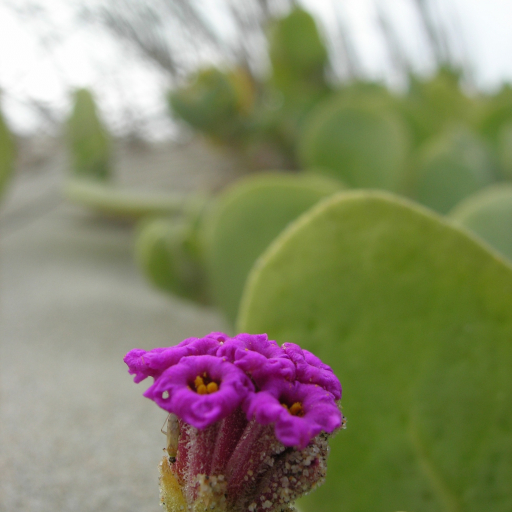
Plant Overview
Known affectionately as the Purple Sand Verbena, this resilient coastal dweller is a master of survival in the harsh, salt-sprayed dunes of the Pacific coast. While it looks like a delicate garden flower, it is actually a rugged succulent-like creeper that plays a vital role in stabilizing sandy shorelines. In coastal folklore, these vibrant mats are often called "beach jewels" for the way they sparkle against the pale sand.
🔍 How to Identify
- 🌸 The Blooms: Features dense, rounded clusters of small, trumpet-shaped flowers that range from deep magenta to rich purple. Unlike many flowers, these lack true petals; the colorful "petals" you see are actually specialized sepals.
- 🍃 The Foliage: The leaves are thick, fleshy, and oval-shaped—a classic sign of a succulent. They are usually a bright, waxy green and grow in opposite pairs along the stems.
- ⏳ The Texture: One of its most unique traits is its "stickiness." The stems and leaves are covered in glandular hairs that exude a gummy substance, often causing the plant to be completely coated in a layer of protective sand.
🏡 In Your Garden
- 🏖️ Coastal Specialist: If you are lucky enough to live near the ocean, this is a "set it and forget it" plant. It thrives in nutrient-poor, sandy soil where other plants would wither, and it actually enjoys the salty mist that kills most garden varieties.
- ⚓ The Deep Root: Be very careful when choosing its home; the Purple Sand Verbena grows a long, fleshy taproot that anchors it against shifting dunes. Because of this, it deeply resents being moved once established and rarely survives a transplant.
- ☀️ Sun Seeker: This plant requires maximum sun exposure. In the wild, it lives on open dunes with zero shade, so placing it in a shadowy corner will lead to leggy growth and a lack of those iconic purple blooms.
⚠️ Safety & Toxicity
- 🟢 Non-Toxic Status: Abronia maritima is generally considered non-toxic to humans and common household pets. It is not known to contain dangerous alkaloids.
- 🐾 Pet Safety: While a curious dog might find the sticky texture off-putting, there are no recorded cases of serious poisoning. However, because it grows in sandy environments, keep an eye out for "sand impaction" if a pet decides to chew on the sand-covered leaves.
✨ Fun Fact
The Purple Sand Verbena uses a "sand-armor" strategy for survival. By being sticky and trapping grains of sand against its skin, the plant creates a heavy, abrasive-resistant coating that protects its delicate tissues from the "sandblasting" effect of high coastal winds!

Detailed Care Instructions
To grow Abronia maritima, also known as yellow sand verbena or beach sand verbena, follow these steps:
- Choose a suitable location: Abronia maritima is native to coastal areas and thrives in sandy, well-draining soils. Find a spot in your garden or yard with full sun exposure.
- Prepare the soil: Sandy soil is ideal for this plant, but if your soil is not sandy, improve drainage by adding sand or compost. Avoid heavy clay soils that retain water.
- Sow seeds directly outdoors: Abronia maritima is typically grown from seeds. Sow the seeds directly into the ground after the last frost date, as they do not transplant well. Lightly press the seeds into the soil, ensuring good seed-to-soil contact.
- Watering: Keep the soil moist until the seeds germinate, which typically takes around 2 to 4 weeks. After germination, allow the soil to dry out between waterings. This plant is well adapted to drier coastal conditions.
- Maintenance: Once the plants have established, they require minimal care. Provide occasional deep watering during dry spells. Avoid overwatering, as this can lead to root rot. Avoid fertilizing, as these plants are adapted to low-nutrient coastal conditions.
- Pruning: Abronia maritima is a spreading plant that can reach up to 2 feet in height. If desired, you can prune it back in the fall to maintain a neater appearance and promote bushier growth.
- Propagation: If you want to propagate Abronia maritima, collect seeds from mature plants and sow them the following spring, or allow the plant to self-seed naturally.
Note: It's important to check if Abronia maritima is native to your region or if it is considered invasive. If it is not native, it is best to avoid planting it to prevent potential negative effects on local ecosystems.

Place in a bright room that is sun drenched almost all day. Or directly in a south-facing window.

Abronia Maritima is a type of flowering plant that requires regular watering to thrive. When watering this plant, it is important to avoid getting water on the leaves and flowers, as this can lead to damage and disease.
To water Abronia Maritima, first ensure that the soil around the base of the plant is dry to the touch. This indicates that the plant is in need of water. Use a watering can or a hose with a gentle spray nozzle to water the soil around the plant, being careful to avoid getting water on the foliage.
Water the plant thoroughly, ensuring that the soil is moist all the way to the roots. However, be careful not to over-water the plant, as this can lead to root rot and other problems. In general, watering once or twice a week is sufficient for Abronia Maritima, but this may vary depending on the climate and soil conditions.
In addition to regular watering, Abronia Maritima may benefit from occasional fertilization and pruning to maintain its health and appearance. With proper care, this plant can produce beautiful, fragrant blooms that will add color and interest to any garden or landscape.
For best results, fertilize this plant in the early spring, using a slow-release fertilizer with a balance of nitrogen, phosphorus, and potassium. Apply the fertilizer at a rate of approximately 1 tablespoon per square foot. Water thoroughly after fertilizing, and continue to water the plant regularly throughout the growing season. Avoid applying fertilizer late in the season, as it may encourage new growth that is susceptible to frost damage.
The recommended soil for Abronia maritima plant is a well-draining soil that is sandy or gravely in texture. The pH of the soil should be slightly alkaline (between 7 and 8). The plant is adapted to grow in coastal sand dunes, so it prefers a soil that is low in nutrients and organic matter. A soil mix that is 50% sand, 25% perlite, and 25% peat moss is a good option. It is essential to ensure that the soil is not too wet, and the plant is well-drained because the species is vulnerable to root rot. Adding bone meal to the soil before planting can help provide essential nutrients.
Abronia Maritima is a perennial succulent plant that can be propagated through several methods. One of the easiest methods is by stem cuttings. To propagate using stem cuttings, select healthy stems that have at least three leaves. Cut the stem using a sharp, clean knife and remove any leaves from the bottom two inches of the stem.
Dip the cut end of the stem into rooting hormone powder to encourage root growth. Place the stem cutting in a pot with well-draining soil and water it lightly. Keep the soil moist, but not too wet, and place the pot in a bright, warm location.
Another propagation method for Abronia Maritima is by seed. Collect the seeds from mature plants and sow them in pots filled with well-draining soil. Cover the seeds lightly with soil and water them gently. Keep the soil moist and place the pots in a warm, bright location. Germination may take several weeks to a few months.
Lastly, division is another method of propagation for this plant. Carefully dig up the plant and separate the root system into two or more sections. Replant each section in its own pot, with well-draining soil and water them gently. Keep them in a warm, bright location and monitor their growth.
Regardless of the propagation method used, proper care is essential for successful growth of Abronia Maritima. Provide it with well-draining soil, bright light, and moderate watering. This plant is also ideal for outdoor gardens in areas with dry or arid climates.








