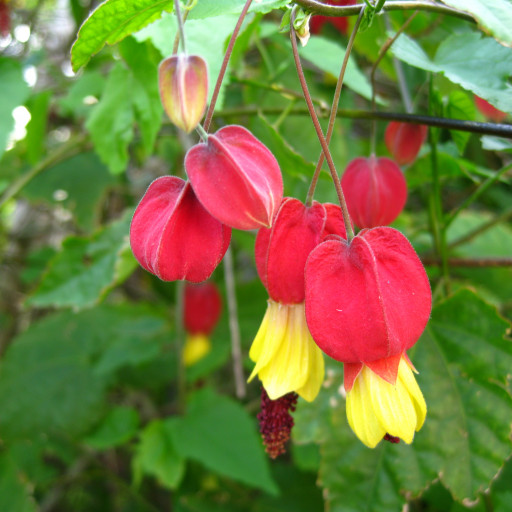
Plant Overview
Known affectionately as the Trailing Abutilon or the Brazilian Bell Flower, this plant looks like a collection of hand-crafted Victorian ornaments draped over a delicate shrub. Hailing from the riverbanks of Brazil, its "lanterns" seem to glow against its dark green foliage, making it a favorite for those looking to add a touch of tropical elegance to a patio or conservatory.
🔍 How to Identify
- 🏮 The Flowers: Its most striking feature is the pendulous, lantern-shaped bloom consisting of a bright red calyx (the top part) and buttery yellow petals that peek out from underneath.
- 🍃 The Foliage: The leaves are relatively small, arrow-shaped or slightly lobed, with a soft texture and finely serrated edges.
- 🌿 Growth Habit: Unlike its upright "Flowering Maple" cousins, this species has slender, arching branches that tend to "weep" or trail, making it perfect for vertical displays.
🏡 In Your Garden
- 🧗 Versatile Support: Because of its floppy, trailing nature, this plant is a bit of a shapeshifter. You can let it spill out of a hanging basket for a waterfall effect, or tie it to a trellis to "cheat" its way into becoming a climber.
- 💧 Thirst & Humidity: It reflects its riverbank origins by demanding consistent moisture. It hates "wet feet" (soggy soil), but if the root ball dries out completely, it will dramatically drop its leaves to show its displeasure.
- ☀️ Light Nuance: While it loves the sun, in very hot climates, the delicate bell flowers can "scorch." It performs best where it gets bright morning light but is shielded from the punishing afternoon heat.
⚠️ Safety & Toxicity
- 🟢 Status: Generally considered non-toxic.
- 🐾 Details: This plant is widely regarded as safe for cats, dogs, and children. However, as with any ornamental plant, keep an eye on curious pets; the high fiber content in the leaves can cause mild stomach upset if ingested in large quantities.
✨ Fun Fact
The species name megapotamicum literally translates to "from the big river," referring to the Rio Grande in Brazil. Its nectar-rich lanterns are specifically designed to be "hover-fed" by hummingbirds, who act as its primary pollinators in the wild.

Detailed Care Instructions
| Humidity | Normal |
| Lighting | Part Sun |
| Difficulty | Medium |
| Hibernation | Cold Period |
| Hardiness Zones | 7 - 10 |
To grow Abutilon megapotamicum, also known as the flowering maple or trailing abutilon, you can follow these steps:
- Choose a suitable location: Abutilon megapotamicum prefers a warm and sunny spot with partial shade in the afternoon. It can also be grown indoors if given enough sunlight.
- Prepare the soil: Use well-draining soil that is rich in organic matter. Amend the soil with compost or aged manure before planting.
- Planting: Dig a hole slightly larger than the root ball of the plant. Place the plant into the hole, ensuring that the top of the root ball is level with the soil surface. Backfill the hole with soil, gently firming it around the plant.
- Watering: Abutilon megapotamicum prefers consistent moisture but does not tolerate excessive soil moisture. Water the plant regularly, keeping the soil evenly moist but not soggy. Be cautious not to overwater or underwater the plant.
- Fertilizing: Apply a balanced, slow-release fertilizer during the growing season. Follow the instructions on the fertilizer packaging for proper application rates.
- Pruning: Abutilon megapotamicum benefits from regular pruning to maintain its shape and promote bushier growth. Prune in late winter or early spring before new growth emerges. Remove any dead, damaged, or diseased branches, and trim back any excessive growth.
- Support: As a trailing plant, Abutilon megapotamicum may benefit from support, such as a trellis or potted stakes, to help it climb or maintain its shape.
- Pests and diseases: Keep an eye out for common pests such as aphids and spider mites. Treat infestations promptly with an appropriate insecticide or by using organic pest control methods. Ensure good air circulation around the plant to reduce the risk of fungal diseases.
- Propagation: Abutilon megapotamicum can be propagated through seeds, stem cuttings, or layering. Stem cuttings taken in spring or early summer tend to root well.
- Winter care: If you live in a region with frost or freezing temperatures, consider growing Abutilon megapotamicum in containers that can be brought indoors during the colder months. Otherwise, provide protection from frost by covering the plant with a frost cloth or bringing it inside.
Remember to regularly monitor your plant's growth, water it appropriately, and provide adequate support to help it thrive.

Place in a bright room that is sun drenched almost all day. Or directly in a south-facing window.

To water this particular plant, you will need to keep a few things in mind. First, make sure to water it deeply and evenly, providing enough water to thoroughly saturate the soil. Avoid letting the soil become too dry or too waterlogged, as this can lead to root rot or other problems. It's also a good idea to use a well-draining soil mix that will allow excess water to drain away quickly, preventing standing water around the roots. Additionally, you may want to consider using a mulch or other protective covering around the base of the plant to help retain moisture and prevent weed growth. Finally, be sure to check the plant regularly for signs of stress or overwatering, such as yellowing leaves, wilting, or mold growth, and adjust your watering practices accordingly.
To properly fertilize this plant, use a balanced fertilizer with equal parts nitrogen, phosphorus, and potassium. Apply the fertilizer once every two months during the growing season, which is typically in the spring and summer. Be sure to follow the instructions on the fertilizer package for the correct amount to use based on the size of your plant. To avoid over-fertilization, water the plant before and after the fertilizer application and avoid fertilizing during periods of drought or extreme heat.
Abutilon megapotamicum is a type of flowering plant that requires a specific type of soil to thrive. The ideal soil for this plant should be well-draining and loamy, with a pH level of around 6.0 to 7.0. It should also be rich in nutrients, particularly nitrogen, phosphorus, and potassium, to support healthy growth and blooming. The soil should be moist but not waterlogged, as excess water can lead to root rot and other fungal diseases. To enhance the soil's fertility, gardeners can add organic matter, such as compost or well-rotted manure, to the top layer of soil or use a slow-release fertilizer. It's important to avoid using heavy clay soils or soils that have a high salt content, as these can be detrimental to Abutilon megapotamicum's health. Overall, providing well-draining, fertile soil that is kept consistently moist can help ensure Abutilon megapotamicum thrives in the garden or container.
Abutilon Megapotamicum can be propagated through seeds, cuttings or layering. To propagate Abutilon Megapotamicum through seeds, collect the matured seeds from the mother plant, sow them in a well-draining potting mix, cover with a thin layer of soil, and keep the soil moist until the seeds germinate.
To propagate Abutilon Megapotamicum through cuttings, take a 3-4 inches long stem cutting that has a few healthy leaves, remove the lower leaves, dip the stem in a rooting hormone, and plant it in a well-draining potting mix. Keep the soil moist and in a bright, warm location until the roots develop.
To propagate Abutilon Megapotamicum through layering, take a flexible stem and bend it down to the soil surface. Gently scrape off the top layer of the bark where the stem touches the soil, apply rooting hormone, and cover the stem with soil. Keep the soil moist until roots develop, and then separate the new plant from the mother plant.
Common pests of the dragons breath include Spider mites, aphids, thrips. Make a habit of checking your dragons breath frequently for pests so that any infestations can be caught and managed early.








