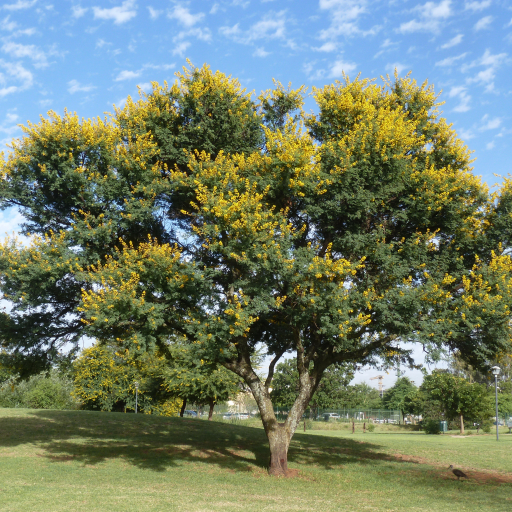
Plant Overview
Known as the "Sweet Thorn," Acacia karroo (now technically reclassified as Vachellia karroo) is a quintessential icon of the African landscape. This tree is famous for its striking contrast of delicate, feathery green leaves against formidable, snow-white thorns. It earned its "sweet" nickname from the golden, honey-scented flower balls that perfume the air in midsummer and the edible, amber-colored gum that seeps from its bark.
🔍 How to Identify
- ⚪ The Thorns: Long, straight, paired white thorns that can grow up to 10cm long. They are particularly prominent on younger branches and act as a natural "keep out" sign.
- 🟡 The Flowers: Bright yellow, puffball-like flower heads that appear in clusters at the ends of branches, smelling intensely of honey.
- 🌿 The Foliage: Feathery, dark-green leaves (bipinnate) that fold up at night or during particularly hot, dry spells to conserve moisture.
- 🪵 The Bark: Younger branches have a smooth, reddish-brown bark, while the main trunk becomes rough, dark, and deeply fissured as the tree matures.
🏡 In Your Garden
- 🚀 Growth Habit: This is a pioneer species, meaning it grows incredibly fast. It is perfect if you need a "quick" shade tree, but be mindful of its mature size; it needs plenty of room to spread its canopy.
- ⛏️ The Taproot: Like many desert-adapted plants, it develops a massive, deep taproot early in life. This makes it exceptionally drought-tolerant once established, but it also means it "hates" being moved—pick a permanent spot before planting!
- 🦋 Wildlife Magnet: It is a supermarket for nature. The flowers attract bees and butterflies, while the seeds are a favorite for birds. In its native habitat, it is a primary food source for giraffes and monkeys.
⚠️ Safety & Toxicity
- ⚔️ Physical Hazard: The primary danger is physical. The thorns are needle-sharp and sturdy enough to puncture tires or thick leather. Keep this tree away from walkways, play areas, or paths where pets and children run.
- 🐾 Pet Safety: While the tree is not considered toxic to cats or dogs if nibbled, the thorns can cause serious puncture wounds or eye injuries.
- 🍴 Edible Gum: The golden sap (gum) is non-toxic and has historically been used by humans as a snack and in traditional medicine, though it’s best left for the birds in a garden setting.
✨ Fun Fact
In the 19th century, the "Cape Gum" harvested from these trees was a major export from South Africa. It was so high in quality that it was used in Europe to make confectionery, medicine, and even the adhesive on the back of postage stamps!

Detailed Care Instructions
Acacia karroo, also known as the sweet thorn, is a hardy and fast-growing tree that can be easily grown from seeds or cuttings. Here are some tips on how to grow Acacia karroo plants:
- Choose a sunny location: Acacia karroo plants prefer full sun and well-drained soil. Make sure the planting site receives at least 6-8 hours of sunlight per day.
- Propagation from seeds: Collect seeds from mature Acacia karroo pods and sow them in well-draining soil in the spring. Keep the soil moist but not waterlogged, and the seeds should germinate in 2-4 weeks.
- Propagation from cuttings: Take 6-8 inch long semi-hardwood cuttings from a healthy Acacia karroo tree. Remove the lower leaves and dip the cut end in rooting hormone before planting it in a pot with well-draining soil. Keep the soil moist and within a few weeks, roots should start to develop.
- Watering: Water newly planted Acacia karroo plants regularly, especially during the first year of growth. Once established, they are drought-tolerant and only need occasional watering.
- Pruning: Prune the tree to remove dead or damaged branches and to maintain its shape. Prune in late winter or early spring before new growth starts.
- Fertilizing: Acacia karroo plants do not require much fertilization. You can apply a balanced fertilizer in the spring to promote healthy growth.
- Mulching: Mulch around the base of the plant to retain moisture and suppress weed growth.
With proper care and maintenance, your Acacia karroo plant will grow into a beautiful and drought-tolerant tree that will attract wildlife and enhance the beauty of your garden.
To water this plant, it is important to consider the soil type and the climate. In general, it requires moderate watering with well-draining soil, as it does not tolerate excessively wet conditions. However, during the hot summer months, it may require more water to prevent the soil from drying out completely.
It is recommended to water the plant deeply once a week, rather than frequent shallow watering, as this encourages deeper root growth. Care should also be taken to water around the base of the plant, rather than on the leaves or flowers, as this can cause damage.
In addition, it is important to avoid waterlogging the soil, as this can lead to root rot and other diseases. If the plant is grown in a container, excess water should be allowed to drain away, and a saucer or tray should be used to catch any excess water.
Overall, the key to watering this plant is to strike a balance between preventing the soil from drying out and avoiding waterlogging, to ensure healthy growth and development.
To fertilize Acacia karroo, you should apply a balanced fertilizer with equal parts nitrogen, phosphorus, and potassium. Use a slow-release fertilizer in the spring before the growing season begins. Make sure to water the plant thoroughly after fertilizing to help the nutrients penetrate the soil. Avoid over-fertilizing as it can damage the plant's roots. Follow the instructions on the fertilizer package for the correct dosage and frequency of application.
The best type of soil to use with this plant is a well-draining soil that is neither too wet nor too dry. It should have a slightly acidic to neutral pH level, between 6.0 to 7.5. The soil should be rich in organic matter and nutrients, as this plant requires regular feeding to maintain healthy growth. A mixture of topsoil, compost, and sand is ideal for this plant. It is also recommended to use a soil that is free of weeds, pests, and diseases, as these can harm the plant. When planting, it is important to ensure that the soil is firm around the roots but not compacted, as this can restrict root growth. Regular watering and fertilizing will also help to maintain healthy soil conditions for this plant.
Acacia Karroo plants can be propagated through seeds or cuttings. To propagate through seeds, collect ripe seed pods from the plant and allow them to dry out. Once dry, remove the seeds from the pods and sow them in a well-draining potting mix. Keep the soil moist and place the pot in a warm, sunny location. Germination typically occurs within 1-2 weeks.
To propagate through cuttings, take semi-hardwood cuttings from the plant in late spring or early summer. Remove the lower leaves from the cutting and dip the end in rooting hormone. Plant the cutting in a pot filled with a well-draining potting mix and keep the soil moist. Place the pot in a warm, sunny location and the cutting should root within 4-6 weeks.
Regardless of the propagation method used, it is important to keep the newly propagated plants well-watered and protected from extreme temperatures until they are established.








