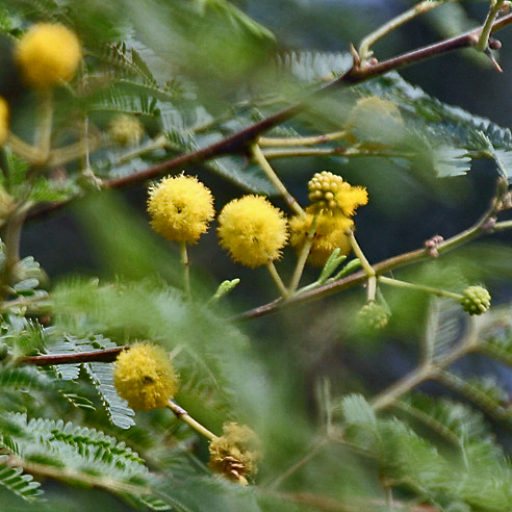
Plant Overview
Known as the Babul tree or the Egyptian Thorn, Acacia nilotica is an ancient survivor that has provided shade, medicine, and ink for thousands of years. From the scorching plains of Africa to the bustling landscapes of India, this hardy tree is celebrated for its resilience and its iconic "pom-pom" golden flowers. In many cultures, it is considered a "pharmacy in a tree" because almost every part—from the bark to the seeds—has a traditional use.
🔍 How to Identify
- 🌿 The Foliage: Look for delicate, feathery, fern-like leaves (bipinnate) that give the tree a soft, airy appearance despite its rugged nature.
- 📍 The Thorns: Be careful! The branches are armed with straight, sharp, greyish-white thorns that usually grow in pairs at the base of the leaves.
- 🌼 The Flowers: In bloom, the tree is covered in bright, golden-yellow globular flower heads that look like tiny fuzzy pom-poms and emit a sweet, subtle fragrance.
- 🫛 The Seed Pods: One of its most distinct features is the flat, greyish-green pods that are deeply constricted between each seed, making them look like a string of beads.
🏡 In Your Garden
- ☀️ Drought Warrior: This plant is incredibly heat-tolerant and thrives in full sun. It is a "set it and forget it" species for arid climates, as it actually prefers soil that most other plants would find too dry.
- 🧱 Taproot Trouble: If you decide to plant one, choose your spot wisely. It develops a very deep and aggressive taproot early in life, which makes it nearly impossible to transplant successfully once established.
- 🚜 Soil Improver: Like many legumes, it works behind the scenes to fix nitrogen in the soil, naturally improving the fertility of the ground around it for neighboring plants.
⚠️ Safety & Toxicity
- 🌵 Physical Hazard: The primary danger of Acacia nilotica is its thorns. They are long and sturdy enough to puncture skin or even thin tires, so it should be planted away from walkways or play areas.
- 🐕 Pet Safety: While the tree is generally not considered highly toxic, the high tannin content in the bark and pods can cause digestive upset in dogs or cats if chewed in large quantities.
- 🚫 Invasive Potential: In certain regions (like parts of Australia), this tree is considered a "weed of national significance" because it spreads so easily. Always check local regulations before planting.
✨ Fun Fact
Ancient Egyptians used the pods of this tree to create a high-quality black ink, and the "Gum Arabic" harvested from its bark has been used for centuries as a stabilizer in everything from watercolor paints to traditional confections!

Detailed Care Instructions
To effectively water this plant, the following steps should be observed:
- Determine the growth conditions of the plant. This includes the soil type, temperature, and humidity levels, among others.
- Determine the moisture level of the soil. Use a moisture meter or a stick to test the soil's moisture level. If the soil is dry, it's time to water the plant.
- Use a watering can or a hose to water the plant. The watering should be done slowly, ensuring that the soil absorbs the water and the water doesn't run off.
- Give the plant a deep watering to encourage root growth. The water should reach the plant's roots to ensure healthy growth.
- Avoid overwatering the plant. This can lead to root rot and other diseases. A good rule of thumb is to water the plant once the top 1-2 inches of soil are dry.
- Water the plant in the early morning or late evening to avoid evaporation and reduce the risk of leaf damage from the hot sun.
Acacia Nilotica prefers a well-draining soil that is rich in organic matter. It does not tolerate waterlogged conditions and thrives in a slightly acidic to neutral soil pH range. The ideal soil type for this plant is a sandy loam with good structure that retains moisture yet allows excess water to drain away easily. It is recommended to mix the soil with compost or well-rotted manure to improve its fertility. The plant is also sensitive to soil salinity, so it is important to avoid using high-salt fertilizers or applying excessive amounts of fertilizers.








