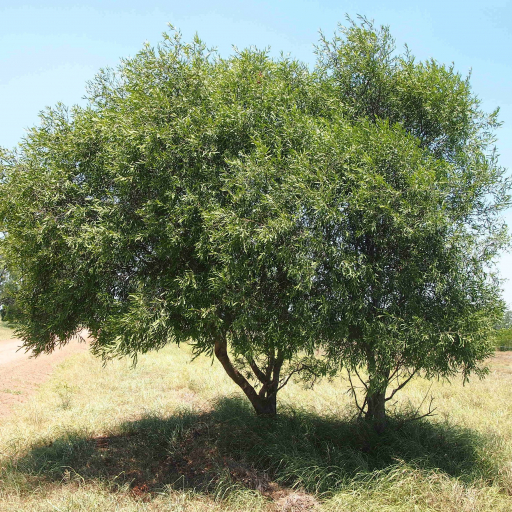
Plant Overview
Often called the Willow Wattle or Cooba, Acacia salicina is Australia’s graceful answer to the weeping willow. Known for its elegant, pendulous branches that sway in the slightest breeze, it is a hardy survivor that thrives where other trees might falter. In Indigenous Australian culture, it is a tree of great utility, historically used for everything from tool-making to traditional medicine.
🔍 How to Identify
- 🍃 The Foliage: Unlike true leaves, it features "phyllodes" (flattened leaf stalks) that are long, narrow, and leathery. They hang vertically, creating a distinct "weeping" silhouette.
- 🌼 The Flowers: It produces small, globular "puff-ball" flowers that range from pale cream to a soft lemon yellow. They usually appear in loose clusters rather than dense spikes.
- 🪵 The Seed Pods: Look for thick, woody pods that are often constricted between the seeds. When they dry and crack open, they reveal dark seeds with a bright red or orange attachment (aril).
🏡 In Your Garden
- 🌱 Soil & Resilience: This plant is a "pioneer species," meaning it’s excellent for fixing nitrogen in the soil. It is incredibly tough, handling both heavy clay and salty coastal winds with ease.
- 🌳 Growth Habit: It is relatively fast-growing but can be sensitive to root disturbance. Because it develops a deep taproot, it is best to plant it in its "forever home" while it is still a small sapling rather than trying to transplant it later.
- 💧 Water Logic: While it naturally grows near watercourses (hence the willow comparison), it is surprisingly drought-tolerant once established, making it a favorite for low-maintenance "Xeriscaping."
⚠️ Safety & Toxicity
- ✅ Status: Generally considered non-toxic and safe for home gardens.
- 🐾 Details: While not listed as a poisonous plant for pets or children, the bark and leaves contain tannins and saponins. If a curious dog chews on the wood, it might experience a slightly bitter taste or mild stomach upset, but it is not considered dangerous.
- 🌾 Allergy Note: Like many wattles, the light pollen can be a minor trigger for hay fever sufferers during the peak flowering season.
✨ Fun Fact
The Cooba tree was traditionally used as a "fish poison." Indigenous Australians would crush the bark and leaves and throw them into stagnant waterholes. The saponins in the plant would temporarily stun the fish by interfering with their oxygen intake, causing them to float to the surface for easy collection without making the meat toxic to eat!

Detailed Care Instructions
To grow Acacia salicina, also known as the willow acacia, you can follow these guidelines:
- Climate: Ensure you are located in a suitable climate for Acacia salicina. It thrives in a Mediterranean or desert climate with hot, dry summers and mild winters. It can tolerate drought conditions but is not frost-resistant.
- Sunlight: Plant the Acacia salicina in a spot that receives full sun, as it requires at least 6-8 hours of direct sunlight per day.
- Soil: The willow acacia prefers well-draining soil. Before planting, prepare the soil by removing weeds, loosening it with a garden fork or tiller, and adding organic matter such as compost to improve its fertility and drainage.
- Planting: Acacia salicina can be grown from seeds or propagated through cuttings. If starting from seeds, scarify them by gently scratching the surface to improve germination rates. Soak the seeds in warm water overnight before sowing them in pots or directly in the soil, 1/4 inch deep. If using cuttings, take 6-8 inch long cuttings from a healthy plant, remove the lower leaves, dip the cut end in rooting hormone, and plant it in moist potting soil.
- Watering: Water the newly planted seeds or cuttings regularly, keeping the soil consistently moist, but not overly soaked, until the plants establish a strong root system. Once established, Acacia salicina is drought-tolerant and requires minimal watering.
- Pruning: Prune Acacia salicina in the early spring to maintain its shape and promote healthy growth. Remove any dead, damaged, or overgrown branches to enhance air circulation and overall plant health.
- Mulching: Apply a layer of organic mulch around the base of the plant to help retain moisture, prevent weed growth, and maintain a stable root temperature.
- Fertilization: Acacia salicina does not generally require extensive fertilization. However, you can apply a slow-release, balanced fertilizer in the spring, following the manufacturer's instructions.
- Pest and disease control: Acacia salicina is relatively resistant to pests and diseases. However, it may occasionally face issues like aphids, caterpillars, or root rot. Regularly monitor your plant for any signs of infestation or disease and take appropriate measures, such as using insecticidal soap or fungicides if necessary.
- Propagation: If you want to propagate additional Acacia salicina plants, you can use either cuttings or seeds. Follow the same steps mentioned earlier for planting or propagating from cuttings.
Remember to check local regulations and consider any potential invasiveness concerns before planting Acacia salicina or any other non-native species.

Place in a bright room that is sun drenched almost all day. Or directly in a south-facing window.

To water this plant, begin by checking the soil moisture level. Insert your finger into the soil up to the second knuckle. If the soil feels dry, then water the plant. Use a watering can or hose with a gentle flow to slowly apply water to the soil. Water thoroughly until the water runs out of the bottom of the pot or reaches a depth of 6-8 inches in the ground. Avoid overwatering, as this can lead to root rot. Allow the soil to dry out slightly between watering sessions.
To fertilize this plant, use a balanced fertilizer with equal amounts of nitrogen, phosphorus, and potassium. Apply the fertilizer once a year in early spring, just before the new growth starts. Use a granular fertilizer and spread it around the base of the plant, avoiding contact with the trunk or stems. Water the plant thoroughly after fertilizing. Do not over-fertilize, as this can cause harm to the plant.
The Acacia Salicina plant prefers a well-draining soil that is non-alkaline and slightly acidic. The ideal soil for this plant is sandy loam mixed with organic matter, which will help it to retain moisture and nutrients. The soil should also have good drainage to prevent waterlogging, which can lead to root rot. Additionally, the soil should be fertile and rich in nutrients, as the Acacia Salicina plant is a heavy feeder. It is also important to ensure that the soil is not too compacted, as this can restrict root growth and lead to poor plant growth.
Acacia salicina can be propagated through several methods including seed propagation and vegetative propagation.
Seed propagation involves collecting seeds from mature trees and sowing them in well-drained soil that is kept moist until the seedlings emerge. This method is simple but can take up to several weeks for the seeds to germinate and requires patience.
Vegetative propagation involves taking cuttings from mature trees and starting them in a rooting hormone and well-draining soil mix. The cuttings should be taken during the dormant season and should be 5-10 centimeters long. Once rooted, the cuttings can be transplanted into larger pots or the ground.
Another method of vegetative propagation is through layering. This involves bending a low growing branch down to the ground and covering it with soil or sand. Once roots have formed, the branch can be cut and planted in a separate location.
Overall, Acacia salicina is a hardy plant that can be easily propagated through both seed and vegetative methods.








