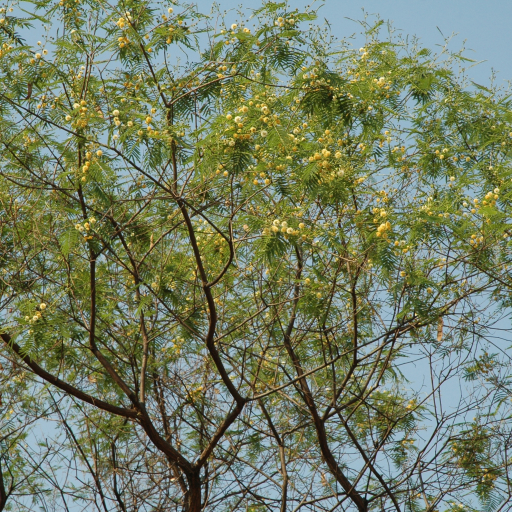
Plant Overview
Known as the "Visco" or "Arca" in its native South American landscapes, this elegant tree is often nicknamed the "Feathery Acacia" due to its delicate, fern-like foliage. It is a staple of the Gran Chaco region, where it is celebrated for providing deep, cooling shade in arid environments. With its umbrella-shaped canopy and puffball blooms, it brings a touch of wild, airy grace to any landscape it inhabits.
🔍 How to Identify
- 🌿 The Foliage: Features finely divided, bipinnate leaves that resemble delicate green lace or fern fronds, giving the tree a soft, misty appearance from a distance.
- 🟡 The Flowers: Produces charming, bright yellow "puffball" flower heads that are highly fragrant and appear in clusters during the warmer months.
- 🪵 The Bark and Form: Typically grows as a medium-sized tree with a rugged, grayish-brown bark that becomes more fissured and textured as the plant ages.
🏡 In Your Garden
- 🏜️ Drought Specialist: Because it originates from dry forests, the Visco is an expert at water conservation. It thrives in well-draining soil and is a perfect candidate for xeriscaping or low-water gardens once established.
- 🌱 Soil Improver: Like many members of the legume family, this plant has a symbiotic relationship with soil bacteria to "fix" nitrogen. This means it actually improves the fertility of the earth it grows in, making it a "giving" plant for your garden ecosystem.
- ☀️ Sun Seeker: To see those iconic yellow blooms, the Visco needs plenty of direct sunlight. It doesn't do well in heavy shade, which can lead to sparse foliage and a "leggy" appearance.
⚠️ Safety & Toxicity
- 🐾 Pet Safety: While generally not considered highly toxic, most Acacias contain tannins and saponins that can cause stomach upset if leaves or seed pods are ingested in large quantities by curious dogs or cats.
- 👶 Kid-Friendly: The tree is generally safe for backyard play, but it is wise to teach children not to eat the seed pods, which can be a choking hazard or cause mild digestive distress.
- 🧤 Pruning Note: Some specimens may develop small thorns or rough bark; wearing gloves during seasonal pruning is recommended to avoid scratches.
✨ Fun Fact
In its native regions of Argentina and Bolivia, the wood of the Acacia visco is highly prized by local artisans for its durability and beautiful grain, often used to create long-lasting tool handles and traditional furniture.

Detailed Care Instructions
To grow Acacia visco (commonly known as "visco" or "stinking wattle"), you can follow these steps:
- Choose the right location: Acacia visco prefers full sun but can also tolerate partial shade. Ensure the location has well-drained soil.
- Prepare the soil: Before planting, prepare the soil by removing any weeds, rocks, or debris. Loosen the soil to improve drainage and mix in some organic matter like compost or aged manure.
- Planting: Dig a hole slightly larger and deeper than the plant's container. Carefully remove the plant from its container and place it in the hole. Backfill the hole with soil, gently pressing it down around the plant to eliminate air pockets.
- Watering: Water the newly planted Acacia visco thoroughly to help settle the soil. Keep the soil moist but not waterlogged during the establishment period. Afterwards, the plant is drought-tolerant but occasional watering during dry spells can help.
- Mulching: Apply a layer of organic mulch around the base of the plant. This will help retain moisture, suppress weed growth, and regulate soil temperature.
- Pruning: Acacia visco is typically low-maintenance and does not require regular pruning. However, if necessary, you can trim back any dead, damaged, or overgrown branches.
- Fertilizing: Acacia visco generally does not require much fertilizer. However, if your soil is lacking in nutrients, you can apply a slow-release balanced fertilizer in early spring.
- Pests and diseases: Acacia visco is relatively resistant to pests and diseases. Just keep an eye out for any signs of infestation or disease and take appropriate action if needed.
- Propagation: Acacia visco can be propagated from seeds or cuttings. Collect seeds from the plant or take semi-ripe cuttings during the growing season and follow standard propagation techniques.
Remember to check for any specific regional requirements or considerations, as the optimal care may vary slightly depending on your location and climate.
To water this plant, you should first check the soil moisture level by sticking your finger about an inch into the soil. If the soil feels dry, it's time to water. Use a watering can or hose to evenly distribute water over the entire surface of the soil. Avoid drenching the plant's leaves or trunk as this can cause damage. During hot and dry weather, you may need to water more frequently. It's best to water in the morning or evening to avoid evaporation during peak sun hours.
- Choose a balanced fertilizer that contains equal amounts of nitrogen, phosphorus, and potassium.
- Dilute the fertilizer according to the instructions on the package.
- Apply the fertilizer around the base of the plant, taking care not to get any on the leaves or stems.
- Water the plant well after fertilizing to help the nutrients reach the roots.
- Fertilize the plant every 2-3 months during the growing season (spring and summer).
- Avoid fertilizing the plant during the winter months when it is dormant.
- Monitor the plant for any signs of nutrient deficiencies or excesses, such as yellowing leaves or stunted growth.
- Adjust the fertilizer application as needed based on the plant's response.
Acacia Visco is a type of plant that requires well-draining soil that is rich in nutrients. It typically prefers soil that is slightly acidic with a pH level between 5.5 and 6.5. The soil should also contain organic matter such as compost or peat moss to provide the plant with additional nutrients. It is important to avoid any soils that are heavy and clay-like, as they can prevent proper drainage and lead to root rot. The plant should be grown in a container or raised bed with at least a foot of soil depth. Additionally, regular fertilization and watering can help ensure the plant thrives in its soil environment.
Acacia visco is a plant that can be propagated through seed germination or stem cuttings. For seed germination, the seeds should be soaked in water for 24 hours before planting in a well-draining soil mix. The seedlings should be kept warm and moist until they have developed roots and are ready to be transplanted.
Stem cuttings can be taken from healthy, mature plants in the spring or early summer. Cuttings should be about 6 inches long and taken from the top of the plant. Remove the lower leaves from the stem and dip the cut end in rooting hormone. Plant the cutting in a well-draining soil mix and keep it moist and warm until it develops roots.
Both methods of propagation require patience and attention to detail, but can result in healthy, thriving plants. Good luck!








