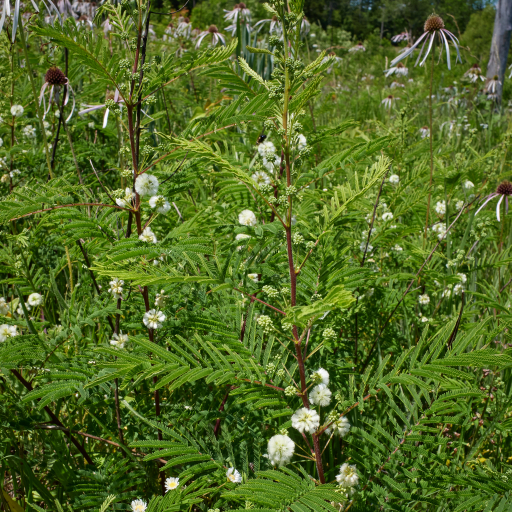
Plant Overview
Often called the Prairie Acacia or Fern Acacia, this plant looks like a delicate fern that decided to grow into a hardy shrub. Originating from the sun-drenched landscapes of the Americas—stretching from Texas down to Argentina—it is a master of survival in dry, rocky terrain. Its soft, feathery appearance hides a resilient spirit, often used by nature to heal and enrich poor soils after a disturbance.
🔍 How to Identify
- 🌿 Fern-like Foliage: The leaves are "bipinnate," meaning they are divided twice into tiny, narrow leaflets. This gives the plant a very soft, lacy texture that mimics a forest fern.
- ☁️ Puffball Blooms: It produces small, spherical clusters of creamy white or pale yellow flowers. These look like tiny, fuzzy pom-poms scattered throughout the branches.
- 🫛 Flat Seed Pods: After flowering, it develops thin, reddish-brown pods that are straight and flat, containing small, dark seeds.
🏡 In Your Garden
- 🌱 Soil Superpower: As a member of the legume family, it works with soil bacteria to "fix" nitrogen. This means it actually improves the quality of the earth where it grows, acting as a natural fertilizer for neighboring plants.
- 🦋 Pollinator Magnet: The white puffballs are rich in pollen, making the Prairie Acacia a popular "gas station" for honeybees, native bees, and butterflies during the heat of the summer.
- ✂️ Vigorous Habit: It can grow quite quickly and may spread through underground runners. To keep it from taking over a small garden, it’s best to prune it back in late winter to maintain a tidy, shrub-like shape.
⚠️ Safety & Toxicity
- 🟢 General Safety: The Prairie Acacia is generally considered non-toxic to humans and is famously "unarmed," meaning it lacks the sharp, painful thorns found on many of its Acacia cousins.
- 🐾 Pet Nuance: While not strictly poisonous, the plant contains high levels of tannins. If a curious dog or cat eats a large amount of the foliage, it could lead to a mild bellyache or digestive upset.
✨ Fun Fact
The species name angustissima is Latin for "very narrow." This refers to its incredibly slender leaflets, which are an evolutionary trick to reduce surface area and prevent water loss in the scorching desert sun.

Detailed Care Instructions
To grow Acaciella Angustissima plant, follow these steps:
- Propagation: Collect seeds from mature pods during the dry season or purchase seeds from a reliable source.
- Seed Preparation: Scarify the seeds by nicking or lightly filing the hard seed coat to help moisture penetrate and enhance germination. Soaking the seeds overnight in warm water can also help soften the seed coat.
- Soil Preparation: Acaciella Angustissima is adaptable to various soil types, but it prefers well-draining sandy or loamy soil. Prepare the soil by loosening it and removing any weeds or debris.
- Planting: Sow the seeds directly in the prepared soil or in seed trays filled with potting mix. Plant the seeds about 0.5-1 inch deep, covering them with a light layer of soil.
- Watering: Keep the soil moist but not waterlogged. Water the seeds and young plants regularly, especially during the germination period and until they are established.
- Sunlight: Acaciella Angustissima prefers full sun exposure. Choose a sunny location where they can receive at least 6-8 hours of direct sunlight daily.
- Germination: Acaciella Angustissima seeds usually take around 2-6 weeks to germinate. Maintain a warm temperature between 70-85°F (21-29°C) to facilitate germination.
- Transplanting: Once the seedlings have grown to a suitable size, typically a few inches tall, they can be transplanted into larger pots or directly into the ground if the weather and soil conditions are favorable.
- Care and Maintenance: Water the plants regularly, especially during dry periods. Mulching around the plants can help retain moisture and suppress weed growth. Avoid overwatering, as Acaciella Angustissima plants are drought-tolerant once established.
- Pruning: Prune the plants to maintain shape and size, and to remove any dead or damaged branches. Pruning can also help promote bushier growth.
- Fertilization: Acaciella Angustissima generally does not require heavy fertilization. However, applying a balanced fertilizer once or twice a year can supply essential nutrients for healthy growth.
- Pest and Disease Control: Generally, this plant is not prone to significant pest or disease issues. However, keep an eye out for aphids, scale insects, or fungal diseases. If necessary, treat with appropriate pesticides or fungicides as recommended.
By following these steps, you can successfully grow Acaciella Angustissima plant in your garden or landscape.

Place in a bright room that is sun drenched almost all day. Or directly in a south-facing window.

To properly water Acaciella angustissima plant, it is important to follow specific guidelines to ensure its health and well-being:
1. Consider the plant's watering needs: Acaciella angustissima thrives in well-draining soil, so it is essential to avoid overwatering. Before watering, always check if the top inch of the soil feels dry. This will help prevent waterlogging and root rot.
2. Watering frequency: Although it depends on various factors such as climate, humidity, and season, a general rule of thumb is to water the plant deeply and allow the soil to dry out partially between waterings. Typically, watering once a week during the growing season is sufficient.
3. Watering technique: When watering, aim to hydrate the root zone rather than just the surface soil. Slowly pour water over the soil near the base of the plant until it flows through the drainage holes. This ensures sufficient moisture reaches the roots without water pooling on the surface.
4. Adequate drainage: Acaciella angustissima prefers soil that drains well. Use a well-draining potting mix or amend the soil with materials like perlite or sand to enhance drainage. This prevents water from stagnating around the roots and causing root rot.
5. Observe plant response: Pay attention to how the plant responds to watering. If the leaves start turning yellow or develop spots, it may indicate overwatering. Adjust the watering frequency accordingly, allowing the plant to dry out more between waterings.
Remember, it is always essential to consider specific environmental factors and plant conditions to determine the most appropriate watering schedule for Acaciella angustissima.
To fertilize the Acaciella angustissima plant, follow these instructions:
- Select a balanced, slow-release granular fertilizer specifically formulated for flowering plants or general-purpose plant fertilizers. Ensure that the nitrogen (N), phosphorus (P), and potassium (K) ratio is balanced, such as 10-10-10 or 20-20-20.
- Before applying the fertilizer, thoroughly water the soil around the plant to ensure it is moist.
- Follow the manufacturer's instructions on the fertilizer packaging to determine the appropriate amount to use based on the size and age of your Acaciella angustissima plant.
- Sprinkle the granules evenly around the base of the plant, ensuring that they are spread out and not concentrated in one area.
- Gently work the fertilizer into the top layer of the soil using a hand cultivator or rake, being careful not to damage the plant's roots.
- After fertilizing, water the plant again to help the granules dissolve and distribute nutrients throughout the soil.
- Repeat the fertilization process once every 2-3 months during the growing season, which typically spans spring and summer. Reduce or suspend fertilizing during the plant's dormant period in fall and winter when growth slows down.
Remember to always closely follow the fertilizer manufacturer's instructions for best results with your Acaciella angustissima plant.
Acaciella angustissima is a plant that thrives in well-draining soil with good fertility. It generally prefers a slightly acidic to neutral pH level (6.0-7.0). When choosing soil for Acaciella angustissima, it's important to consider its natural habitat, which is often found in sandy or loamy soils.
A suitable soil mix for Acaciella angustissima can be created by combining equal parts of garden soil, compost, and perlite or coarse sand. This mixture provides a balanced texture and structure that allows for adequate drainage while retaining enough moisture to support the plant's growth.
Additionally, adding some organic matter like well-rotted compost or aged manure to the soil mix can enhance its fertility and supply essential nutrients to the plant. Organic matter improves the soil's water-holding capacity, promotes beneficial microbial activity, and enhances overall soil structure, benefiting the growth and development of Acaciella angustissima.
It's important to note that this plant does not tolerate waterlogged or heavy clay soils, as it prefers soil that allows water to drain freely. Therefore, the soil mix should be well-draining to avoid waterlogged conditions that can lead to root rot.
Regular monitoring of soil moisture levels is recommended to ensure adequate watering without over-saturating the soil. It is advisable to allow the top inch or two of the soil to dry out between watering intervals to avoid water stagnation and promote healthy root growth in Acaciella angustissima.
Overall, by providing a well-draining, slightly acidic to neutral soil with good fertility, you can create a suitable growing environment for Acaciella angustissima, supporting its vigorous growth and overall health.
To propagate Acaciella angustissima, follow these step-by-step instructions:
- Prepare a medium: Choose a well-draining potting medium like a mixture of peat moss and perlite or sand. Sterilizing the medium is recommended to prevent the growth of pathogens.
- Take cuttings: Select healthy stems that are about 4-6 inches long. Make a clean cut just below a leaf node using sterilized pruning shears or a sharp knife. Remove any leaves from the lower part of the cutting.
- Rooting hormone: Dip the base of the cutting in a rooting hormone powder or gel to encourage root development. Ensure the hormone is evenly distributed on the bottom inch of the stem.
- Planting: Create a hole in the prepared potting medium and gently insert the cutting into it, burying about 1-2 inches of the stem. Press the medium around the cutting to provide stability.
- Provide optimal conditions: Place the potted cutting in a warm and bright location, away from direct sunlight. Maintain a temperature of around 75-85°F (24-29°C). Avoid overwatering, as the cutting might rot, but keep the medium slightly moist.
- Use a mini greenhouse: To create a humid environment that fosters root growth, cover the potted cutting with a plastic bag or place it inside a propagation tray with a clear lid. Make sure there is enough airflow to prevent fungal issues.
- Wait and monitor: Roots usually develop within 4-8 weeks. Check the cutting periodically for signs of growth, such as new leaves or resistance when tugging gently. Avoid disturbing the cutting unnecessarily.
- Transplanting: Once a substantial root system has developed, the cutting can be transplanted into a larger pot or directly into the desired garden location. Ensure the new soil or garden bed is well-draining.
Remember, these instructions are general guidelines for propagating Acaciella angustissima. It is essential to note that success rates can vary, and it is always beneficial to research specific techniques for this plant or seek advice from local gardening experts for more precise propagation methods.








