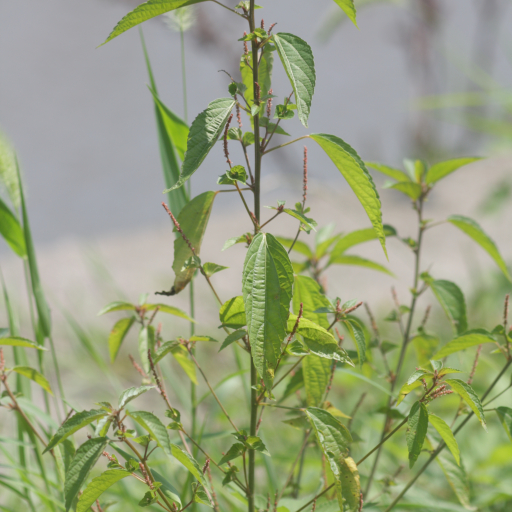
Plant Overview
Often known as the Asian Copperleaf, this understated annual is a frequent traveler, often hitching a ride in potting soil or popping up in garden cracks. While it might look like a simple weed at first glance, its transformation in the autumn—turning shades of warm copper and bronze—earns it its metallic name. Native to East Asia, it is a hardy "pioneer" species that thrives wherever the soil has been disturbed.
🔍 How to Identify
- 🍃 Leaf Texture: The leaves are lance-shaped or ovate with distinct serrated (saw-tooth) edges and a slightly rough, textured surface.
- 🌾 The Flower Spikes: It produces small, greenish flower spikes that emerge from the leaf axils, often accompanied by a heart-shaped, leafy "cup" (bract) that protects the seeds.
- 🍂 Seasonal Color: While green in the spring, the entire plant often flushes with a reddish-brown or coppery tint as the weather cools or when exposed to high light.
🏡 In Your Garden
- 🌱 The Opportunist: This plant is rarely sold in nurseries; instead, it "finds" you. It loves disturbed soil, making it a common sight in freshly tilled flower beds or vegetable patches.
- 💧 Resilient Roots: Unlike delicate ornamentals, the Asian Copperleaf is incredibly drought-tolerant once established, though it will grow much taller and "leafier" in moist, fertile ground.
⚠️ Safety & Toxicity
- 🐾 Mild Irritant: As a member of the Euphorbiaceae (Spurge) family, its sap can contain compounds that may cause mild skin irritation or dermatitis in sensitive individuals.
- 👶 General Caution: While not considered highly toxic, it is best to keep it away from curious pets and toddlers, as ingestion can lead to minor stomach upset or nausea.
✨ Fun Fact
- ✨ A Hidden Medicine: Despite its reputation as a common weed, Acalypha australis is highly regarded in traditional Chinese medicine, where it is known as Tie Xian Cai and used for its purported ability to help stop bleeding and reduce inflammation.

Detailed Care Instructions
To grow Acalypha australis (also known as the copperleaf plant), you can follow these steps:
- Choose the right location: Acalypha australis thrives in full sunlight but can tolerate partial shade. Select a spot in your garden or outdoor space that receives at least 6 hours of direct sunlight daily.
- Prepare the soil: The plant prefers well-draining soil rich in organic matter. Amend the soil with compost or well-rotted manure to improve its quality and drainage. A slightly acidic to neutral soil pH is ideal (around 6.0-7.0).
- Planting: Dig a hole that is twice the size of the plant's root ball. Place the plant into the hole, making sure the top of the root ball is level with or slightly above the soil surface. Backfill the hole with soil and gently firm it around the plant.
- Watering: For the first few weeks after planting, water the newly planted Acalypha australis regularly to help it establish. Once established, it is moderately drought-resistant but still benefits from regular watering during dry spells. Water deeply to ensure the roots receive adequate moisture.
- Mulching: Apply a layer of organic mulch, such as wood chips or straw, around the base of the plant. Mulching helps retain soil moisture, suppress weed growth, and insulate the roots from temperature fluctuations.
- Pruning: Acalypha australis can be pruned to maintain its shape and size. Prune any dead, damaged, or diseased branches throughout the year. You can also lightly trim the plant after its main blooming season to encourage bushier growth.
- Fertilizing: Acalypha australis benefits from regular fertilization during the growing season. Use a balanced slow-release fertilizer or organic alternatives according to the package instructions. Avoid over-fertilization, as it can lead to excessive foliage growth at the expense of flowers.
- Pests and diseases: Monitor your plant for common pests like aphids, spider mites, and whiteflies. Treat any infestations promptly with appropriate organic or chemical methods. Proper spacing and good air circulation can help prevent fungal diseases.
- Propagation: You can propagate Acalypha australis through stem cuttings. Take 4-6 inch long cuttings from healthy, mature plants, remove the lower leaves, and insert the cut end into a well-draining potting mix. Keep the cutting moist and warm until new growth emerges.
By following these guidelines, you can successfully grow Acalypha australis and enjoy its attractive foliage and flowers in your garden.

Place in a bright room that is sun drenched almost all day. Or directly in a south-facing window.

Acalypha Australis is a plant that requires regular watering to thrive. To water this plant, you should first check the soil to determine if it is dry. Stick your finger into the soil about an inch deep, and if it feels dry, it is time to water the plant.
When watering Acalypha Australis, you should use room temperature water and pour it gently into the pot until it begins to drain out of the bottom. Make sure you do not overwater the plant, as excessive moisture can lead to root rot and other issues.
It is also important to ensure that the plant's soil is well-draining, as it does not do well in soggy conditions. You may need to repot the plant into a pot with better drainage if it is currently in soil that retains too much moisture.
In addition to regular watering, Acalypha Australis requires a humid environment to thrive. You can increase the humidity around the plant by misting it with water, placing a tray of water near the plant, or using a humidifier in the room.
- Wait until Spring before beginning to fertilize.
- Use a slow-release fertilizer to provide nutrients to the plant over time.
- Mix the fertilizer with water according to package instructions.
- Apply the fertilizer solution to the soil around the base of the plant, avoiding getting the solution on the leaves.
- Water the plant well after fertilizing.
- Reapply fertilizer every 4-6 weeks during the growing season.
- Do not overfeed the plant, as this can lead to burning and damage to the roots.
A suitable soil for the plant in question should have good drainage, as the roots can be sensitive to waterlogging. A mixture of loam, sand, and peat can be used to ensure adequate drainage while retaining moisture for the plant. Organic matter can be added to the soil to improve its fertility and texture. It is recommended to avoid acidic soils as they are not conducive to the growth of this plant. A pH level of 6.5-7.5 is ideal for the plant's growth. The plant prefers a soil that is slightly moist but not waterlogged. Therefore, the soil should not be too heavy and should allow for easy drainage. When planting, it is recommended to choose a location that receives partial or full sunlight and has good air circulation.
To propagate this plant, you can take stem cuttings that are approximately 4-6 inches in length. Make sure to cut below a node and remove any lower leaves so only the top leaves remain. Dip the cut end into rooting hormone and plant it in a potting mix that is well-draining and moist. Keep the cutting in a warm and humid location with indirect light. After a few weeks, roots should start to form and the cutting can be transplanted into a larger pot or outdoors in a suitable location.








